


02 Aug Bare Bright Copper Scrap Prices in Singapore: What You Need to Know Before You Sell
If you have a pile of bare copper wire sitting in your workshop or storeroom, you are sitting on real money. Bare bright copper is the most valuable grade of copper scrap you can sell. Buyers pay top dollar for it because it is clean, pure, and ready to go straight back into production.
But here is the problem most sellers run into. They do not know what their copper is actually worth before they call a buyer. They accept whatever price they are quoted without knowing if it is fair. Some even lose money by not preparing their material properly before selling.
This guide covers everything you need to know. What bare bright copper is. Why it fetches the highest price. What makes the price go up or down. And how to prepare your material so you walk away with the best payout possible.
What Is Bare Bright Copper?
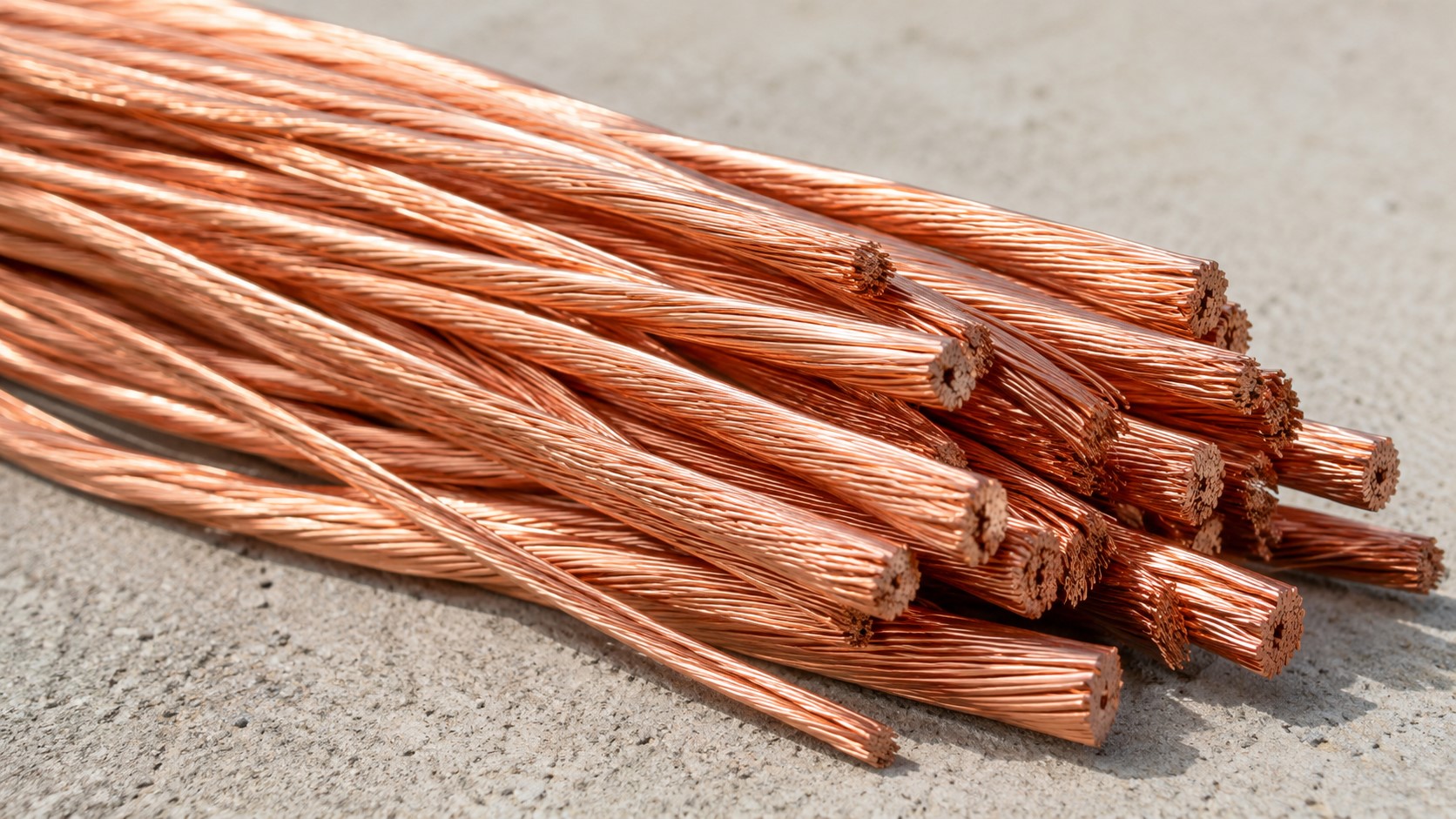
Bare bright copper is clean, uncoated, unalloyed copper wire or cable. No insulation. No tin coating. No solder. No oxidation. Just shiny, pure copper.
The Institute of Scrap Recycling Industries (ISRI) defines it as No. 1 Bare Bright Copper Wire. It must be at least 99% pure copper, free of fittings, and free of burnt wire. If your copper has any coating, corrosion, or paint on it, it does not qualify as bare bright.
The name says it all. Bare means no insulation or coating. Bright means shiny and clean, not dull or oxidised.
This is the grade that electrical contractors, renovation teams, and factory operators deal with most often. When you pull out wiring from a building, strip cables after a fit-out, or clear old wiring from a production line, what is left after stripping is often bare bright copper.
How Bare Bright Copper Compares to Other Copper Grades
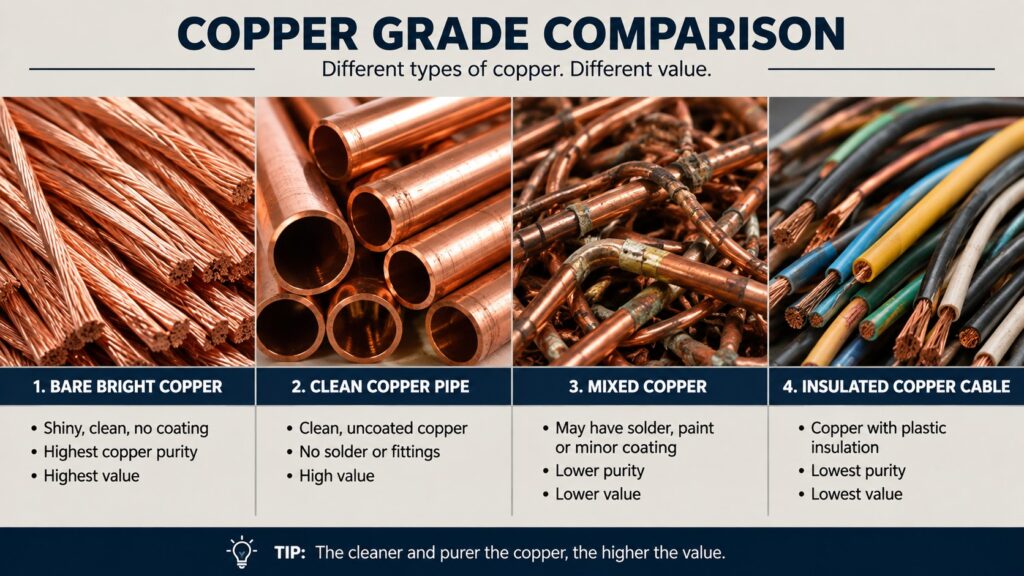
Not all copper scrap is valued the same way. Buyers grade your material before quoting a price. The cleaner and purer the copper, the higher the price per kilogram.
Here is how the main grades compare:
| Grade | Description | Condition Required | Relative Price |
|---|---|---|---|
| Bare Bright (#1 Bare Bright) | Clean, shiny, uncoated copper wire | No insulation, no corrosion, no alloys | Highest |
| #1 Copper | Clean copper pipe, bus bar, clippings | No paint, no insulation, minimal oxidation | High |
| #2 Copper | Copper with some coating, solder, or corrosion | Mixed, not heavily coated | Medium |
| Insulated Copper Cable | Copper wire still inside plastic or rubber sheathing | Any condition | Lower (depends on copper content inside) |
The difference in payout between bare bright and insulated copper can be significant. That is why stripping your cables before selling almost always makes sense. The labour you put in comes back to you in the price difference.
If you have insulated cables to sell, we cover that in a separate guide on selling copper wire scrap in Singapore.
What Determines Bare Bright Copper Prices in Singapore?
Copper prices are not fixed. They move every day. Here is what drives the number you see when you call a scrap buyer.
The London Metal Exchange (LME) Price
All copper scrap prices in Singapore track the LME copper spot price. The LME is the global benchmark for copper trading. When the LME price goes up, scrap prices in Singapore go up. When it falls, local prices follow.
You can check the LME copper price at lme.com. It is quoted in USD per tonne. Singapore buyers convert this to SGD per kilogram when they quote you.
The scrap price is always lower than the LME price. Buyers build in their margin, processing costs, and transport. But the LME number tells you whether the market is trending up or down right now.
The SGD/USD Exchange Rate
Because copper is priced globally in US dollars, the exchange rate matters. When the Singapore dollar is strong against the USD, local scrap prices in SGD can look softer even if the LME price is steady. When the USD is strong, you may see higher SGD payouts.
This is not something you need to calculate yourself. But it helps to know why the number can shift even on days when no major news has hit the copper market.
Local Supply and Demand
Singapore is a small market. If several large projects are generating copper scrap at the same time, buyers may have more material than they need. This can put slight downward pressure on prices locally. On the flip side, if major buyers are actively sourcing copper, they will pay more to secure material.
Large batches tend to attract better rates than a few kilograms dropped off at the yard. If you are managing a big renovation or factory clearance, it is worth calling ahead.
Material Quality
Even within bare bright copper, quality varies. A buyer will look for:
- Oxidation. Slightly green or dull copper is worth less than shiny copper. It needs extra processing.
- Contamination. Screws, bolts, or foreign metal mixed into your copper reduces the grade and the price.
- Moisture. Wet copper weighs more, and buyers adjust for this.
- Burn marks. Burnt copper is automatically downgraded. Do not burn cables to strip insulation. It contaminates the copper and destroys value.
Volume
Selling more at once generally works in your favour. If you have a regular stream of copper from ongoing projects, talk to your buyer about a standing arrangement.
Why Copper Prices Change So Often
The LME copper price can shift multiple times in a single trading day. Several things drive this:
- Global demand from manufacturing. China is the world’s biggest copper consumer. When Chinese factories ramp up production, copper demand rises. When they slow down, prices can drop.
- Supply disruptions. Mine shutdowns, shipping delays, or export restrictions in major copper-producing countries like Chile and Peru push prices up fast.
- Energy and inflation data. Copper is used in so much infrastructure and construction that its price often reflects how the global economy is doing.
- Speculation. Traders bet on where prices are going. This adds short-term volatility even when physical demand has not changed much.
What this means for you: do not wait for the “perfect” moment to sell. Prices go up and down in ways nobody can predict reliably. If the current price is fair and you have material ready, selling now is usually the right move.
How to Prepare Your Copper Before You Call a Buyer
How you prepare your material directly affects what you get paid. A few simple steps can make a real difference.
Step 1: Confirm you actually have bare bright copper. Your copper must be clean, shiny, and free of insulation. If any rubber, plastic, or coating remains, it is not bare bright. Strip it completely first.
Step 2: Do not burn the insulation off. Burning damages the copper surface and leaves carbon residue. Buyers will downgrade burnt copper. Use a wire stripping tool or a knife instead.
Step 3: Remove any fittings or attachments. Connectors, terminals, and screws are not copper. Take them off before you sell. Mixed material reduces the price of the whole batch.
Step 4: Sort your grades separately. Keep bare bright separate from #1 copper, #2 copper, and insulated cables. If you mix them together, the buyer grades the whole batch at the lowest grade present.
Step 5: Weigh your material if you can. You do not need a certified scale. Even a rough weight gives you a baseline so you can sanity-check the quote you receive.
Step 6: Take a few photos. A quick photo of your material helps a buyer give you a more accurate quote over WhatsApp before they even visit. It also protects you if there is any dispute about grade.
Common Mistakes That Cost Sellers Money
These are the errors that come up again and again. Avoiding them costs nothing. Ignoring them can cost you real money.
Selling mixed copper as bare bright. If insulation, solder, or fittings are still attached, a buyer will reclassify your material on the spot. You expected bare bright pricing. You get #2 copper pricing instead.
Burning cables to save time on stripping. Burnt copper is one of the most common ways sellers destroy value. The quick shortcut costs you on every kilogram.
Accepting a quote without knowing your grade. Always ask the buyer exactly which grade they are paying for. Bare bright, #1 copper, and #2 copper are different prices. If a buyer does not specify, ask.
Selling to unlicensed buyers. Singapore’s National Environment Agency (NEA) regulates scrap metal dealers under the Resource Sustainability Act. Selling to an unlicensed buyer puts you at risk. Always check that your buyer operates legally.
Not asking about volume pricing. If you have a large batch, say so upfront. Buyers often adjust their rate for volume. You will not know unless you ask.
How to Get a Current Price Quote in Singapore
Bare bright copper prices change every day. There is no point publishing a fixed number here because it will be out of date by the time you read this. The only way to get an accurate quote is to contact a buyer with current market access.
Karung Guni Singapore, operated by Infinity Fair Trading, buys bare bright copper and other scrap metals from commercial sellers across Singapore. The process is straightforward.
- Send a WhatsApp message with a brief description of your material and a photo if you have one.
- Get a quote based on today’s market price.
- Agree on a collection time. They come to you.
- Get paid on the spot when they collect.
No transport needed. No waiting for payment to clear. If you have a large batch from a project clearance or factory decommission, collection can be arranged at your site.
To get a quote today, reach out via WhatsApp or visit the sell page to submit your details online.
Frequently Asked Questions
Is bare bright copper the same as Grade 1 copper wire?
These terms are often used to mean the same thing. Bare bright copper is the ISRI classification for clean, uncoated, unalloyed copper wire with no insulation. Some local buyers call it Grade 1 copper wire. Always confirm with the buyer exactly what standard they are applying.
Does selling a larger batch get me a better price per kilogram?
Often, yes. Buyers prefer bulk because it reduces their handling cost per kilogram. If you have a significant quantity, it is worth mentioning that upfront when you ask for a quote.
Do I need to transport the copper to a scrap yard myself?
No. Karung Guni Singapore offers free doorstep collection. You do not need to hire transport or make a trip to a yard.
How quickly can I get collected and paid?
Collection is scheduled at your convenience. Payment is made on the spot at the time of collection. There is no waiting period.
What if I have other scrap materials alongside my copper?
Karung Guni Singapore handles multiple scrap types. If you have copper alongside other metals, old electronics, or industrial equipment, they can assess everything in one visit. See the full list of what they collect.
Can I sell copper scrap from a renovation project?
Yes. Renovation offcuts, pulled wiring, and stripped cables are some of the most common sources of bare bright copper in Singapore. Just make sure the insulation is removed before you call.
The Bottom Line
Bare bright copper is the most valuable copper scrap grade you can sell. Getting the most out of it comes down to three things: knowing what you have, preparing it properly, and selling to a buyer who gives you a fair price based on today’s market.
Strip the insulation. Sort your grades. Do not burn anything. And always ask exactly which grade your buyer is quoting for.
If you have copper scrap ready to sell, get in touch with Karung Guni Singapore for a current quote. Free collection, payment on the spot, and no hassle.
No Comments