


23 Jul Commercial Bulk Steel Scrap Recycling: A Complete Guide for Singapore Businesses
Your factory or warehouse probably has steel waste right now. Maybe it’s old metal parts. Maybe it’s broken machines. Maybe it’s leftover steel from your work.
Here’s the thing: that steel is worth money.
Most businesses don’t realize they can get paid to remove their steel scrap. Instead, they pay money to throw it away. That’s backwards. In this guide, we’ll show you how commercial steel recycling actually works, why it helps your business, and how to get started.
What Is Commercial Bulk Steel Scrap Recycling?
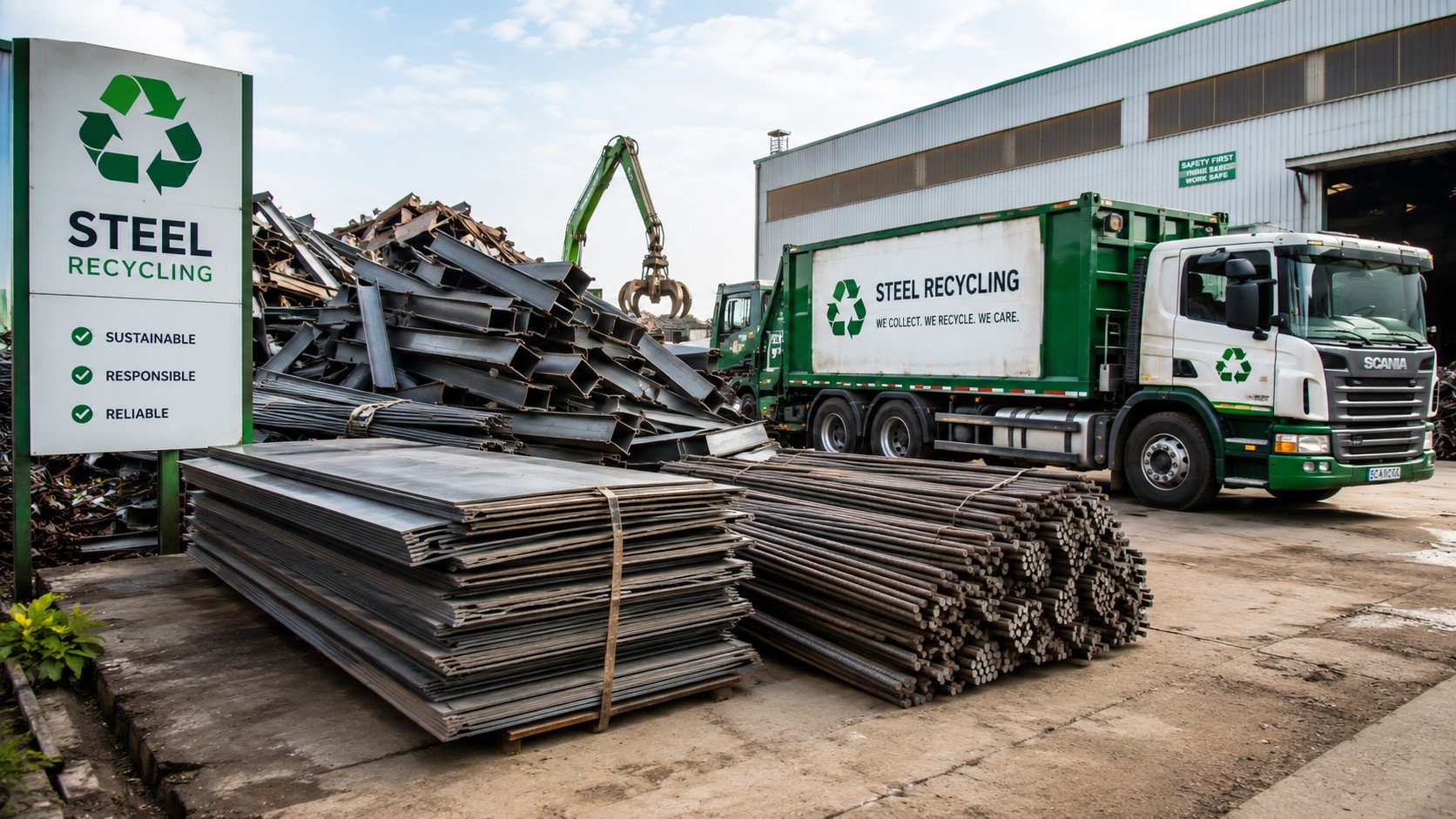
Bulk steel scrap recycling is simple. You collect all the steel waste from your business. A recycling company picks it up. They take it to a facility. It gets melted down and turned into new steel products. Your business gets paid.
That’s it.
Businesses generate steel waste all the time. Manufacturing plants create waste. Construction sites create waste. Warehouses store waste. Demolition projects create tons of waste. Instead of piling it up or throwing it away, you can sell it.
The word “bulk” means large amounts. This isn’t about selling a few pounds here and there. Commercial recycling works best when you have significant quantities. Think tons of material, not pounds.
Why Should Your Business Recycle Steel Scrap?
There are three big reasons: money, space, and the planet.
You Make Money
This is the easiest one to understand. Your scrap steel has real value. The price changes based on market conditions, but bulk scrap typically brings in real income. A facility with lots of steel waste can earn meaningful money through recycling.
Here’s an example: A small manufacturing plant produces about 20 tons of steel scrap per year. They could simply dispose of it for a fee. Or they could recycle it and make money instead. Over time, that adds up.
You Free Up Space
Steel waste takes up room. Storage space costs money. Every square foot matters in a warehouse or factory. Steel piled up in corners or outside areas wastes valuable space.
When you recycle regularly, you keep your facility clean and organized. The space stays available for actual production work. No more piles of metal rusting in the corner.
You Help the Environment
Steel recycling is actually great for our planet. Making new steel from scrap uses way less energy than making steel from raw materials. We’re talking about 75% less energy.
When you recycle steel, you help reduce carbon pollution. You help keep waste out of landfills. You help create circular economy—which just means using things over and over instead of always making new ones.
What Types of Steel Can You Recycle?
Not all metal is the same. Let’s talk about what actually qualifies.
Ferrous Metals (Iron and Steel)
Ferrous metals are metals that contain iron. These stick to magnets. Most industrial steel is ferrous metal. This includes:
- Mild steel (the most common type)
- Carbon steel
- Stainless steel
- Structural steel beams
- Sheet metal
- Steel pipes
- Metal machinery parts
If you hold a magnet near it and it sticks, it’s probably ferrous metal and recyclable.
What Doesn’t Work
Mixed materials are tricky. If steel is glued or welded to plastic or rubber, that creates problems. The facility has to separate everything, which costs time and money.
Contaminated steel doesn’t work either. Oil, paint, chemicals—these can damage recycling equipment. You want clean, dry metal.
Very small pieces are also difficult. A single screw isn’t enough. Recycling needs scale.
How Does Steel Scrap Actually Get Recycled?
Understanding the process helps you prepare your material. Here’s what happens.
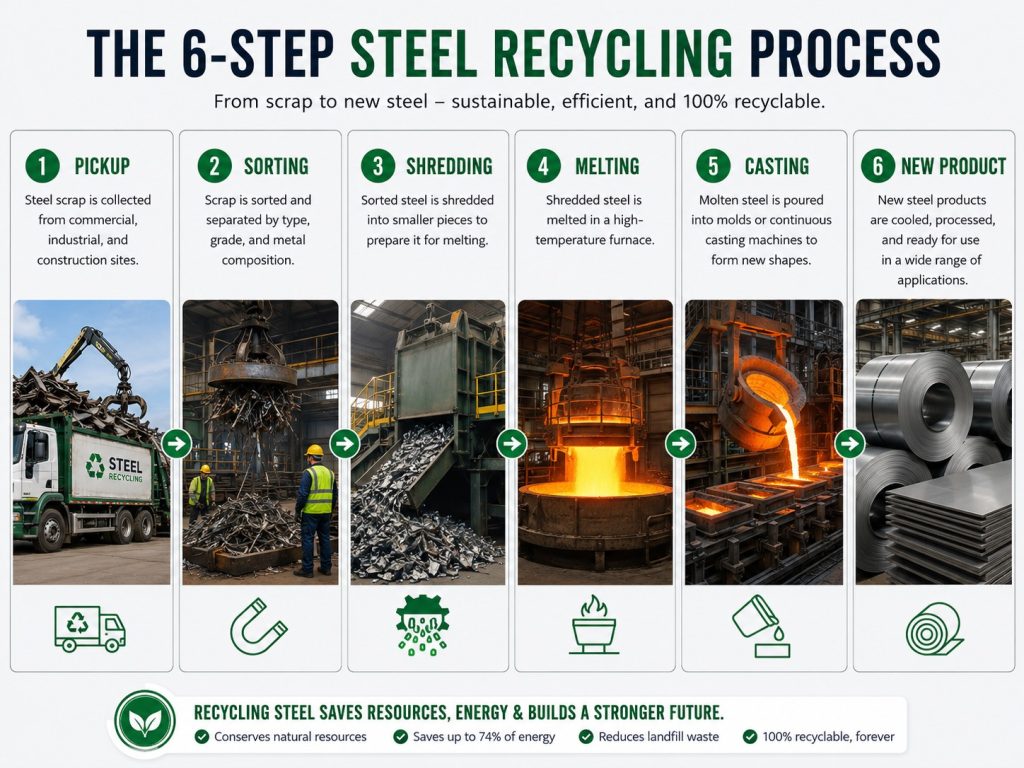
Step 1: Collection and Pickup
First, your facility calls a recycling company. They arrange a pickup date. The recycling team comes to your location with a truck. They collect your steel scrap.
This is when having your material organized matters. If everything is sorted and accessible, pickup goes smoothly. If material is scattered everywhere, it takes longer.
Some facilities get regular pickups—maybe once a month. Others have one big pickup per year. It depends on how much steel you generate.
Step 2: Sorting
At the recycling facility, workers look at each piece. Is it steel or something else? Is it clean? They separate different types of steel into different piles.
They use magnets for this. Ferrous metals stick to magnets. Non-ferrous metals don’t. This simple tool helps sort everything fast.
Step 3: Shredding
The steel gets fed into a huge shredder. Picture a giant machine that tears metal into small pieces. Think of it like a can crusher, but much, much bigger.
This shredding serves two purposes. It reduces the volume—you can move more material. And it helps with the next step.
Step 4: Melting
The shredded steel goes into a furnace. That’s a very hot oven. The temperature reaches about 1,500 degrees Celsius. At that temperature, solid steel melts into liquid metal.
Heavy materials sink. Light materials float. Impurities get separated out. The clean liquid steel stays behind.
Step 5: Casting Into New Products
The melted steel flows into molds. As it cools, it becomes solid again. It forms into new shapes—maybe flat sheets, maybe long beams, maybe coils.
This new steel gets sold to manufacturing companies. They use it to make new products. Cars, buildings, machines, tools—everything starts with recycled steel.
Step 6: You Get Paid
The recycling facility pays your business for the steel. Payment depends on:
- How much steel you provided
- The type of steel (stainless is worth more than mild steel)
- The quality and cleanliness
- Current market prices
Current market prices matter. Steel prices go up and down like oil prices. When prices are high, you earn more. When prices are low, you earn less.
What Environmental Benefits Does This Provide?
Steel recycling is genuinely one of the best environmental choices an industrial business can make.
Less Energy Use
Making steel from raw ore in the ground requires massive amounts of energy. The rocks must be mined, crushed, and heated in huge furnaces. It’s an energy-intensive process.
Recycling steel requires just a fraction of that energy. Recycling uses about 75% less energy than making new steel from ore. That’s huge.
Less energy means fewer carbon emissions. Your business becomes part of the climate solution instead of the problem.
No New Mining Damage
Mining damages the environment. It disturbs land. It can pollute water. It creates waste rock that sits around forever.
When you recycle steel, less mining is needed. That means less land damage. Less water pollution. Less environmental disruption.
Less Landfill Waste
Steel that doesn’t get recycled goes to the landfill. In the landfill, it rusts and corrodes for decades. It takes up space that could be used for truly non-recyclable waste.
Recycling keeps tons of material out of landfills each year. That’s space saved for waste that can’t be recycled.
The Financial Picture: What You Can Earn
Let’s be honest. The main reason businesses recycle is money. So let’s talk real numbers.
General Market Ranges
Steel scrap prices vary based on global markets. They’re not fixed. But here are typical ranges that you might see:
Mild steel scrap might bring $80 to $150 per ton. Stainless steel is worth more—sometimes $300 to $500 per ton. Specialty steels can be worth even more.
Remember: these are general ranges. Actual prices change. Market conditions shift. Always ask your recycler for a current quote.
It Adds Up
A small factory might generate 15 to 30 tons of steel per year. At mid-range prices, that’s $1,200 to $4,500 per year. That’s real money.
Larger facilities generate hundreds of tons yearly. The earnings scale up significantly.
Plus, remember: you save money by not paying disposal fees. So the benefit is actually twice as good.
Why Prices Fluctuate
Steel prices move based on supply and demand worldwide. When construction booms, demand increases and prices rise. When the economy slows, demand drops and prices fall.
You can’t control market prices. But you can call your recycler for current quotes before you commit to a sale.
Cost Comparison: Recycling vs. Traditional Disposal
Let’s do a simple comparison.
Option 1: Pay Someone to Dispose of It
You hire a waste disposal company. They charge you a tipping fee—maybe $50 to $100 per ton. They haul your steel away. You never see it again.
For a facility producing 20 tons per year, that’s $1,000 to $2,000 spent.
Option 2: Recycle It and Get Paid
You call a recycling company. They pick up your steel for free (or very cheap). You receive payment. Let’s say $100 per ton average.
For 20 tons per year, that’s $2,000 earned.
The Difference
Disposing: You lose $1,000 to $2,000.
Recycling: You gain $2,000.
That’s a swing of $3,000 to $4,000 per year. For doing basically the same thing.
Many businesses never think about this. They just pay disposal fees without asking if there’s a better way.
Getting Your Facility Ready: A Checklist
Before you contact a recycling company, prepare your material. This makes the process smoother and faster.
Organize Your Steel
Gather all your steel scrap in one location. Don’t leave pieces scattered throughout the facility. Having everything in one place makes pickup fast.
Sort by type if you can. Mild steel in one pile. Stainless in another pile. This helps the facility when they process it.
Remove Non-Steel Contamination
Check your steel for plastic, rubber, wood, or other materials stuck to it. Remove what you can. Severely contaminated pieces might need to be left behind.
Oil and grease residue is okay. The facility can handle light contamination. But large amounts of oil can cause problems.
Stack It Safely
Make sure your piles are stable. Heavy metal can be dangerous. Stack it so nothing will topple over. Make sure the ground underneath is solid.
This matters for your workers’ safety and for the pickup team’s safety.
Keep It Dry
If possible, store your scrap under a roof or tarp. Wet steel is fine, but dry steel is easier to handle. Plus, wet metal can corrode faster.
Document Everything
Keep track of how much steel you have. Rough measurements work. When the recycler arrives, they’ll do their own weighing. But having your own estimate helps.
Common Mistakes to Avoid
Here are things that slow down the recycling process.
Mixing Materials
Don’t mix steel with aluminum, copper, or other metals in the same pile. The facility can handle it, but it takes longer and complicates the process. Keep ferrous metals separate when possible.
Contamination Issues
Don’t include plastic, rubber, paper, or wood with your steel. These materials get stuck in processing equipment and cause problems. They have to stop the machines to remove the contamination.
Tiny Pieces
Steel shavings or filings from machining work are difficult. A handful of small pieces isn’t worth processing. If you have small steel waste, collect it in a barrel or bag. The facility can decide what to do with it.
Waiting Too Long
Don’t wait until you have a huge pile and storage becomes impossible. Regular smaller pickups are easier to arrange than one giant haul. They’re also better for your facility’s organization.
Not Getting a Quote
Scrap prices change. Don’t assume you know what you’ll earn. Always contact the recycler and ask for a current quote based on your steel’s type and quantity.
How Much Time Does the Process Take?
Timeline questions come up a lot. Here’s what to expect.
First Contact to Pickup: 1 to 2 Weeks
When you call a recycling company, they can usually schedule a pickup within a week or two. They might do it faster if they’re busy in your area.
Very large loads or emergency situations might be arranged same-week. Small facilities might need to wait longer.
Pickup Day: 1 to 4 Hours
The actual pickup depends on how much material you have. A small pile might take an hour. A huge accumulation could take all day.
Your facility should remain operational during pickup. The team works on your time.
Payment: 3 to 7 Days
You get paid after the material is weighed and processed at the facility. Most companies pay within a week. Some pay faster. Ask about their payment timeline when you contact them.
The Full Process (Material to Recycled): 2 to 8 Weeks
From when the facility receives your steel to when it becomes new recycled product takes 2 to 8 weeks. You don’t have to wait for this part. You already got paid.
How to Choose a Scrap Recycler
Not all recyclers are the same. Here’s what to evaluate.
Local Service
Use a recycler near you. They should serve your area and offer convenient pickups. Long-distance transport costs money that comes out of your earnings.
Karung Guni Singapore services the Singapore area. If you’re in the region, local service matters.
Reliable Pickup Scheduling
Your recycler should be flexible and responsive. Can they work with your facility’s schedule? Do they offer regular pickups or one-time service? What if you need an emergency pickup?
Ask about their scheduling options before you commit.
Fair Pricing
Get quotes from multiple recyclers. Prices vary. The highest bidder isn’t always best if reliability is poor. The cheapest option might have hidden fees.
Ask about:
- Payment timing
- Whether they charge pickup fees
- How they weigh your material
- Their payment method (check, transfer, cash)
Compliance and Certifications
Good recyclers follow environmental laws. They document everything. They handle waste properly. Ask about their certifications and compliance.
In Singapore, recyclers should follow National Environment Agency guidelines. Learn more about our environmental practices.
Reputation
Check online reviews. Ask other local businesses. A recycler’s reputation matters. You want someone reliable who pays on time and treats you fairly.
Environmental Impact: By the Numbers
Let’s look at actual environmental benefits.
Energy Savings
Recycling 1 ton of steel saves about 1.4 tons of raw materials and 75% of the energy needed to make new steel. That’s significant.
For a mid-sized facility recycling 50 tons per year, the energy savings equal what 10 homes use in a year.
Carbon Reduction
Recycling 1 ton of steel prevents about 1.5 tons of carbon dioxide emissions. For 50 tons, that’s 75 tons of emissions prevented annually.
To put that in perspective, that’s like planting 1,200 trees.
Landfill Impact
Steel takes decades to decompose. Every ton recycled is a ton not sitting in a landfill for 50+ years. That space stays available for waste that truly can’t be reused.
Water Conservation
Steel production uses water. Recycling uses less water than making new steel from ore. Less strain on freshwater resources.
The environmental case for recycling is clear. It’s good business and good for the planet.
Compliance and Documentation
Singapore has environmental regulations around waste. Let’s talk about what you need to know.
Documentation Requirements
The National Environment Agency (NEA) tracks industrial waste. Most recyclers handle documentation automatically. They’ll give you records of what they collected.
Keep these records for your business files. They might be needed for audits or compliance checks.
Hazardous vs. Non-Hazardous
Plain steel scrap is non-hazardous waste. You don’t need special permits to recycle it.
But if your steel is contaminated with hazardous materials (certain chemicals, radioactive material, etc.), that’s different. Declaration requirements apply. Your recycler can help you determine if special handling is needed.
Environmental Compliance
Using a professional recycler ensures compliance. They know Singapore’s environmental rules. They process material legally.
Trying to recycle on your own or using unlicensed operators can create legal problems. Use licensed, professional recyclers.
Real-World Scenarios: Is Recycling Right for You?
Let’s look at different business types.
Manufacturing Plants
Most manufacturing facilities have plenty of steel scrap. Machining produces offcuts. Defective products get discarded. Assembly processes create waste.
Answer: Recycling is excellent for manufacturing plants. Regular pickups make sense.
Construction Companies
Construction generates huge amounts of steel scrap. Demolition work produces bent rebar and structural steel. New construction creates waste.
Answer: Recycling is ideal for construction. The volumes are substantial and the material is valuable.
Warehouses and Logistics
Warehouses might accumulate old racking, damaged equipment, old machinery. The amounts vary.
Answer: Recycling depends on volume. Small accumulations might not justify frequent pickups. But annual hauls work well.
Workshops and Metalworking
Small workshops create regular waste. But volumes might be modest.
Answer: Recycling still makes sense. Small-scale facilities can partner with recyclers who aggregate material from multiple small clients.
Facilities with Minimal Scrap
Some service businesses generate little waste material.
Answer: Recycling isn’t worth the effort. You might store material and do one pickup every few years.
Taking the Next Step
Ready to start? Here’s what to do.
Step 1: Gather Your Material
Go through your facility. Identify all the steel scrap you have or generate. Make a rough estimate of quantity. Check the type and cleanliness.
Step 2: Get a Quote
Contact local recyclers. Describe what you have. Ask for a current price quote. This is free and non-binding.
Step 3: Prepare Your Material
Organize your scrap according to the tips above. Get it in one location. Remove contamination. Make it accessible.
Step 4: Schedule Pickup
Work with your chosen recycler to set a convenient date. Confirm any details about payment or documentation.
Step 5: Pickup Day
Have someone on-site to show the recycler where the material is. Answer any questions. Get a receipt or paperwork confirming what was picked up.
Step 6: Receive Payment
You’ll get paid within the timeframe the recycler stated. Most offer checks, bank transfers, or cash.
Getting in Touch
Karung Guni Singapore offers commercial bulk steel scrap recycling services. We service the Singapore area and provide:
- Free pickup for bulk quantities
- Fair market pricing
- Professional handling
- Documentation and compliance
- Flexible scheduling
Get in touch to discuss your facility’s specific needs. We can provide a quote and arrange a convenient pickup time.
You can also visit our website to learn more about how our service works.
Frequently Asked Questions
How Much Steel Do I Need for Recycling?
There’s no strict minimum, but recycling works best with at least 500 pounds (about 250 kg) to a few tons. Smaller quantities get lower priority. Larger quantities get better service and pricing.
Do You Take Stainless Steel?
Yes. Stainless steel is valuable and highly recyclable. It’s worth more than mild steel. Keep stainless separate from other steel for best pricing.
What About Mixed Metals?
Mixed metals (steel with aluminum or copper) are harder to process. If you have separate piles by metal type, recycling is faster and better priced. But recyclers can handle mixed lots if necessary.
How Are You Paid?
Payment methods vary by recycler. Check, bank transfer, and cash are common. Ask your recycler about their payment options.
What Happens if Prices Drop?
You’re locked in at the price you agreed to before pickup. After pickup, you’re paid at that rate even if market prices drop. This protects you from sudden price swings.
Can You Recycle Rusted Steel?
Yes. Rust is just oxidized steel. The recycling process removes rust. Rusted steel is perfectly recyclable.
Do You Need Special Permits?
For regular steel scrap, no special permits are required. The recycler handles all documentation. If your material might be hazardous, ask your recycler about requirements.
How Often Should We Pick Up?
It depends on your waste generation. Small facilities might do annual pickups. High-volume producers might benefit from monthly service. Discuss options with your recycler.
The Bottom Line
Commercial bulk steel scrap recycling is straightforward. You have steel waste. A recycler picks it up. You get paid. The steel gets reused.
It’s good for your business (money, space). It’s good for the environment (less energy, less emissions, less landfill). It’s good for your community (local service, resource recovery).
Most businesses overlook this opportunity. They pay disposal fees instead of earning money. Don’t make that mistake.
Start by identifying your steel scrap. Get a quote. Prepare your material. Schedule a pickup. Watch the payment arrive.
Your facility. Your steel. Your opportunity.
No Comments