


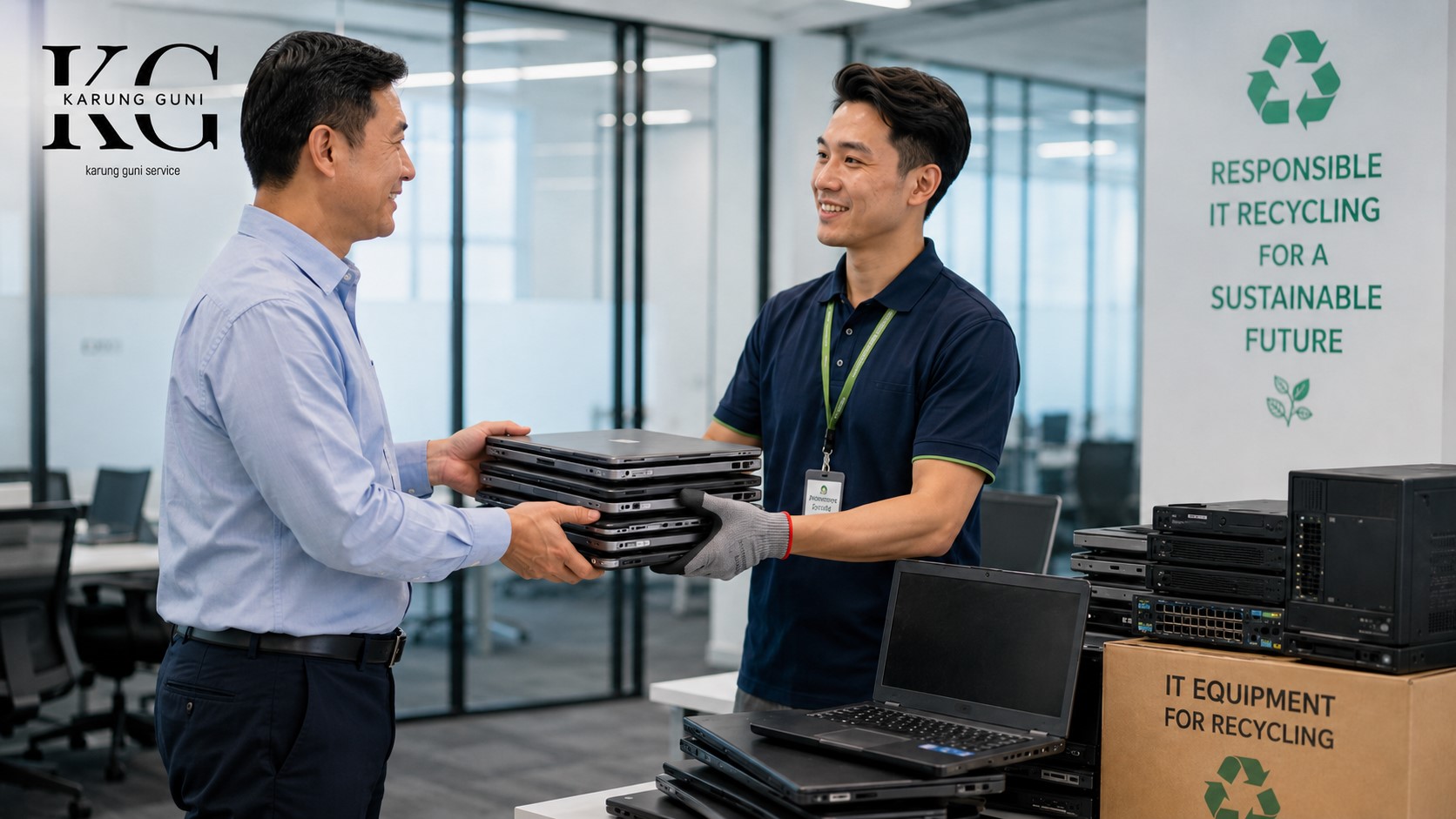
16 Jun Certified Corporate Laptop Recycling Programs Singapore
Retiring old office hardware creates massive legal liabilities. You stack aging machines in a storage closet and wait for procurement to handle it. This hesitation invites data theft and severe regulatory fines from local authorities.
Proper Corporate E-Waste Recycling is a strict risk management mandate. IT Asset Disposition (ITAD) protects your company from crippling financial penalties. After reading this piece, you will know exactly how to legally dispose of corporate devices while hitting your sustainability targets.
Sell at karung guni: https://karung-guni.com/karung-guni-sell/
Why Singapore Enterprises Must Prioritize IT Asset Disposition (ITAD)
IT Asset Disposition (ITAD) is the formal, documented process of securely retiring obsolete business hardware while ensuring compliance with local environmental and data privacy laws. This protocol guarantees hazardous materials are processed safely. Enterprises face massive legal exposure without a documented disposal framework.
Extended Producer Responsibility frameworks place the burden of safe disposal directly on the organization. You must track every piece of hardware from acquisition to final destruction. Understanding local e-waste laws prevents your company from violating these strict mandates.
Handling a fleet of retiring corporate laptops requires absolute precision. A structured disposal process minimizes downtime while maximizing residual value recovery.
The Legal Side of Corporate E-Waste Recycling
An NEA-Licensed Recycler is a specialized vendor officially vetted by the National Environment Agency to legally handle, transport, and process hazardous electronic components for commercial entities. This certification ensures all disposal methods meet strict environmental and health regulations. Working with an unverified vendor constitutes a direct legal violation.
You must verify the credentials of your chosen disposal partner before releasing any hardware. Fulfilling your Extended Producer Responsibility demands absolute transparency in the disposal chain. Confirming NEA licensing requirements shields your business from regulatory audits.
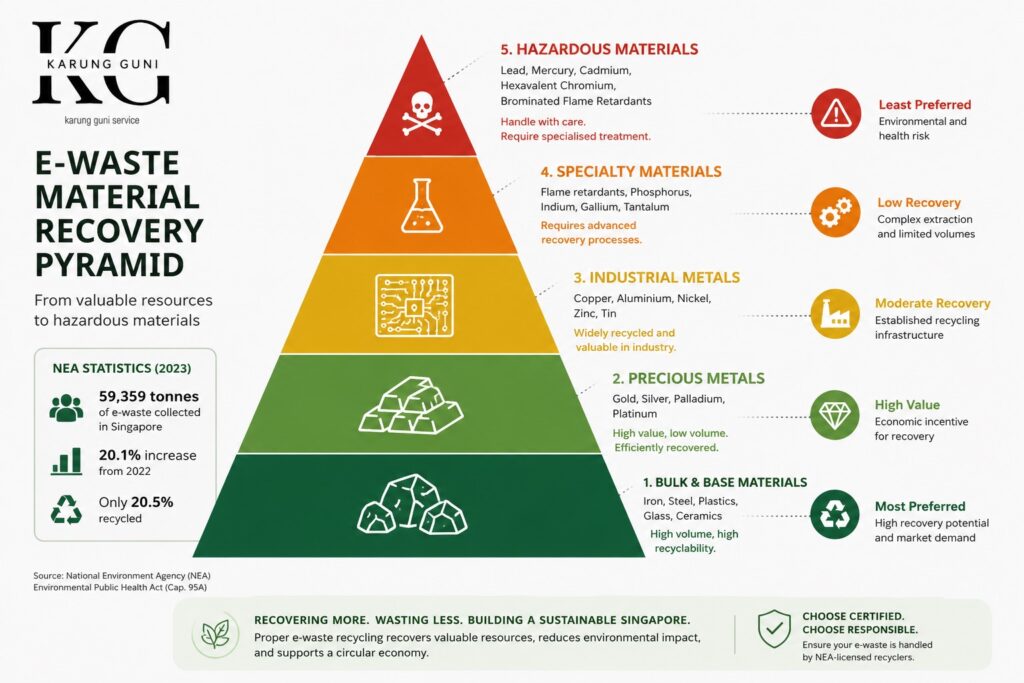
The National Environment Agency (NEA) actively monitors commercial disposal practices to prevent illegal dumping. Corporate electronics contain heavy metals that pollute groundwater when discarded improperly. Secure disposal methods keep these toxins out of local ecosystems.
Secure Data Destruction: Protecting Your Company from Breaches
Safely wiping corporate devices requires specialized software algorithms, magnetic degaussing, or physical shredding to guarantee your data is completely irrecoverable. Standard hard drive formatting leaves sensitive files easily accessible to malicious actors. Certified physical or magnetic destruction is the only acceptable method for enterprise hardware.
Failing to destroy data permanently leads to a catastrophic data breach. The Personal Data Protection Act (PDPA) mandates strict financial penalties for companies that expose client information. You are legally responsible for that data until the drive is physically pulverized.
Implementing Secure Data Destruction protocols is non-negotiable for modern IT departments. You cannot trust generic formatting tools to protect your intellectual property. You must securely wipe corporate devices to eliminate all financial risk.
| Dimension | Factory Reset (Standard) | Certified Data Destruction | What to Do With It |
| Security Level | Low | Absolute | Never rely on standard resets for enterprise hardware. |
| Data Recoverability | High | Zero | Use certified destruction for all retiring business drives. |
| Legal Compliance | Fails PDPA requirements | Meets all privacy standards | Demand physical destruction to ensure legal compliance. |
| Cost Implication | Free | Paid service | Budget for secure destruction during the IT refresh. |
Sell at karung guni: https://karung-guni.com/karung-guni-sell/
The Importance of a Certificate of Destruction
A Certificate of Destruction is a binding legal document proving your hardware was processed and destroyed according to local laws. This paperwork serves as your primary defense during a rigorous compliance audit. You must maintain these records for years after the devices leave your facility.
Implementing strict Secure Data Destruction protocols means nothing without this definitive proof. Auditors will demand a paper trail for every single device your company purchased. Reviewing certified data destruction methods ensures you choose a vendor capable of providing this exact documentation.
The Secure Corporate Laptop Recycling Process
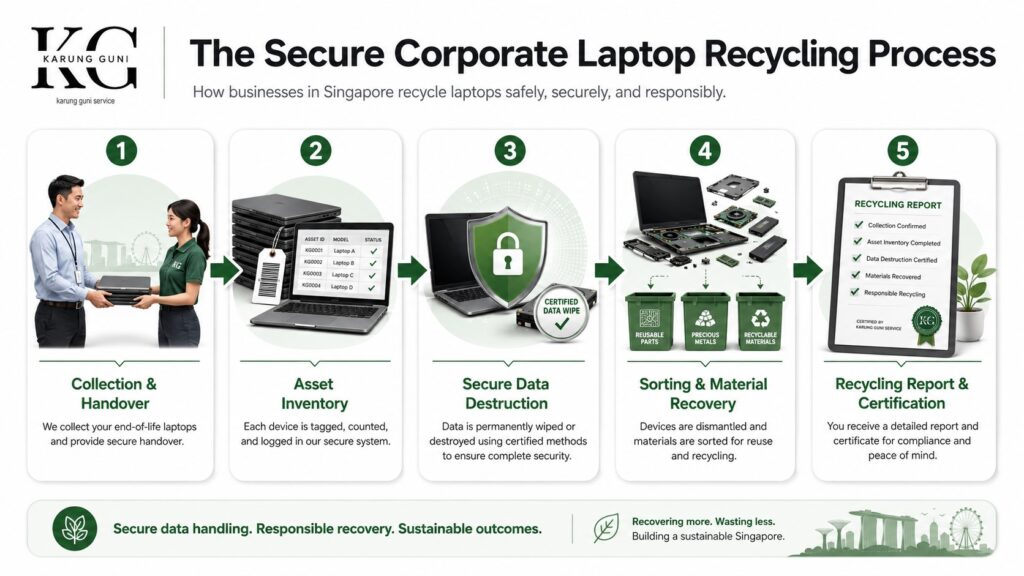
Recycled corporate laptops follow five exact steps:
1. Scheduled pickup,
2. Monitored transport,
3. Certified data destruction,
4. Component dismantling, and
5. Certificate issuance.
This exact sequence guarantees full environmental and legal compliance for your business.
Understanding this progression removes all guesswork from your hardware retirement strategy. Information Technology departments need a predictable workflow to handle large disposal volumes efficiently. Partnering with a trusted provider like Karung Guni Singapore guarantees absolute adherence to this sequence.
Transparency in this pipeline is critical for enterprise security. You need to know precisely where the hardware goes once it leaves your loading dock. Establishing standard operating procedures for managing end-of-life electronics keeps your procurement team organized.
Boosting Your ESG Rating Through Responsible Recycling
Integrating hardware disposal into your sustainability initiatives elevates your corporate reputation immediately. Proper recycling practices contribute directly to a functional circular economy by returning raw materials to the manufacturing supply chain. Investors prioritize companies that demonstrate measurable environmental responsibility.
Green IT strategies involve more than just buying energy-efficient monitors. The physical act of processing old hardware reduces the need for destructive raw material mining. Documenting this environmental impact boosts your formal ESG scores significantly.
You can quantify the specific environmental benefits of your disposal program. Tracking these exact metrics provides tangible data for your annual corporate reports. Analyzing your hardware lifecycle helps in reducing carbon emissions through recycling.
Partner with Karung Guni Singapore for Your Next IT Refresh
Karung Guni Singapore provides enterprise-grade commercial recycling services tailored for modern businesses. We handle the complex logistics of retiring your hardware while guaranteeing total legal compliance. Booking a specialized collection requires only a single phone call.
Choosing an experienced NEA-Licensed Recycler protects your brand reputation and your bottom line. We provide the precise documentation you need to satisfy auditors and investors alike. Trust our experts to execute the ITAD process flawlessly for your entire fleet.
Do not let old hardware become a legal liability. Secure your company data and protect the local environment simultaneously. Schedule your corporate pickup with us today.
Frequently Asked Questions
What is the best way to recycle old company laptops in Singapore?
The most secure method involves hiring an NEA-licensed e-waste collector like Karung Guni Singapore to handle your hardware. These certified professionals guarantee permanent data destruction and strict adherence to environmental regulations during the entire disposal process.
Disposing of enterprise hardware requires a verifiable chain of custody to protect sensitive corporate information. You cannot simply throw old laptops away or sell them to unverified vendors. Licensed collectors maintain secure facilities specifically designed to dismantle electronics safely. They separate valuable metals from hazardous materials like lead and mercury. This structured approach prevents toxic chemicals from entering local landfills. Choosing a certified partner protects your business from data breaches and significant regulatory fines.
How do I make sure data is safe before recycling corporate computers?
You must mandate certified physical or magnetic data destruction to ensure absolute safety. Professional disposal services use heavy industrial shredders or specialized degaussing magnets to physically obliterate the hard drives before any components are recycled.
Standard factory resets do not actually erase data from your corporate drives. Free formatting software simply removes the file pathways, leaving the actual raw data intact and highly vulnerable. Malicious actors use basic recovery tools to extract this hidden information easily. Physical destruction eliminates this threat completely. Your company eliminates all breach anxiety by demanding physical pulverization. This approach guarantees compliance with national privacy laws.
What does NEA-licensed mean for e-waste recycling?
An NEA-licensed recycler has passed rigorous official inspections by the National Environment Agency to manage hazardous electronic waste. This designation proves the vendor uses compliant facilities, safe transport methods, and environmentally sound extraction techniques.
Singapore strictly regulates the disposal of commercial electronics to prevent severe environmental contamination. Obtaining this specific license requires a company to demonstrate exceptional operational standards. The agency audits these vendors regularly to ensure they handle dangerous materials like lithium batteries safely. Hiring an unlicensed collector exposes your enterprise to massive government fines. You must verify this specific credential before authorizing any hardware transfers.
Can my business get a certificate of destruction for recycled electronics?
Yes, a certified e-waste partner issues a formal Certificate of Destruction upon completing the disposal process. This official document lists the serial numbers of destroyed drives and proves your organization adhered to all legal requirements.
This certificate acts as your primary legal shield during corporate audits. Government regulators require documented proof of safe disposal to verify compliance with privacy laws. You keep this paperwork on file to prove you executed your due diligence. Failing to secure this document leaves your company vulnerable to legal scrutiny. Your disposal strategy is incomplete without obtaining this exact verification.
Do companies pay to recycle electronic waste in Singapore?
Disposal costs depend heavily on your total hardware volume and your specific data security requirements. On-site physical hard drive shredding incurs a fee, while bulk collection of generic e-waste sometimes qualifies for free processing.
Many certified recyclers offset their service fees by extracting valuable metals from your old computers. High-volume disposals contain enough copper and gold to cover the transport and processing costs entirely. You must request a specific quote outlining data destruction fees versus material recovery rebates. Investing in certified destruction remains far cheaper than paying the fines associated with a data breach. Proper budgeting ensures safe disposal.
What happens to laptops after they are collected for recycling?
Technicians transport the collected devices to a secure facility and immediately destroy all data storage drives. Workers then manually dismantle the laptops, separating plastics, circuit boards, and batteries for specialized chemical or mechanical processing.
This intensive breakdown process maximizes the recovery of reusable materials. Refineries melt down the extracted circuit boards to recover precious metals for new manufacturing cycles. Specialized chemical plants neutralize the hazardous materials found in the batteries and screens. This complex supply chain requires strict oversight to prevent environmental contamination. Your hardware serves as raw material for the next generation of electronics.
Sell at karung guni: https://karung-guni.com/karung-guni-sell/
No Comments