


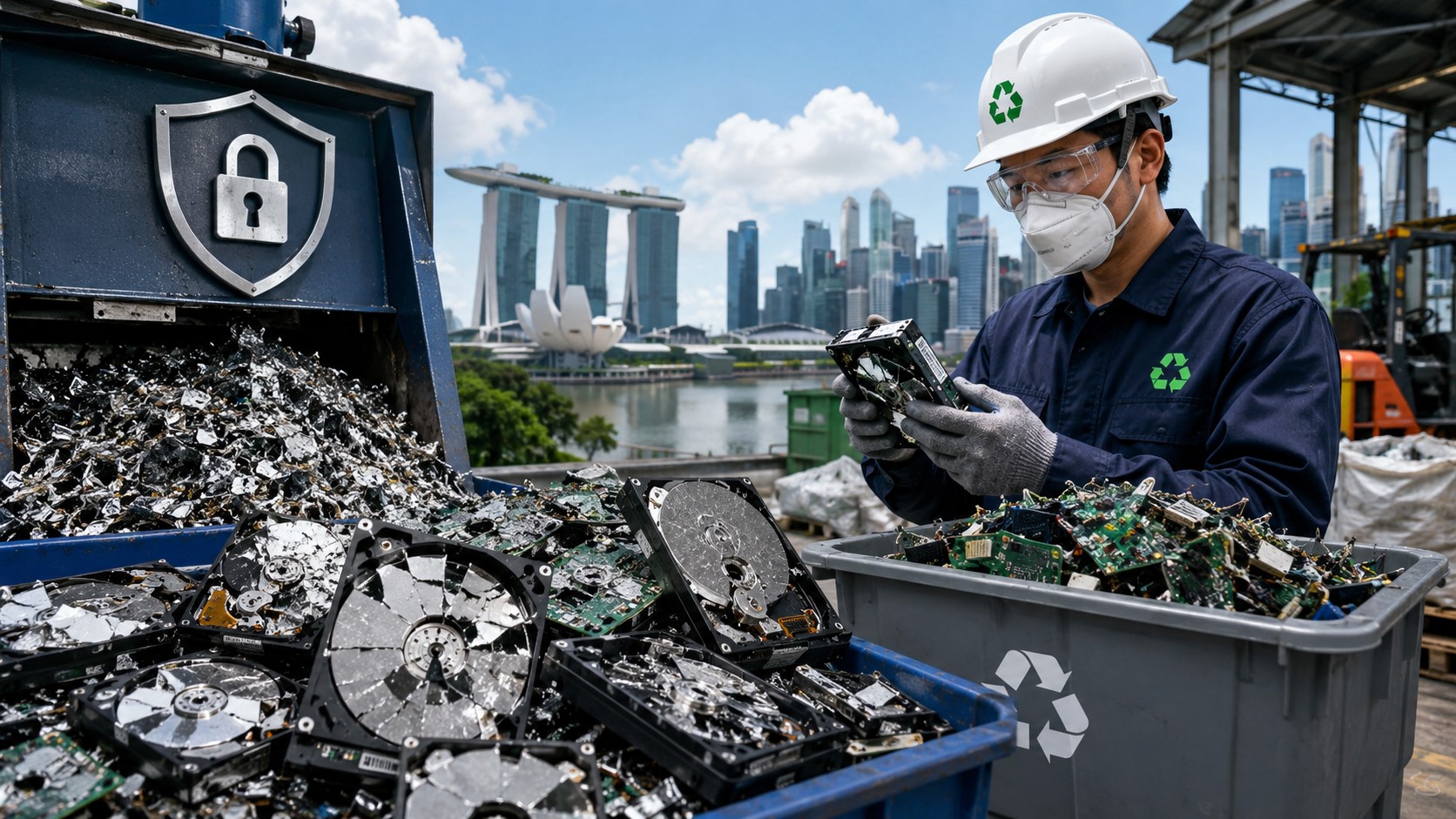
13 Jun Secure Hard Disk Destruction & E-Waste Scrap Singapore
Old laptops and decommissioned servers are stacking up in your office storage room. You think the data is safe because the devices are powered down and locked away. In reality, you are sitting on a regulatory time bomb.
If those drives disappear, your company faces catastrophic data breach risks. The Personal Data Protection Commission (PDPC) hands out massive fines for these exact oversight gaps.
The solution requires moving past basic software wipes. True security requires partnering with Karung Guni Singapore for verified, physical destruction.
Sell at karung guni: https://karung-guni.com/karung-guni-sell/
The Hidden Risks in Your IT Storage: Why PDPA Compliance Demands Physical Destruction
Leaving old hard drives in a closet creates a massive security vulnerability. Rogue employees, office movers, or cleaning staff can easily pocket a drive without anyone noticing for months.
The Personal Data Protection Act (PDPA) requires organizations to protect personal data during disposal. Under recent updates, the PDPC can fine companies up to 10% of their annual turnover in Singapore for data leaks.
A simple file deletion does not remove data from a platter. Software recovery tools easily rebuild files from formatted disks. Physical destruction is the only way to guarantee absolute safety and permanent compliance.
Degaussing vs. Shredding vs. Wiping: How to Choose the Right Data Destruction Method
Different storage media require entirely different disposal strategies. Relying on the wrong method leaves your data completely retrievable.
Degaussing uses powerful magnetic fields to sanitize traditional hard disk drives (HDDs). However, modern solid-state drives (SSDs) do not use magnetic storage. Degaussing leaves flash memory chips perfectly intact.
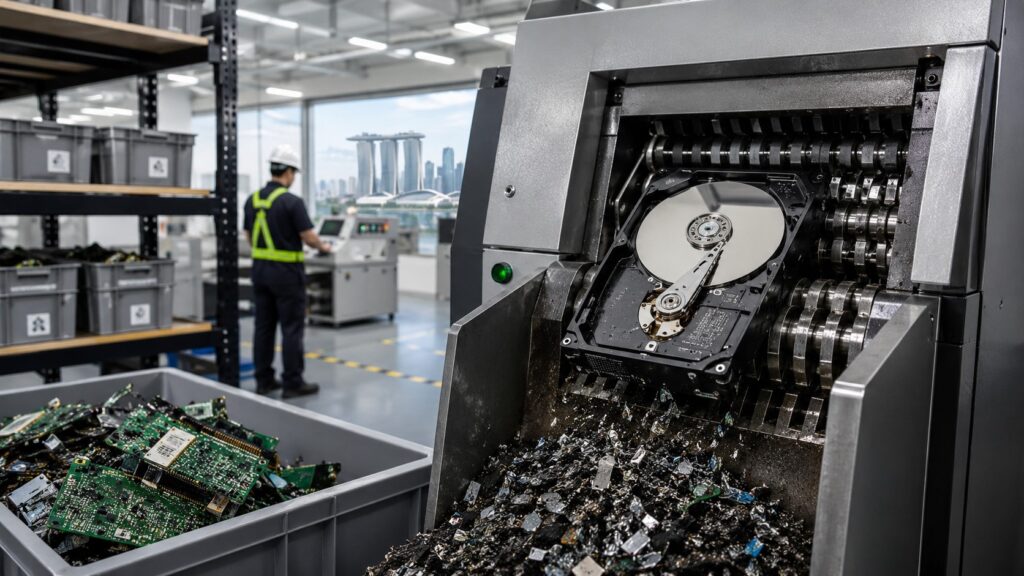
Physical shredding remains the gold standard for all media types. Industrial shredders grind the drives into tiny metal fragments. This complies fully with international NIST 800-88 sanitization standards.
| Destruction Method | Best For | Security Level | Compliance Status |
| Data Wiping | Reusable drives | Moderate | Requires verification |
| Degaussing | Magnetic HDDs & Tapes | High (HDDs only) | Non-compliant for SSDs |
| Physical Shredding | HDDs, SSDs, Flash Media | Absolute | 100% compliant |
The Chain of Custody: How Karung Guni Singapore Guarantees Secure Hard Disk Destruction
Security is entirely about maintaining an unbroken chain of custody. If you lose track of a drive for even five minutes, your audit trail breaks down.
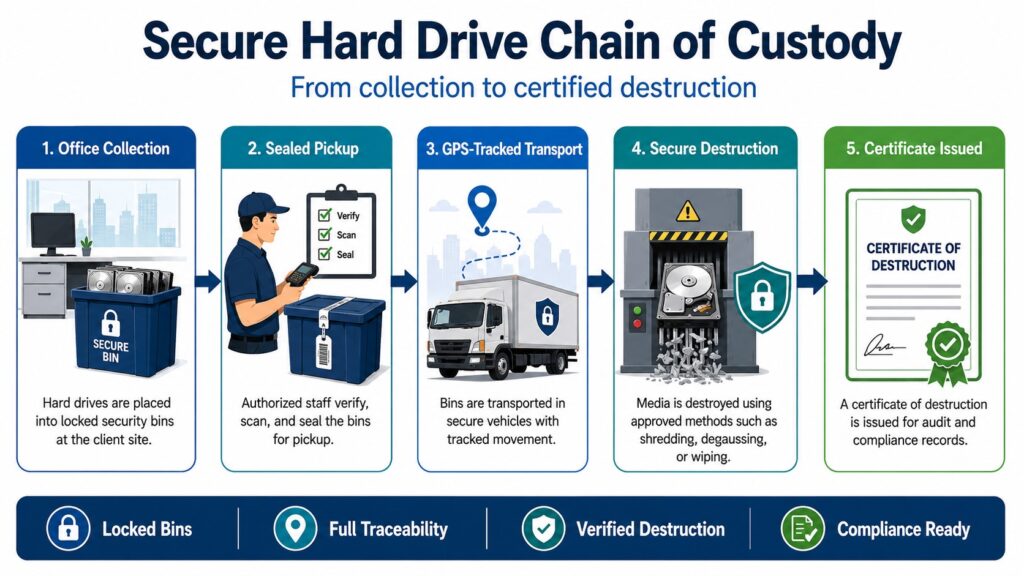
Karung Guni Singapore uses a strict, multi-step protocol to eliminate transit risks:
- Secure collection using locked, tamper-proof bins directly from your premises.
- Secure transport via GPS-tracked vehicles to prevent unauthorized stops.
- Scanning of unique serial numbers at the destruction site to log every asset.
- Physical shredding using industrial-grade destruction machinery.
- Immediate processing of the leftover metal for sustainable recycling.
Sell at karung guni: https://karung-guni.com/karung-guni-sell/
The Proof of Compliance: Why You Must Have a Certificate of Destruction
You cannot just tell an auditor that your hard drives were destroyed. You need legally binding proof to satisfy corporate governance rules.
A Certificate of Destruction Singapore is your primary shield during an IT Asset Disposition (ITAD) audit. It links every shredded drive back to its original serial number.
Karung Guni Singapore issues this official certificate immediately after processing. It proves your company took reasonable steps to protect consumer data. Keep this document in your compliance files to satisfy PDPC investigators if an audit occurs.
Turning Hazards into Circular Assets: E-Waste Scrap Recycling Under NEA Guidelines
Shredded hard drives cannot simply go into standard trash bins. Electronics contain heavy metals like lead and cadmium that poison landfills.
Singapore manages this risk strictly through the National Environment Agency (NEA). Businesses must dispose of regulated e-waste scrap through licensed channels.
Karung Guni Singapore separates the shredded materials after destruction. Aluminum, copper, and plastics are sorted and sent to specialized refining facilities. This keeps your business compliant with local environmental laws while supporting a circular economy.
Frequently Asked Questions
What is the proper way to dispose of a hard drive in Singapore?
The most secure method is physical hard drive shredding by an NEA-licensed vendor like Karung Guni Singapore. This process completely obliterates the data platters. The remaining metal is then recycled responsibly.
Is degaussing effective for SSDs?
No, degaussing is entirely ineffective for solid-state drives. SSDs store data on flash memory chips rather than magnetic platters. You must use physical shredding to destroy them.
What are the PDPA requirements for data disposal?
Organizations must make reasonable security arrangements to prevent unauthorized access or leaks during disposal. Failing to secure data-bearing assets results in severe financial penalties.
What is a Certificate of Destruction?
It is a formal audit document proving your storage media was safely destroyed. The certificate lists destruction dates, methods, and individual serial numbers for your compliance records.
Can I throw e-waste in the normal trash in Singapore?
No, disposing of electronic waste in general trash bins is illegal for businesses. You must use an authorized recycler to meet strict NEA environmental management standards.
Sell at karung guni: https://karung-guni.com/karung-guni-sell/
No Comments