


02 Jul Sell Spoilt Computers in Bulk to Karung Guni: A Singapore Guide
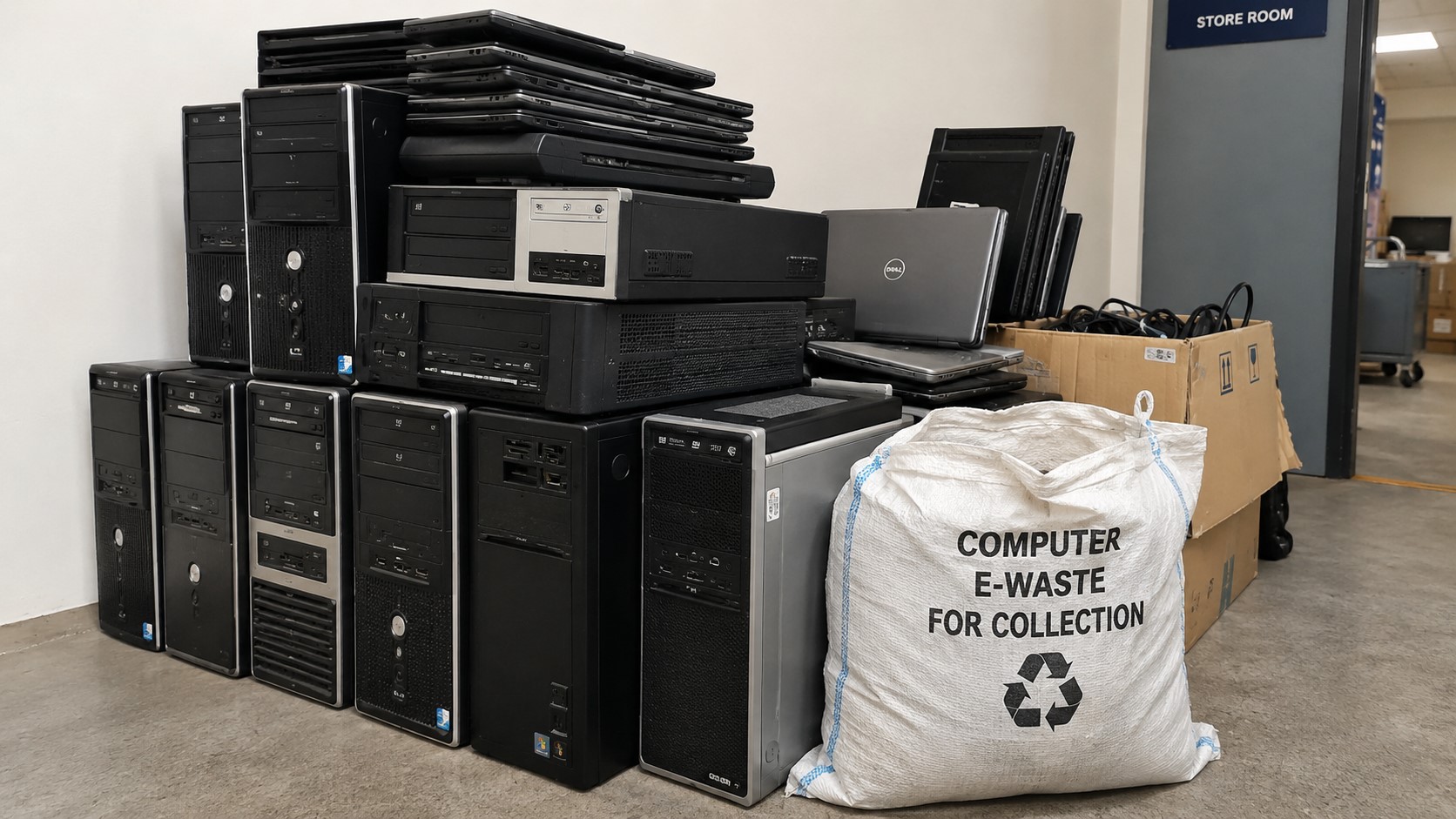
If you’ve got a storeroom full of dead computers, you’re not alone. Most offices in Singapore go through the same cycle: machines get old, IT does a refresh, and suddenly there’s a pile of ten, twenty, or fifty units sitting in a corner nobody wants to deal with. The problem is figuring out what to actually do with them.
Selling spoilt computers in bulk to a karung guni is one of the simplest ways to clear that pile and get something back for it. But if you’ve never done it before, you probably have questions. How does the pricing work? Is it even legal? What about the data still sitting on those hard drives? This guide walks through the whole process, from prepping your machines to picking the right buyer, so you can clear out the clutter without any nasty surprises.
Ready to Sell? 👉 List Your Items Here
What Is a Karung Guni and Why Sell Computers to Them?
A karung guni is a rag-and-bone collector, a fixture of Singapore’s informal recycling scene for decades. Originally known for buying old newspapers, clothes, and household junk, many karung guni operators today also deal in electronics and scrap metal, including computers, laptops, and IT equipment.
For businesses and households with a bulk lot of spoilt computers, a karung guni offers a fast, low-hassle way to offload equipment. You’re not filling out forms for a government recycling scheme or waiting weeks for a formal e-waste contractor. You call, they assess, they pay, they collect. That simplicity is exactly why so many offices and schools turn to karung guni when it’s time to clear out old IT stock.
The tradeoff is that not every karung guni is set up to handle large volumes properly, so it helps to know what you’re looking for before you commit to one.
Is It Legal and Safe to Sell Spoilt Computers in Bulk?
Yes, selling old computers to a licensed collector is legal in Singapore, but there are a few things worth knowing before you do it in bulk.
Singapore’s e-waste management is governed by the National Environment Agency (NEA) under the Extended Producer Responsibility (EPR) scheme, which regulates how electronic waste should be collected and processed. If your business handles a large volume of IT equipment regularly, it’s worth checking NEA’s current guidelines to make sure your disposal method fits within them, especially if you’re a registered company with asset disposal obligations.
The bigger everyday concern for most people isn’t legality. It’s data. Spoilt computers often still have working hard drives, and a machine that won’t boot doesn’t mean the data on it is gone. Before you sell anything in bulk, you need a plan for wiping or removing that data, which we’ll cover shortly.
What Affects the Price of Spoilt Computers Sold in Bulk?
Karung guni typically price computers based on weight and material content rather than brand or original retail value. A dead computer isn’t worth what you paid for it. It’s worth what’s inside it.
A few factors that generally influence the price:
- Weight of the unit. Desktop towers with metal casings usually fetch more than lightweight laptops.
- Metal content. Copper wiring, aluminium heatsinks, and steel casings all add scrap value.
- Condition. Fully dead units are priced differently from machines that still power on but have some fault.
- Quantity. Selling in bulk often gets you a better rate per unit than selling one or two machines at a time, since it’s more worthwhile for the collector to make the trip.
- Completeness. Computers sold with their original components (motherboard, RAM, hard drive) are usually worth more than stripped units.
Components That Add Value
Some parts carry more scrap value than others. Copper wiring and cabling, aluminium components, and circuit boards with retrievable metals tend to be the main drivers of price. Working RAM sticks or hard drives, even from spoilt machines, can sometimes be sold separately if a buyer is willing to test and sort them. Don’t expect a detailed breakdown from every karung guni, but a good one should be able to explain roughly how they’re arriving at a number.
Ready to Sell? 👉 List Your Items Here
Step-by-Step: How to Prepare Computers for Bulk Sale
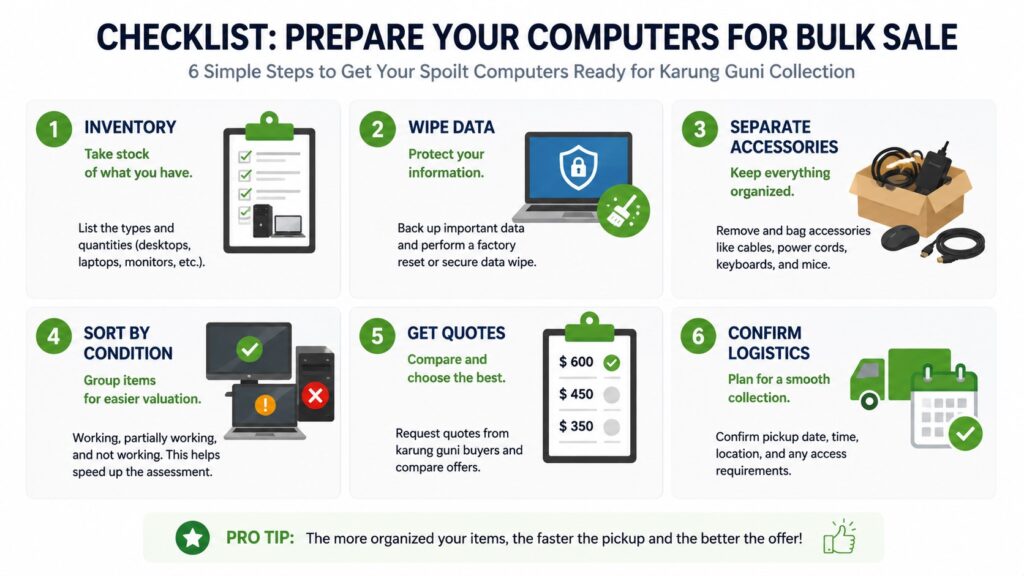
Getting a fair deal and a smooth pickup comes down to preparation. Here’s the process most businesses follow:
- Take inventory. Count how many units you have, note the type (desktop, laptop, monitor, server), and roughly assess condition.
- Wipe or remove data from every drive. This is non-negotiable, especially for business machines that may hold company or customer information.
- Separate accessories. Keyboards, mice, and cables are usually priced or handled differently from the main units. Group them separately so nothing gets lost in the shuffle.
- Sort by condition. Group fully dead machines separately from ones that still partially work. This makes it easier for the collector to quote accurately.
- Get more than one quote. Contact a couple of buyers before agreeing to a pickup, especially for larger lots.
- Confirm pickup logistics. Ask whether the collector handles loading and transport, particularly if you’re dealing with heavy desktop units or a large quantity.
How to Wipe or Destroy Data Before Selling
If the computer still boots, use a proper data-wiping tool that overwrites the drive rather than just deleting files, since deleted files can often be recovered. If the machine won’t boot at all, the safer option is to physically remove the hard drive before handing over the unit, then either wipe it separately using another computer or have it professionally destroyed.
For businesses, it’s worth keeping a simple record of which drives were wiped or removed and when. This isn’t just good practice. It’s useful documentation if anyone ever asks how sensitive company data was handled during disposal.
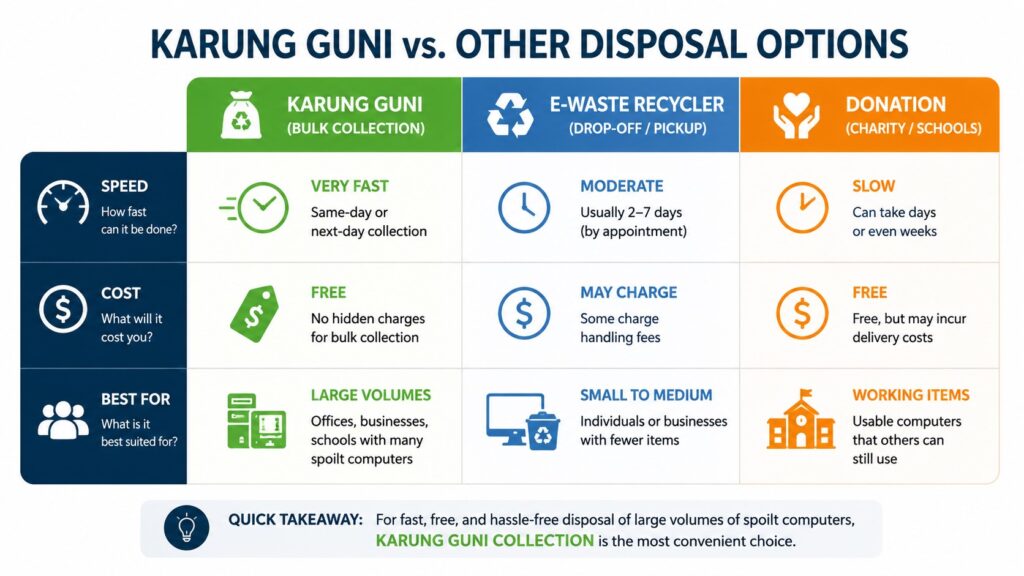
Karung Guni vs. Other Disposal Options
Karung guni isn’t the only route for bulk computer disposal in Singapore. Here’s how the main options compare:
| Option | Speed | Typical Cost | Best For |
|---|---|---|---|
| Karung Guni | Fast, often same-week pickup | You get paid based on scrap value | Bulk lots of clearly spoilt equipment |
| Licensed e-waste recycler (e.g. ALBA) | Moderate, may need scheduling | Usually free, no payout | Businesses prioritising compliance and proper e-waste handling |
| Donation | Slower, requires working units | Free, sometimes tax-deductible | Machines that still function, not spoilt ones |
| Landfill/general disposal | Not recommended | N/A | Should be avoided for electronics in Singapore |
If your main goal is to get some value back for a large batch of dead machines with minimal hassle, karung guni is usually the most practical choice. If your priority is strict regulatory compliance or your equipment contains highly sensitive data you’d rather not risk, a licensed e-waste recycler might be the safer route, even without a payout.
Ready to Sell? 👉 List Your Items Here
Common Mistakes to Avoid When Selling Computers in Bulk
A few mistakes come up again and again with first-time sellers:
- Not wiping data first. This is the most common and most costly mistake, especially for businesses.
- Accepting the first quote without comparing. Prices can vary noticeably between collectors, particularly for large lots.
- Not weighing or counting units beforehand. Going in without a clear count makes it harder to tell if a quote is fair.
- Skipping documentation. Companies disposing of IT assets should keep a basic record of what was sold, to whom, and when, for internal accounting and data governance purposes.
- Assuming all karung guni handle bulk lots the same way. Some are better equipped for large-volume pickups than others, so it’s worth asking about their capacity upfront.
Ready to Sell? 👉 List Your Items Here
How to Get a Fair Quote for Bulk Computer Disposal
The best way to get a fair price is to treat it like any other sale: get more than one opinion, ask questions, and don’t rush into the first offer.
When you reach out to a collector, ask how they calculate their pricing, whether it’s based on weight, unit count, or a mix of both. Ask about pickup arrangements too, since transport for a large batch of desktop towers is a different job than picking up a handful of laptops.
Karung Guni Singapore handles bulk computer collection for offices, schools, and households across Singapore, and can walk you through pricing before you commit to anything. If you’re weighing your options, it’s worth reaching out to request a bulk pickup quote so you know roughly what to expect before your machines leave the building.
Key Takeaways
- Karung guni buy spoilt computers based on weight and material content, not original retail price.
- Wiping or physically removing hard drives is essential before selling any computer, working or not.
- Bulk lots often get better per-unit pricing than single-item sales.
- Comparing a couple of quotes and confirming pickup logistics upfront leads to a smoother, fairer deal.
- Karung guni is best for clearly spoilt equipment; licensed recyclers may suit businesses with stricter compliance needs.
Frequently Asked Questions
Does a karung guni buy computers that don’t turn on at all?
Yes. Karung guni typically buy computers based on their scrap and material value, not whether they still function. A completely dead desktop or laptop can still be sold, since the value usually comes from the metal, wiring, and components inside rather than whether the machine boots up.
How much can I expect to get for computers sold in bulk?
Pricing depends on weight, material content, and quantity, and varies between collectors. There’s no fixed rate across the industry, so the best approach is to get a quote from a couple of buyers and compare. Larger, heavier units generally fetch more than lightweight laptops.
Is it safe to sell a computer with data still on the hard drive?
Not without taking precautions first. Even a spoilt or non-booting computer can have a recoverable hard drive. Always wipe the drive using proper software if the machine still boots, or physically remove the drive if it doesn’t, before handing the unit over to any buyer.
What’s the difference between selling to a karung guni and using a licensed e-waste recycler?
A karung guni typically pays you based on scrap value and offers faster, more flexible pickup. A licensed e-waste recycler like ALBA usually processes equipment for free without a payout, but may offer more formal compliance documentation, which some businesses prefer for internal record-keeping.
Do I need any documentation when disposing of company computers in bulk?
It’s good practice, though not always legally mandatory depending on your company’s policies. Keeping a simple record of what was sold, when, and confirmation that data was wiped protects your business and supports internal data governance, especially if the machines once held customer or employee information.
A Final Word
Clearing out a pile of spoilt computers doesn’t have to be complicated. Wipe your data, sort your machines, get a couple of quotes, and choose a collector who can handle the volume you’re dealing with. For most bulk lots of genuinely spoilt equipment, selling to a karung guni is the fastest way to turn dead stock into cleared floor space and a bit of cash back in your pocket.
If you’ve got a batch ready to go, Karung Guni Singapore can give you a straightforward quote and arrange collection. Get in touch through karung-guni.com to find out what your equipment is worth.
Ready to Sell? 👉 List Your Items Here
No Comments