


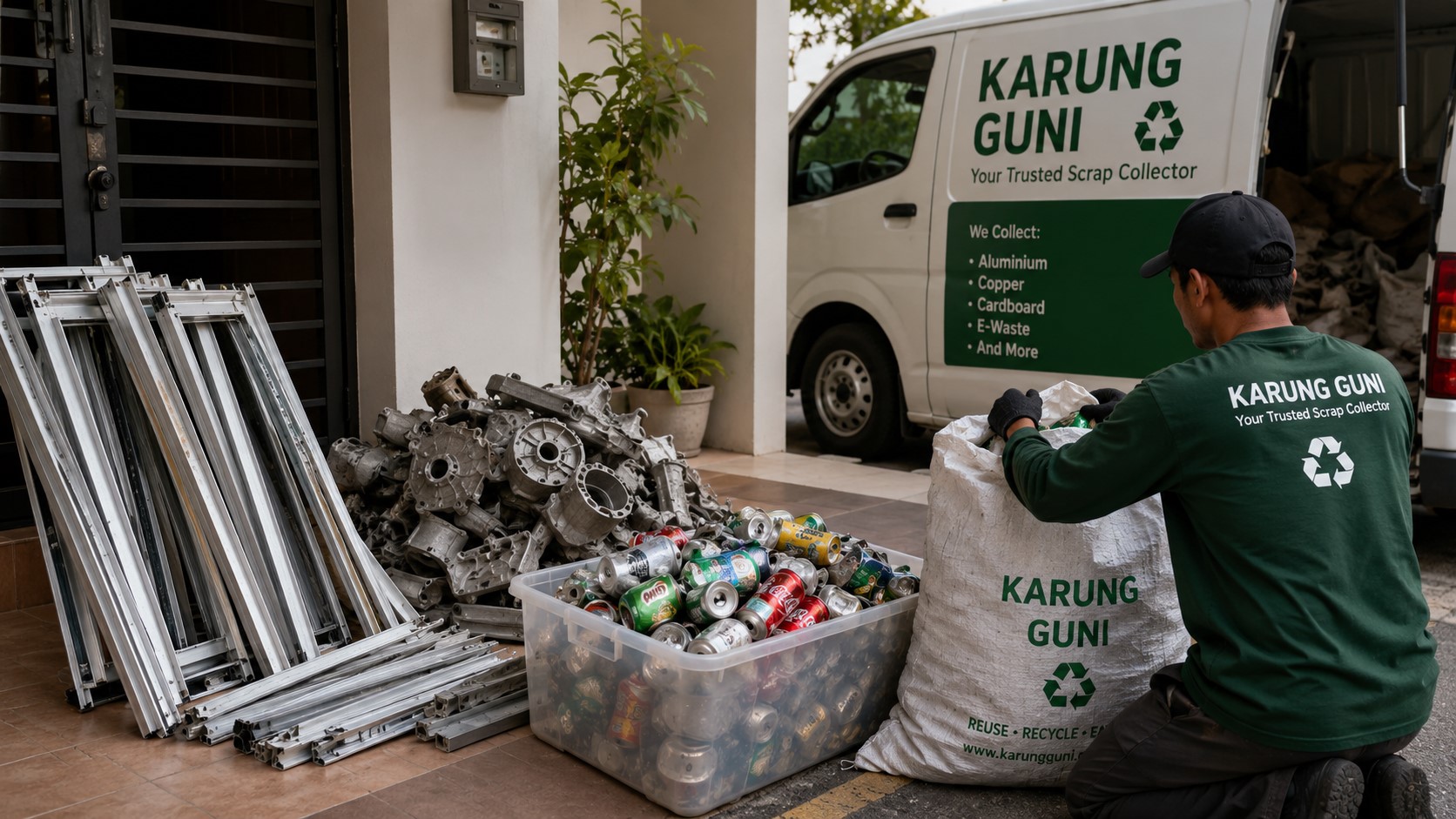
08 Jul Find the Best Aluminium Scrap Buyers in Singapore
If you’ve got aluminium scrap sitting around, whether it’s old window frames from a renovation, a stack of used beverage cans, or car parts from a workshop clearout, the fastest way to turn it into cash is knowing what a good buyer actually looks like. A good aluminium scrap buyer in Singapore should offer transparent on-site weighing, explain how your quote is calculated, pay on the spot, and handle collection without you having to haul anything to a yard yourself. Anything less, and you’re probably leaving money on the table or dealing with someone who isn’t properly set up for this.
This guide walks through what counts as aluminium scrap, how pricing actually works, what separates a legitimate buyer from a lowball operator, and how to prep your scrap so you get the best possible payout.
Sell at Karung-guni: https://karung-guni.com/karung-guni-sell/
What Counts as Aluminium Scrap
Aluminium shows up in more places than most people realise, and not all of it looks the same once it’s scrap.
Common household and renovation sources:
- Window and door frames removed during renovation
- Ladders, gutters, and roofing offcuts
- Old appliance casings (washing machines, air conditioner units)
- Aluminium foil trays and packaging (in bulk, this usually isn’t worth collecting on its own)
- Used beverage cans (UBCs)
Common commercial and industrial sources:
- Construction offcuts from window and cladding installation
- Cast aluminium car parts (rims, engine components)
- Factory or workshop equipment being decommissioned
- F&B kitchen equipment (trays, exhaust hood components)
- Sheet aluminium from signage or display fabrication
If you’re not sure whether something counts as aluminium or a mixed alloy, a simple test is a magnet. Aluminium is not magnetic, so if a magnet sticks to your scrap, you’re likely looking at steel or a steel-aluminium composite, which changes how it should be sorted and priced.
Sell at Karung-guni: https://karung-guni.com/karung-guni-sell/
How Aluminium Scrap Pricing Actually Works
This is the part most scrap buyer websites skip over, and it’s the reason two people with the same pile of scrap can get very different quotes.
Aluminium scrap prices aren’t fixed. They track the London Metal Exchange (LME), which sets the global benchmark price for aluminium and other base metals. That benchmark moves daily based on global supply, demand, and industrial output, which means the price a buyer offers you today can be different from what they offered last month, even for identical scrap. Any buyer who quotes you a flat rate that never changes either isn’t paying attention to the market or isn’t being straight with you.
From that benchmark price, buyers deduct based on a few factors:
Grade and purity. Clean, single-alloy aluminium (like pure extrusion from window frames) is worth more than mixed or contaminated scrap. Cast aluminium, extrusion, sheet, and UBCs are graded separately because they melt and process differently.
Contamination. Paint, plastic trim, rubber seals, screws, and attached steel hardware all lower the value of the load, because the buyer has to either pay to have it processed out or accept a lower resale price from the smelter. A window frame with the rubber gasket still attached is worth less per kilo than the same frame stripped down.
Form factor. Loose, sorted scrap is easier and cheaper for a buyer to process than scrap that’s tangled with other materials or in awkward shapes that are hard to weigh and transport.
Volume. Larger loads sometimes get a marginally better rate, since the buyer’s collection cost is spread across more weight.
None of this means you need to become a metallurgist before your pickup. It just means you should expect a buyer to explain their pricing logic, not just hand you a number with no context.
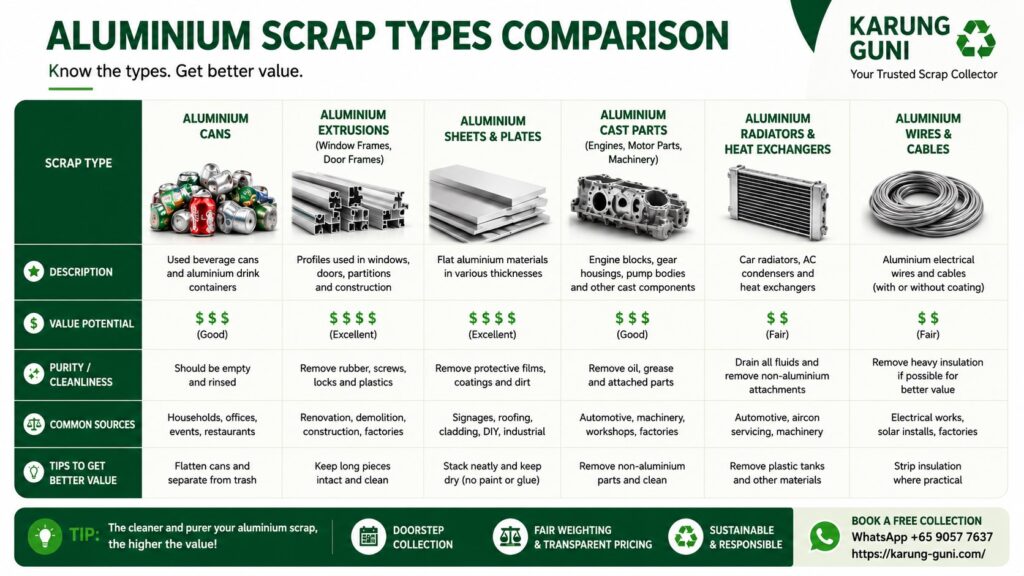
Aluminium Scrap Types at a Glance
| Scrap Type | Common Sources | What Affects Value |
|---|---|---|
| Extrusion (window/door frames, railings) | Renovation offcuts, demolition | Purity, presence of rubber/plastic trim |
| Cast aluminium | Car parts, engine components | Alloy mix, attached steel fasteners |
| Sheet aluminium | Signage, cladding, appliance panels | Coating/paint, thickness |
| UBC (used beverage cans) | Household recycling, F&B outlets | Cleanliness, crushing/compaction |
This table isn’t about giving you an exact dollar figure, since that number moves with the market. It’s about helping you understand why a buyer might quote your window frames differently from your beverage cans, so you’re not comparing two unrelated numbers and assuming someone’s trying to shortchange you.
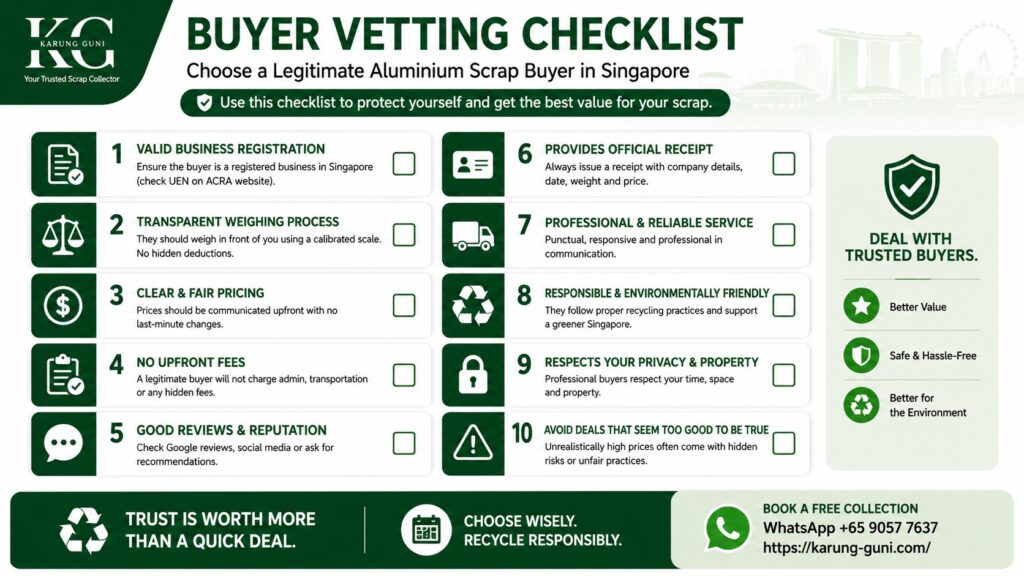
How to Choose a Legitimate Aluminium Scrap Buyer
Singapore has plenty of scrap collectors, but not all of them operate the same way. Here’s what to actually check before you commit.
They should be registered to handle waste collection. Singapore’s waste collection industry falls under the National Environment Agency’s (NEA) regulatory oversight. A legitimate operator should be able to speak clearly about how they handle collection and disposal, not dodge the question.
They weigh on-site, in front of you. You should be able to see the scale and watch your scrap get weighed, not have a number handed to you after the fact with no way to verify it.
They explain the price, not just state it. If you ask why your load is priced a certain way and get a vague answer, that’s a signal to be cautious.
They don’t pressure you to accept on the spot without questions. A collector confident in their pricing won’t mind you asking how the number was reached.
They offer doorstep collection, not just a drop-off address. For anything beyond a small bag of cans, hauling scrap to a yard yourself defeats the purpose of selling it. A proper collector comes to you.
They pay immediately, not “after processing.” Cash or instant payment on collection is standard for this industry. If a buyer wants to pay you later “once it’s weighed at the yard,” you’ve lost your ability to verify the number.
Common Mistakes to Avoid
- Mixing aluminium with steel or copper before collection. This drops the value of the entire mixed lot, since it now needs to be re-sorted before it can be graded properly.
- Assuming every buyer pays the same rate. Rates vary by buyer, by how they resell (direct to a smelter versus through a middleman), and by how they weigh contamination deductions.
- Waiting for a walk-by collector instead of booking ahead. Traditional karung guni collectors still walk through some estates, but for anything beyond a small household clearout, a scheduled pickup gets you a proper weigh-in and a fair quote instead of a rushed doorstep exchange.
- Not asking how the scale is calibrated or verified. You don’t need a technical answer, just a willingness from the buyer to talk about it.
Sell at Karung-guni: https://karung-guni.com/karung-guni-sell/
Preparing Your Aluminium Scrap Before Collection
A bit of prep before your buyer arrives can make a real difference to your payout.
- Separate aluminium from other metals. Keep aluminium window frames away from steel railings or copper wiring. Mixed piles get priced at the lowest common grade.
- Strip off non-metal attachments where you can. Rubber seals, plastic trim, and glass panes should come off if it’s not too much extra work. You don’t need to be perfect about it, but the cleaner it is, the better the quote.
- Rough-sort by type if you have a large load. Separating cast parts from sheet and extrusion helps the buyer grade faster and more accurately.
- Take photos before your pickup. If you’re arranging collection over WhatsApp or a booking form, clear photos help the buyer give you a more accurate estimate before they even arrive.
- Consolidate small items. A pile of loose beverage cans is easier to weigh and quote if it’s been crushed or bagged rather than scattered.
None of this is mandatory. A doorstep collector will still take unsorted, mixed scrap. But if you want the best possible number, a bit of sorting on your end goes a long way.
Why Doorstep Collection Beats a Scrap Yard Drop-Off
For most people in Singapore, especially in HDB flats or condos, hauling aluminium scrap to a yard isn’t realistic. Window frames and ladders don’t fit in a car easily, and getting a large workshop clearout to a yard usually means renting transport, which eats into whatever you’d earn from the sale.
Doorstep collection solves this. Karung Guni Singapore offers free doorstep collection across scrap metal categories, including aluminium, copper, and iron, alongside e-waste and general household junk. You book a pickup, the team weighs on-site, and you get paid on the spot, without needing to transport anything yourself. It’s the same principle as the traditional karung guni trade in Singapore, just coordinated through a booking system instead of waiting for someone to walk past your block.
If you’re clearing a renovation, closing down a workshop, or just have a pile of old appliances and window frames taking up space, that’s exactly the kind of load worth booking a collection for rather than sorting through yourself.
Frequently Asked Questions
Is there a minimum amount of aluminium scrap needed for collection? Most doorstep collectors will still come out for smaller loads, though very small amounts (a handful of cans, for instance) may be more efficient to save up and combine with other scrap. It’s worth asking your collector directly what makes sense for your situation.
Do I need to clean the aluminium before selling it? Not strictly, but removing obvious contamination like rubber seals, plastic trim, and attached steel hardware will usually get you a better quote, since it reduces the processing work on the buyer’s end.
How is aluminium different from other scrap metals in terms of value? Aluminium generally sits in a different price tier from copper (which is typically worth more per kilo) and steel (typically worth less). Its value is also more sensitive to grade and contamination than steel, since aluminium alloys vary more widely in composition.
Can I sell mixed scrap metal, or does it need to be all aluminium? You can sell mixed loads, but expect the price to reflect the lowest-value material in the mix unless you sort it first. If you have both aluminium and other metals, separating them before your pickup will get you a better overall payout. You can also check out how copper wire scrap is priced separately if you’re clearing a mixed electrical or renovation job.
Ready to Sell Your Aluminium Scrap?
If you’ve got aluminium scrap piling up, whether it’s a few window frames or a full workshop clearout, Karung Guni Singapore offers free doorstep collection with on-the-spot payment, no yard visit required. Book a collection or get in touch if you have questions before you list your items.
No Comments