


14 Sep Who Buys Unwanted Electronics in Singapore (And How to Get a Fair Deal)
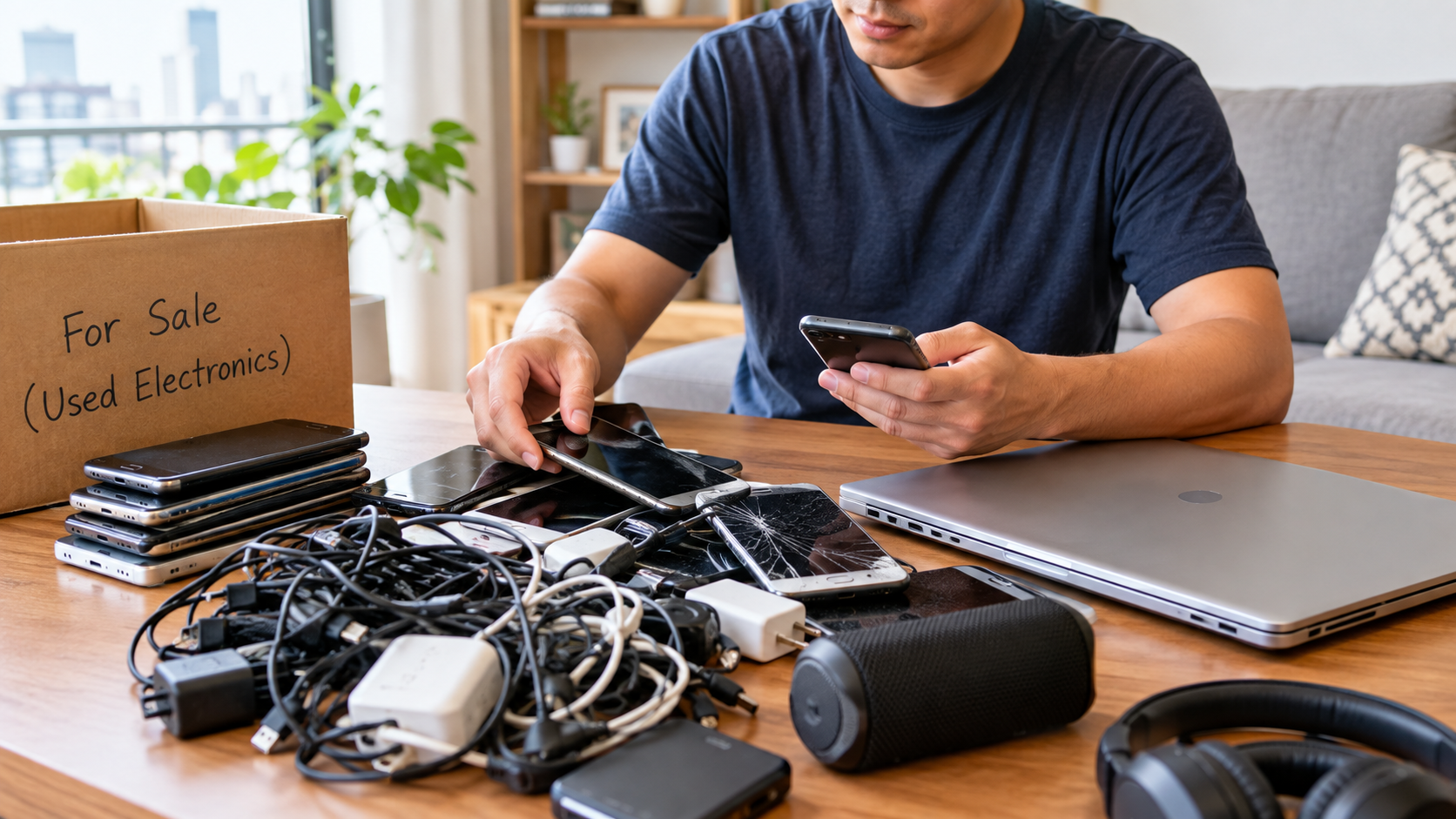
You’ve got a drawer full of old phones, a TV that still works but got replaced, maybe a laptop or two sitting in a cupboard since 2022. It’s not junk, exactly. But it’s not something you’re using either.
Most people in Singapore end up in one of two places with this stuff. They either let it pile up for years, or they carry it down to the void deck and hope the karung guni truck passes by. Neither one gets you real money for what you have.
Here’s what actually works, who buys unwanted electronics in Singapore, and how to avoid getting shortchanged when you sell.
What Counts as “Unwanted Electronics”
This is a wider category than most people think. It’s not just phones and laptops. Buyers in Singapore are interested in:
Working or non-working smartphones and tablets, laptops and desktop computers, TVs and monitors, gaming consoles, audio equipment like amplifiers and speakers, routers and networking gear, small appliances with electronic parts, and even broken items that still have recoverable metal or components inside.
The line that matters isn’t “does it work.” It’s “does it have value once someone takes it apart or refurbishes it.” A cracked phone screen doesn’t stop a buyer from wanting the device. The battery, the board, and the metal casing are all worth something on their own.
Why You Shouldn’t Just Throw It Out
A lot of people default to tossing electronics in the general waste bin because it feels like the easy option. Two problems with that.
First, it’s against Singapore’s e-waste rules. Under the Extended Producer Responsibility scheme run by NEA, electronic waste is supposed to go through proper recycling channels, not general refuse. Improperly disposed e-waste can leak heavy metals and other materials into the environment.
Second, and more practically, you’re leaving money on the table. Old electronics contain copper, aluminium, and other recoverable materials. Buyers pay for that. Bins don’t.
Who Actually Buys This Stuff
There are a few different types of buyers in Singapore, and knowing the difference helps you pick the right one.
Karung guni collectors. The traditional door-to-door or phone-call service. Good for quick pickup of a mixed batch of household electronics, especially if you’re clearing out a flat. Rates are usually based on weight or item type, and payment is on the spot.
Trade-in programs. Phone manufacturers and some electronics retailers run trade-in deals, but these usually only apply if you’re buying something new from them, and the payout comes as store credit rather than cash.
Online marketplaces. Carousell and similar platforms work if the item is in decent working condition and you’re willing to deal with buyer messages, meetups, and the occasional lowball offer. Takes more of your time, but can get a higher price for items that still work well.
Specialist e-waste and scrap buyers. These buyers handle everything from single old TVs to larger household clearances, and they’re set up to take non-working items too, not just stuff that still turns on. This is usually the best option when you have a mix of working and broken electronics, or when you just want it gone without the hassle of listing and negotiating.
How Pricing Actually Works
There’s no fixed price list for used electronics, and anyone who tells you a flat rate over the phone without seeing the item is guessing. A few things genuinely move the price:
Whether it powers on and functions normally. Age and original spec, especially for laptops and phones. Brand, since some hold value better than others. Physical condition, including cracks, water damage, or missing parts. And quantity, since selling five items together usually gets you a better combined rate than selling one at a time.
For anything broken beyond repair, don’t expect it to be worthless. Non-functional electronics still get bought for their metal and component content. The price will just be lower than a working equivalent, and that’s normal, not a sign you’re being cheated.
It also helps to know what drives value on the inside, not just the outside. A phone with a cracked screen but a healthy battery and working charging port still has usable parts. A laptop that won’t boot might just have a dead hard drive, with the screen, RAM, and casing all still fine. Buyers who actually process this stuff, rather than just flipping it whole, look at it in pieces. That’s part of why two buyers can quote you very different numbers for the same item. One might only be interested in reselling it as-is. The other knows what it’s worth broken down.
This is also why it pays to mention brand and rough age even for items you think are worthless. A five-year-old mid-range phone and a five-year-old flagship phone don’t land in the same price bracket, even in similar condition. Same goes for laptops. A basic office laptop and a gaming laptop with a dedicated graphics card are treated very differently, since the graphics card alone can be worth more than the rest of the machine combined.

Where Karung Guni Collectors Fit In
If you grew up in Singapore, you’ve probably heard the karung guni call before, whether it’s a door knock, a phone call to a regular collector, or a truck making its rounds through the neighbourhood. This system still works, especially for straightforward household clearouts.
Where it makes the most sense is when you’re getting rid of a mixed batch of stuff at once. Old newspapers, some clothes, a broken fan, and a couple of old phones, all in one go. The convenience is real. The trade-off is that pricing for electronics specifically tends to be less precise in this setup, since collectors are often working across many categories and pricing by rough weight or type rather than assessing each device closely.
For a handful of electronics on their own, especially anything with real resale or component value like a working laptop or a decent phone, it’s usually worth getting a second opinion from a buyer who specializes in electronics before you settle on a karung guni price.
How to Get a Fair Price
A few habits make a real difference here.
Get more than one quote if you have time. Even two data points tell you if an offer is reasonable. Be upfront about the condition when you first contact a buyer, including any damage, missing chargers, or issues with the item. This avoids a lower offer showing up on the day of pickup. Bundle items together instead of selling one thing at a time. If you have an old computer, a broken monitor, and a stack of cables sitting around, offering them as one lot usually gets you a better total than three separate small deals.
And be wary of buyers who won’t give you any estimate until they’re standing in your home. A rough range based on photos and a description is reasonable to expect before that.
What to Do Before You Sell Any Device
This part gets skipped more often than it should, and it matters.
Back up anything you need from phones, laptops, and tablets. Then do a factory reset. For phones, this also means removing your SIM card and signing out of accounts like iCloud or Google. A device that’s still logged into someone’s account is basically unsellable, and leaving personal data on it is a real risk if it ends up with the wrong buyer.
If you’re selling a laptop or desktop with a hard drive and you’re worried about sensitive data, ask the buyer if they offer secure data wiping. Reputable buyers handling larger volumes usually do.
A Simple Way to Think About Timing
There’s no perfect moment to sell old electronics, but some timing is better than others. Right after you upgrade to a new phone or laptop is usually the best window, since the old device is still relatively current and hasn’t lost another year of value sitting in a drawer.
If you’ve already missed that window by a year or two, don’t let that stop you from selling. It just means the payout will be smaller than it would have been earlier. Waiting further only makes that gap bigger. A phone that’s worth something today because the battery still holds a decent charge might not be worth much in another two years once the battery has degraded further and newer models have pushed it further down the resale ladder.
The same logic applies to anything with moving parts or a battery, like laptops, tablets, and cordless power tools with electronic components. The longer they sit unused, the more likely something inside degrades even without being used.
Common Mistakes People Make
Waiting too long to sell. Electronics lose value every year, sometimes every few months for phones and laptops. That drawer full of old devices is worth less today than it was last year.
Assuming broken means worthless. As covered above, this isn’t true. It just changes the price, not whether someone will buy it.
Selling piece by piece when a bundle would pay more. Separate small transactions cost you time and usually net less overall.
Skipping the data wipe. Beyond the security risk, some buyers will actually offer less for a device that isn’t reset, since it adds work on their end.
Not checking if the buyer handles pickup. If you have several items or something heavy like an old CRT TV or a desktop tower, a buyer who comes to you saves a genuine hassle compared to lugging it somewhere yourself.
When It’s Time for a Bigger Clean-Out
If you’re not just dealing with one or two devices but clearing out a whole flat, a family member’s old electronics collection, or gear left over after a renovation, it’s worth treating it as one job rather than several small sales. A buyer who takes electronics alongside other scrap categories, like old appliances or metal, can often handle the whole load in a single visit.
If you’re clearing out an old fridge or washing machine at the same time, see our guides on old refrigerator disposal and selling a spoilt washing machine for cash. And if the electronics haul is more on the business side, like old office equipment or IT gear, our page on office e-waste collection covers that in more detail.
Get a Quote for Your Electronics
If you’ve got unwanted electronics sitting around, working or not, the fastest way to find out what they’re worth is to send a quick description or a few photos over WhatsApp. You’ll get a straight answer on what you can expect, and if it makes sense, same-day pickup and payment.
Message us on WhatsApp to get a quote for your unwanted electronics today.
No Comments