


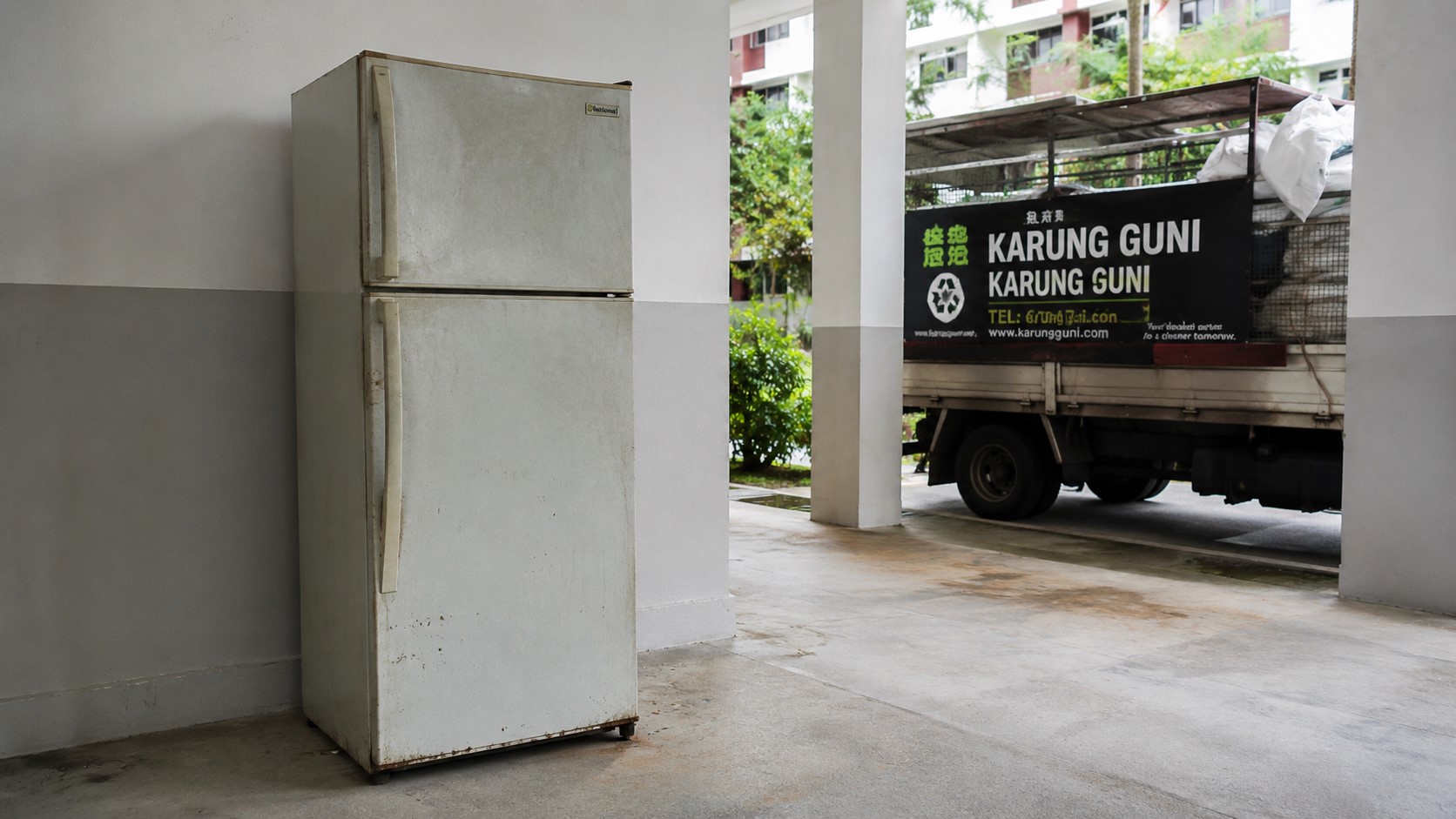
09 Aug Affordable Old Refrigerator Disposal Services in Singapore: What You Need to Know
Getting rid of an old fridge in Singapore is not complicated. But there are a few things worth knowing before you call anyone — like which option actually costs you nothing, and why some collectors will pay you instead of charging you.
This guide covers every real disposal option available, what each one involves, and how to choose the right one for your situation.
Your Options at a Glance
| Disposal Method | Cost to You | Who Can Use It | Best For |
|---|---|---|---|
| HDB Town Council Collection | Free or small fee | HDB residents | Single unit, no rush |
| Retailer Take-Back | Free with new purchase | Anyone buying a new fridge | Upgrading your fridge |
| NEA E-Waste Drop-Off | Free | Anyone | If you can transport it yourself |
| Karung Guni Pickup | Free or paid to you | Anyone | Fast removal, possible cash |
| Illegal Dumping | Heavy fine | — | Not an option |
Option 1: HDB Town Council Bulky Item Collection
If you live in an HDB flat, your town council collects large items including refrigerators. This service is usually free or comes with a small admin fee depending on your town council.
You contact them, book a slot, and leave the fridge at a designated collection point on the agreed day. Simple enough.
The downside is timing. You may wait several days for the next available slot. If you need the fridge cleared quickly — during a renovation, for example — this may not work for you.
One thing to be clear about: do not leave the fridge in the corridor or void deck without booking a collection. That counts as illegal dumping under Singapore law and can result in a fine.
What to do: Contact your town council directly or check their website to book a bulky item collection slot.
Option 2: Retailer Take-Back
Buying a new refrigerator? Most major retailers in Singapore will take your old one away when they deliver the new one. This is usually free or bundled into the delivery fee.
It is the most convenient option if you are upgrading. The logistics are handled for you. Old fridge out, new fridge in, same visit.
This only works if you are actually buying a replacement. If you are just clearing out a fridge with no new purchase, move on to the next option.
What to do: Confirm the take-back policy with the retailer before you buy. Ask whether the fridge needs to be defrosted and emptied before delivery day.
Option 3: NEA E-Waste Collection Points
Singapore’s National Environment Agency (NEA) runs an e-waste collection programme under the Extended Producer Responsibility (EPR) framework. Refrigerators are classified as regulated consumer goods under this scheme.
NEA-appointed collection points are set up at various locations across the island. The catch is that you need to transport the fridge there yourself. For a single household fridge, that usually means hiring a van or getting help — which adds effort and cost.
This option makes more sense for smaller electronics. For a full-size fridge, most people find the town council or karung guni route more practical.
What to do: Check nea.gov.sg for the current list of collection points and confirm your fridge qualifies under the programme.
Option 4: Karung Guni Pickup
This is the option most people overlook — and often the best one.
A karung guni is a licensed scrap collector. They come to you, assess the item, and take it away. Depending on your fridge’s condition and age, they may take it for free or pay you a small amount for it.
The reason is that old refrigerators contain materials with real scrap value.
Why Your Old Fridge Has Scrap Value
Most people see a broken fridge as dead weight. A scrap collector sees recoverable materials.
Here is what is inside a typical refrigerator:
Steel outer casing. Most fridge bodies are cold-rolled steel. There is a lot of it per unit, which adds up in bulk.
Copper compressor motor. The compressor at the back of your fridge contains a copper-wound electric motor. Copper is one of the most valuable scrap metals. This alone makes the compressor worth recovering even if the fridge no longer works.
Copper refrigerant tubing. Thin copper pipes run through the cooling system. These are stripped and recovered separately.
Aluminium evaporator coils. The coils inside the fridge compartment are typically aluminium, which has its own scrap value.
Put it together and a single fridge carries enough recoverable metal that a collector will often take it for free. For a working unit or a newer model from a known brand, they may pay you a small amount on top.
Whether you get paid, get free collection, or pay a small fee depends on the condition, brand, age, and size of the unit. A fridge that stopped cooling last month is worth more than one that has been sitting in a storeroom rusting for five years. Ask before you assume either way.
The Part Most Disposal Guides Skip: Refrigerant Gas
Every refrigerator contains compressed gas — the refrigerant — that makes the cooling system work. Common types include R-134a in older units and R-600a in newer ones.
This gas has to be properly recovered before the fridge is dismantled or crushed. It cannot just be vented into the air. Older refrigerants like R-22 contribute to ozone depletion. Newer ones are still potent greenhouse gases.
Under Singapore’s environmental regulations, proper handling of refrigerant-containing appliances is required. A licensed collector or NEA-appointed handler recovers the refrigerant safely as part of the disposal process.
This is one of the real reasons illegal dumping is a worse idea than it looks. The fine is one thing. But the fridge sitting in a back alley still has compressed gas inside it, and that gas does not disappear safely on its own.
When you use a proper service — whether NEA-appointed or a licensed karung guni collector — refrigerant handling is already part of what they do.
What to Do Before the Collector Arrives
A bit of prep makes the process faster and avoids delays on collection day.
- Defrost completely. Unplug the fridge 24 to 48 hours before pickup. Leave both doors open. Put towels down to catch the water. Some older fridges have significant ice buildup.
- Remove all food. Clear everything out — including condiments and anything in the freezer. The collector is there for the appliance, not your groceries.
- Give the interior a basic clean. It does not need to be spotless, but heavy mould or strong odours can affect the assessment.
- Keep the power cord attached. Do not cut or remove it. Collectors assess the full unit as-is.
- Take a photo of the brand label and serial number. If you are getting a quote over WhatsApp before the visit, a clear photo of the fridge and its label helps the collector give you an accurate answer quickly.
- Check access. Make sure the fridge can be moved out without obstacles. If it is on an upper floor without lift access, or stuck behind other furniture, mention this when booking. It affects logistics and sometimes pricing.
What If You Have More Than One Fridge?
The equation shifts for bulk disposal.
Property agents handling estate clearances, facilities managers at F&B outlets, renovation contractors clearing a fit-out, and landlords with multiple units often have several fridges to dispose of at once. Commercial kitchens may also have chest freezers, display chillers, and catering-grade units on top of standard refrigerators.
A bulk pickup handles all of them in a single visit. That matters when you are on a tight renovation timeline and cannot wait for separate collection windows.
Karung Guni Singapore handles bulk appliance collections alongside other scrap and e-waste. The same team that picks up fridges can clear office e-waste, bulk printers, and spoilt computers and electronics in one go. That cuts down the number of vendors, visits, and coordination headaches on your end.

What Happens to Your Fridge After Pickup
When a licensed collector takes the unit, here is what actually happens:
The refrigerant is recovered first using proper equipment. Then the fridge is broken down. Steel goes to a metal recycler. Copper and aluminium are separated and sent to commodity processors. Plastic components go to the appropriate waste stream.
Done properly, very little goes to landfill. The materials go back into circulation.
That is the practical case for using a proper service over dumping — beyond just the regulatory side of it.
Mistakes That Cost People Time or Money
Leaving the fridge in the corridor without booking a slot. It will not just disappear. Town councils treat unscheduled items as illegal dumping. Book first.
Assuming every fridge is free to remove. It depends on condition. A heavily corroded unit with a seized compressor may not have enough scrap value to cover free collection. A small fee may apply. Ask upfront.
Not defrosting before collection day. Some collectors will reschedule rather than deal with a soaking wet fridge. Defrost in advance.
Removing the compressor yourself before calling. Do not do this. The refrigerant is still inside the compressor. It needs to be handled as a whole unit by someone with the right equipment.
Using an unlicensed collector to save a few dollars. If the person picking up your fridge cannot tell you how they handle the refrigerant, that is a problem. You are still responsible for how your waste is disposed of. Use a licensed service.
How to Get a Quick Answer
If you are not sure whether your fridge qualifies for free collection or whether you will get paid for it, the fastest way to find out is to send a photo over WhatsApp.
Karung Guni Singapore picks up old fridges and appliances across Singapore. WhatsApp them at wa.me/6590577637 with a photo of the fridge, the brand and model if visible, and your location. You will usually get a response the same day.
For larger volumes or commercial clearances, use the contact page to sort out scheduling and logistics.
Quick Recap
- HDB residents: use town council bulky collection — usually free, a few days’ wait
- Buying a new fridge: use retailer take-back — easiest option
- Want it gone fast with no transport hassle: karung guni pickup
- Multiple units or commercial clearance: bulk pickup is the right call
- Always defrost, clean, and photograph the fridge before collection day
- Never remove the compressor yourself — leave the full unit intact
- Never leave a fridge in the corridor without a scheduled pickup
Got an old fridge to move? WhatsApp Karung Guni Singapore with a photo and you’ll know what it’s worth the same day.
No Comments