


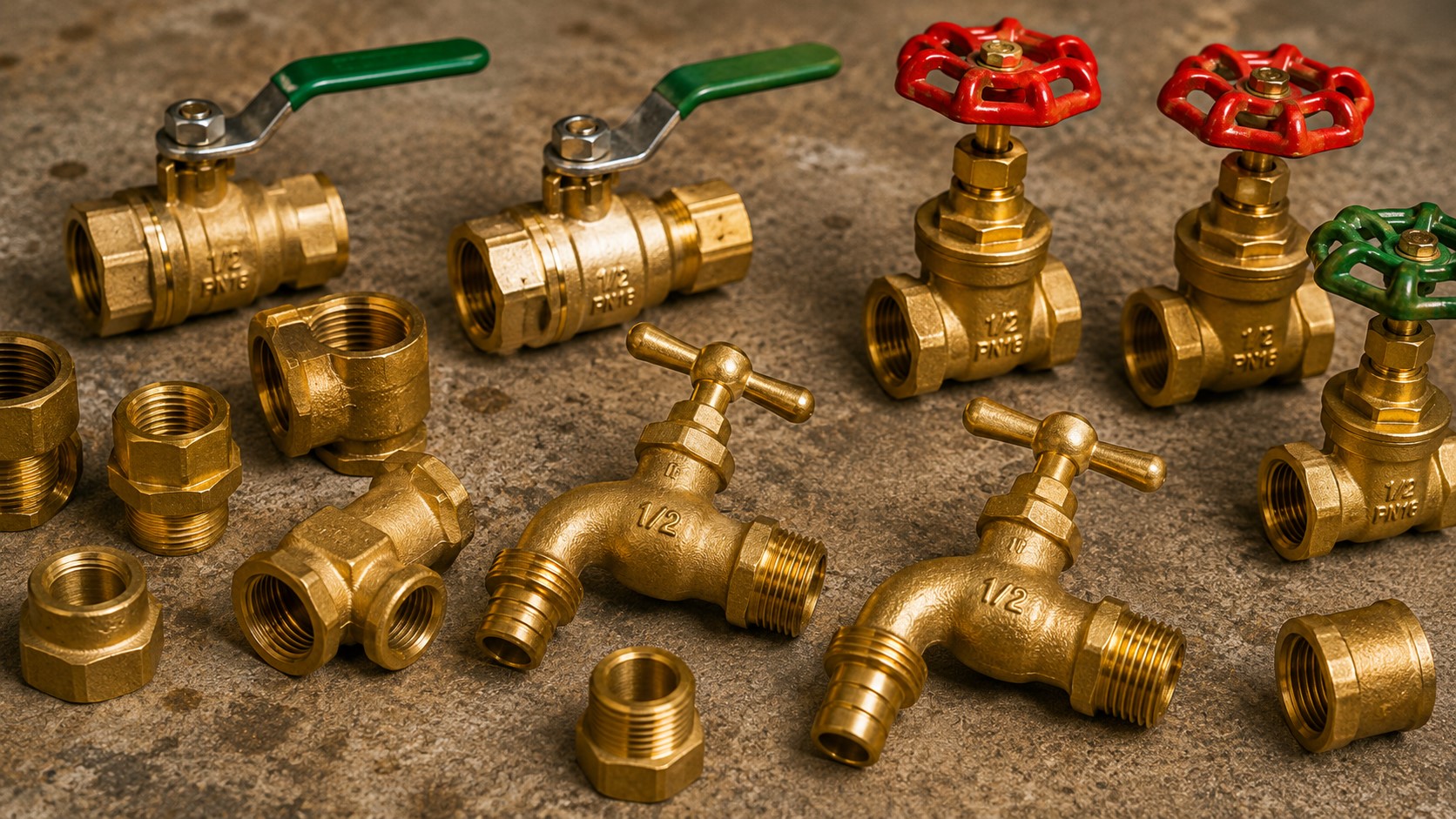
27 Jul Brass Scrap Collection in Singapore: How to Sell It Fast and Get Paid on the Spot
You have brass lying around. Maybe it’s old taps from a bathroom renovation. Maybe it’s a pile of fittings left over from a plumbing job. Or maybe someone cleared out a factory and you ended up with a box of brass valves you have no idea what to do with.
Here’s the short answer: brass has real value, and you don’t need to transport it anywhere. A doorstep collection service will come to you, check what you have, and pay you on the spot.
This guide explains exactly what counts as brass scrap, how to identify it if you’re not sure, what affects the price you’ll get, and how to book a fast collection in Singapore without any hassle.
What Is Brass Scrap?
Brass is a metal made from copper and zinc mixed together. It is usually golden-yellow in colour. You find it everywhere — in plumbing, door hardware, electrical parts, industrial valves, and even old locks.
When brass items are old, broken, or no longer needed, they become brass scrap. Scrap dealers buy brass because it can be melted down and reused. The copper inside it is what gives brass its value.
Brass is a non-ferrous metal, which means it does not contain iron and does not rust. This makes it easy to identify and easy to recycle.
How to Tell If What You Have Is Brass
This is where a lot of people get stuck. You have something metal and you think it might be brass, but you’re not sure.
Here are three simple checks you can do at home:
1. Look at the colour. Brass is golden yellow. It looks similar to gold but duller. Copper is reddish-brown, like a new 10-cent coin. Bronze is darker and more brownish. If the metal is grey or silver, it’s something else entirely — probably steel or aluminium.
2. Try a magnet. Brass is not magnetic. If a fridge magnet sticks to it, it’s not brass. It’s probably steel. This is the fastest and most reliable test. A magnet costs almost nothing and can save you from sorting the wrong pile.
3. Listen to the sound. Tap the item on a hard surface. Brass makes a clean ringing tone. Steel makes a dull thud. This won’t work for every item, but it helps when you’re dealing with rods, pipes, or fittings.
If you’re still not sure after these checks, take a photo and send it to a scrap collector. They can usually tell you right away.
Common Brass Items Found in Singapore Homes and Businesses
Brass shows up in more places than most people realise. Here are the things you’re most likely to come across:
In homes and HDB units:
- Kitchen and bathroom taps
- Door knobs, handles, and hinges
- Old padlocks
- Decorative ornaments and figurines
- Curtain rods and hooks (some are brass-plated)
- Plumbing pipe fittings and connectors
In renovation and construction work:
- Gate fittings and locks
- Water valves and pressure reducers
- Pipe elbows, tees, and couplings
- Ballcocks from old cisterns
- Compression fittings
In industrial and commercial settings:
- Heat exchanger tubes
- Electrical switchgear components
- Terminal blocks
- Pump housings and impellers
- Instrumentation fittings and gauges
- Marine fittings
If you’re doing a renovation, replacing old plumbing, or clearing out a factory, it’s worth checking every fitting before you throw it away. A lot of it may be brass.
The Different Types of Brass Scrap (And Why It Matters)
Not all brass is the same. Scrap dealers classify brass into grades, and the grade affects what price you get.
You don’t need to memorise the technical names. But it helps to know the basics.
Yellow brass is the most common type. It has a golden-yellow colour and is used in taps, fittings, decorative items, and general hardware. Most brass you find at home or in a renovation will be yellow brass.
Red brass has more copper in it than yellow brass. This makes it darker — almost reddish-golden. It’s commonly found in water meters, fire sprinkler fittings, and older plumbing valves. Because it has higher copper content, it’s worth more per kilogram.
Cartridge brass comes from manufacturing. It’s used in ammunition casings, deep-drawn components, and some electrical parts. This grade is very high in copper.
The simple takeaway: the redder and heavier the brass, the more copper it contains, and the more it’s likely to be worth.
Why Brass Prices Change
Brass prices in Singapore are not fixed. They go up and down based on what’s happening globally with copper and zinc prices.
Copper makes up 60 to 70 percent of most brass alloys. So when the copper price rises on international commodity markets — like the London Metal Exchange — brass scrap prices tend to go up too. When copper falls, brass scrap prices follow.
This is why any website showing you a “current rate per kg” is almost always out of date. The only way to get an accurate price is to ask a scrap collector directly with a description or photo of what you have.
A few other things affect the price you get:
Grade and purity. Clean, sorted brass gets a better rate than mixed or contaminated material.
Contamination. Brass with paint, oil, grease, or attached steel parts is worth less. Dealers have to spend time cleaning or sorting it before they can process it.
Quantity. More material usually means a better rate per kilogram. Small quantities are still worth collecting, but larger volumes give you more negotiating room.
Current market conditions. This changes week to week.
How to Prepare Your Brass for Collection
You don’t need to do a lot of work. But a few simple steps can get you a better price.
Remove steel parts where you can. Steel bolts, screws, and brackets attached to brass fittings will reduce the value of your load. If it’s easy and safe to take them off, do it. If it’s not, just let the collector know when you send your photos.
Keep it dry. Wet or damp brass is fine to sell, but dry brass is easier to weigh and assess. If your scrap has been stored outside, let it dry before collection if possible.
Separate from other metals. If you have copper, aluminium, and brass mixed together, try to keep them in separate bags or boxes. Mixed loads get valued at the lowest grade in the pile. A little sorting can make a noticeable difference.
Don’t strip paint off items. You don’t need to. Just disclose it so the collector can factor it in.
Describe what you have. When you contact a collector, describe the items simply. “About 20 old tap bodies and fittings from a bathroom renovation” is more useful than “assorted metal.” The better your description, the more accurate the quote.
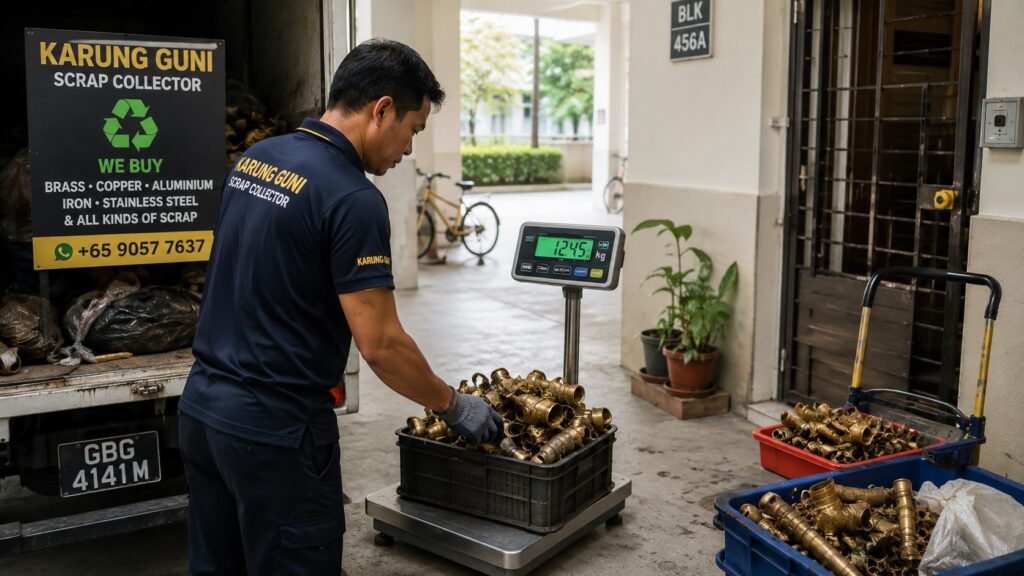
How Doorstep Brass Scrap Collection Works in Singapore
This is the part that surprises most people: you don’t need to go anywhere.
Here’s how the process works with Karung Guni Singapore:
Step 1: Send a WhatsApp message with photos. Take a few photos of your brass scrap. Show the items clearly. Message them at +65 9057 7637. Describe what you have and roughly how much there is.
Step 2: Get a quote. They’ll look at your photos and come back with a price. The site states they typically respond within two hours during business hours.
Step 3: Confirm a collection time. If you’re happy with the quote, you agree on a pickup time that works for you. They come to your home, office, or worksite.
Step 4: Get paid on the spot. When the collector arrives, they weigh the material, confirm the grade, and pay you immediately. No waiting for bank transfers. No invoices.
The whole process is designed so you do as little as possible. That’s especially useful if you have heavy fittings or a large pile of industrial brass that would be difficult to transport.
If you have other types of scrap alongside your brass — like copper cable or old electrical equipment — you can include those in the same collection. Karung Guni Singapore handles scrap metal collection across multiple categories, so you don’t need to arrange separate pickups for different materials.
What You Can Include Alongside Brass Scrap
Brass rarely comes alone. If you’re clearing a renovation site or a storeroom, you’ll probably have other materials too.
Karung Guni Singapore collects a wide range of items beyond brass. This includes:
- Copper wiring and cables — if you have old cabling from a renovation or office refit, that can go in the same collection. Read more about how to sell copper wire scrap in Singapore.
- Old IT equipment — laptops, desktops, servers, and printers. If your office has been clearing hardware alongside electrical fittings, the same collector can take both. See how office e-waste collection works.
- Industrial electrical parts — motors, generators, cables, and switchgear are all collected.
- General scrap metal — iron, aluminium, and mixed metal items.
Combining multiple categories into one collection means fewer trips, less coordination, and less time wasted.
Common Mistakes People Make When Selling Brass Scrap
Throwing it away without checking. This happens more than you’d think. Old taps, valves, and fittings get tossed into a skip during renovations. A quick magnet test takes five seconds and can tell you whether you’re throwing away something worth keeping.
Mixing brass with steel. If you put brass fittings in a bin with steel brackets, bolts, and other ferrous material, the whole load gets valued lower. Keep them separate.
Relying on online price guides. Most price lists you find online are outdated within days. They’re useful for understanding what affects brass prices, but not for knowing what you’ll actually be paid today. Ask the collector directly.
Not describing contamination. If your brass is painted, oily, or has rubber seals attached, say so upfront. Hiding it doesn’t help — the collector will discover it during weighing. Being upfront just makes the whole process smoother.
Waiting until you have “enough.” There’s no strict minimum for doorstep collection. If you have a reasonable amount — even just from one bathroom renovation — it’s worth sending a WhatsApp photo and asking. The worst that happens is you get a quote and decide it’s not worth it yet.
Who Usually Sells Brass Scrap in Singapore?
Renovation contractors and plumbers are the biggest source. Every time old plumbing gets ripped out and replaced, there’s brass in those fittings. Most experienced contractors already know to set it aside.
Facilities managers at commercial buildings, hotels, and schools often accumulate brass fittings over time — from maintenance work, pipe replacements, and building upgrades. A single building can generate a substantial amount over a year.
Factories and workshops using brass in manufacturing or machining end up with turnings, offcuts, and rejected parts. This material is usually very clean and gets good rates.
Homeowners doing HDB or condo renovations are a growing category. Many people don’t realise the taps, door handles, and plumbing parts being torn out have resale value until someone tells them.
If you fall into any of these groups, it’s worth knowing that Karung Guni Singapore collects from all of them — homes, offices, worksites, and commercial premises.
Quick Checklist Before You Book a Collection
Before you send your WhatsApp message, run through this:
- I’ve done a magnet test — the metal is not magnetic, so it’s likely brass
- I have some idea of the quantity (even a rough estimate helps)
- I’ve separated brass from steel and aluminium where possible
- I know roughly what the items are (taps, valves, fittings, etc.)
- I can take a few clear photos to send
- The material is reasonably dry and accessible for pickup
That’s it. You don’t need to have everything perfectly sorted. A photo and a description is enough to get started.
How to Book Brass Scrap Collection in Singapore
To arrange a collection, contact Karung Guni Singapore directly:
WhatsApp: +65 9057 7637
Take two or three photos of your brass scrap, send them over, and include a brief description of what you have. You’ll get a quote back within a few hours during business hours.
You can also submit your items online through the form on the website. Upload photos, describe the material, and they’ll get back to you with a quote and arrange a collection time that suits you.
There’s no transport needed. No dropping off. They come to you, weigh the material, and pay you on the spot.
If you have questions before booking, use the contact page to reach the team.
No Comments