


29 Jul How Factory Metal Scrap Yard Services Work in Singapore (And How to Choose the Right One)
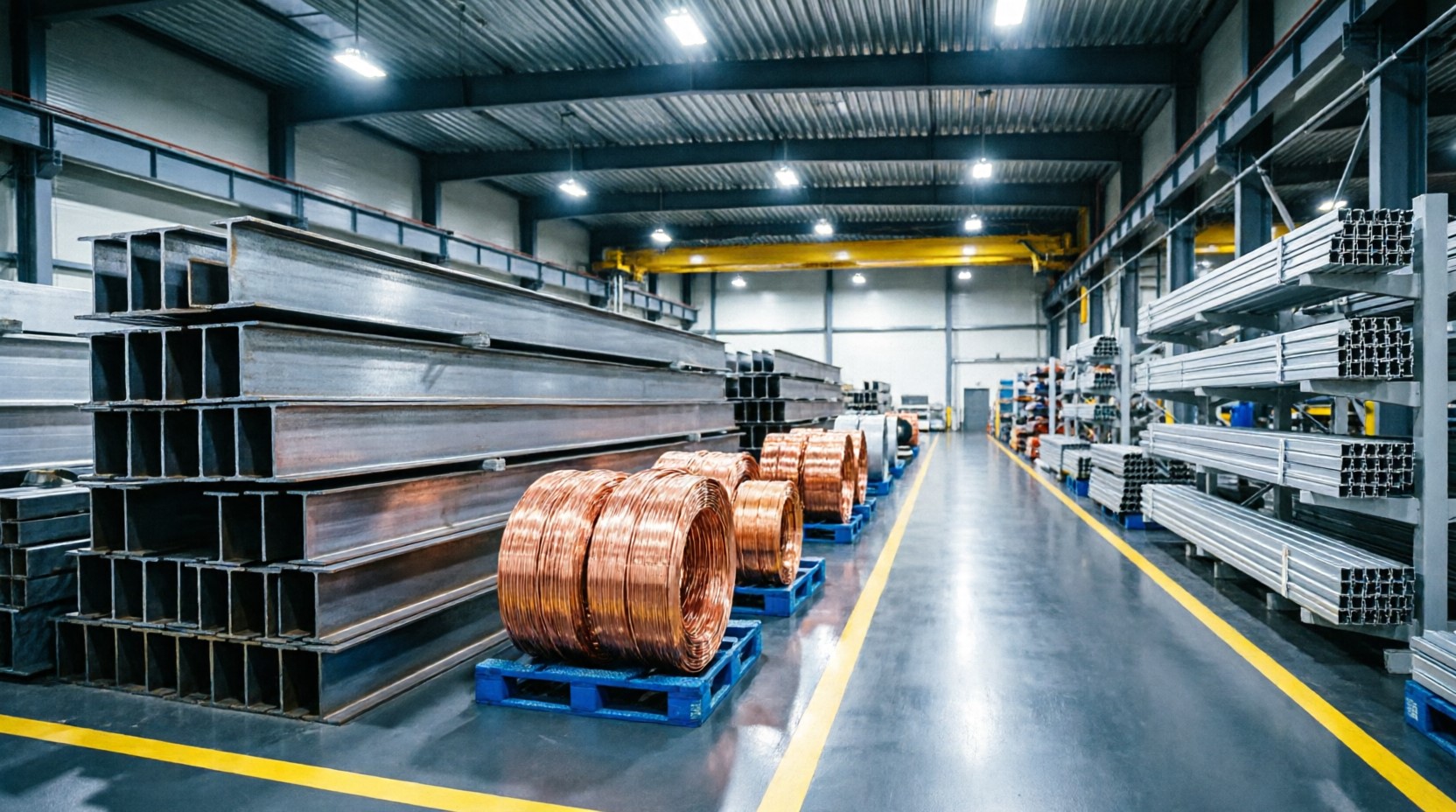
If your factory or workshop has been piling up scrap metal, you already know the problem. Space gets eaten up fast. Stacked steel, leftover copper pipe, old aluminum frames — it adds up before you notice. And at some point, someone has to deal with it.
The good news: that scrap has real value. The question is just how to collect it safely, legally, and with as little hassle as possible.
This guide explains exactly how certified factory metal scrap yard services work in Singapore — what they collect, what the process looks like, what compliance means here, and how to make sure you are working with a proper operator.
What Is a Factory Metal Scrap Yard Service?
A factory metal scrap yard service is a licensed collection and recycling operation that comes to your industrial site, collects your scrap metal, weighs it, and pays you based on what you have. They handle transport, sorting, and recycling — you do not need to deliver anything yourself.
These services are different from a general waste disposal company. Waste disposal removes rubbish. A scrap yard service buys materials. The metal has commodity value, and a legitimate operator reflects that in the price they offer.
In Singapore, scrap metal dealers operate under the regulatory framework of the National Environment Agency (NEA). Businesses that want to collect, trade, or process scrap metal must hold the right licences to operate legally. This matters to your factory too — using an unlicensed operator can expose your business to compliance problems.
What Metals Do Factories Usually Have?
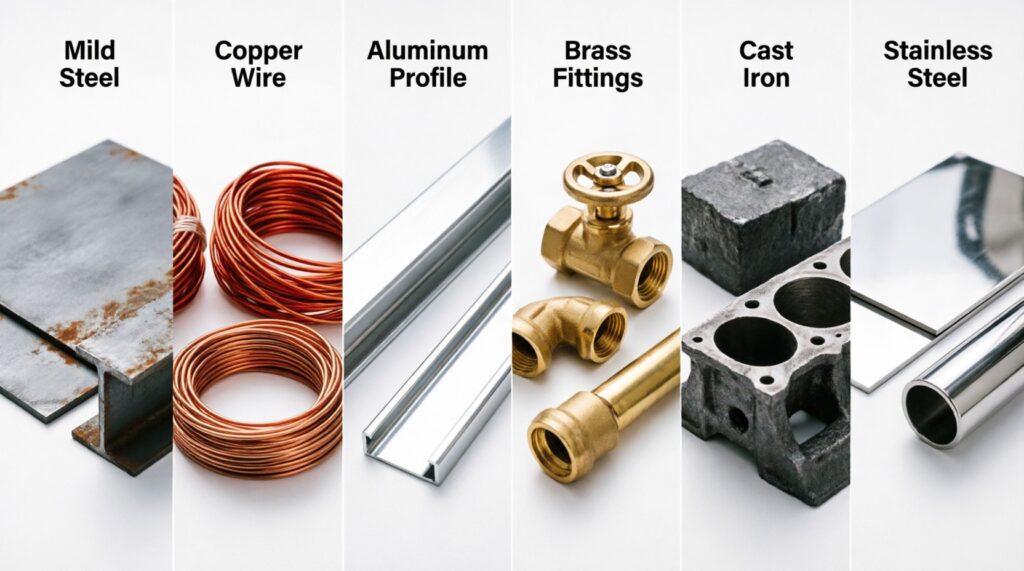
Most industrial and manufacturing sites accumulate a mix of metals over time. Knowing what you have helps you prepare before the collector arrives.
Here is a quick breakdown of the most common types found in factory settings:
| Metal Type | Common Factory Sources | Recycling Value Tier |
|---|---|---|
| Mild steel / structural steel | Beams, brackets, offcuts, shelving, machinery frames | Medium |
| Stainless steel | Food processing equipment, lab fittings, exhaust ducting | Medium-High |
| Copper | Electrical wiring, motor windings, plumbing pipe | High |
| Brass | Valves, fittings, connectors | High |
| Aluminum | Profiles, ladders, casings, heat sinks | Medium-High |
| Cast iron | Old machine beds, pipe fittings, grates | Low-Medium |
| Lead | Old cable sheathing, radiation shielding (requires special handling) | Medium |
A few things to note. Mixed metals — for example, copper wire still wrapped in rubber insulation — are worth less than clean, separated copper. The more sorted your scrap is before collection, the better the payout tends to be. Collectors will often sort on-site, but they factor that labour into their offer.
Also, lead requires special handling. If you have lead-bearing materials, mention this upfront when contacting the collector.
What Does “Certified” Actually Mean in Singapore?
The word “certified” gets used loosely in this industry. Here is what it actually means in the Singapore context.
Singapore’s waste management sector is regulated by the NEA under the Environmental Public Health Act and related legislation. Scrap metal dealers who collect, trade, or process regulated materials are expected to comply with NEA requirements. The Resource Sustainability Act, which came into force in stages from 2019, added further structure to how industrial and commercial waste — including metals — must be managed.
When people say “certified scrap yard service,” they generally mean a dealer who:
- Operates as a registered business entity in Singapore
- Complies with NEA requirements for waste collection and recycling
- Can provide documentation after collection (receipts, weight tickets, or collection records)
- Handles regulated materials correctly, including proper disposal of hazardous components
What it does not automatically mean: ISO certification, government endorsement, or a specific award. Be cautious with operators who cannot explain what licences they hold or refuse to provide any paperwork after a job.
The practical test: Ask the operator whether they are registered with ACRA, whether they comply with NEA requirements, and whether they can provide a receipt or collection record. A legitimate operator will answer all three without hesitation.
The Risks of Using an Unlicensed Operator
Some factories go with whoever offers the highest spot price, without checking credentials. That can be a costly shortcut.
Here is what can go wrong:
Illegal dumping liability. If a scrap collector improperly disposes of your metal — or mixes it with other waste and dumps it — your factory could be questioned as the originating source. You want a paper trail that shows what left your site and who collected it.
No recourse on disputes. If a collector underpays, disputes the weight, or simply disappears after a partial collection, you have no formal record to rely on.
Penalties for improper disposal of regulated materials. Certain metals and components — like lead, or metals from electrical equipment — fall under specific disposal rules. If those materials end up in unregulated channels, the consequences can reach back to the business that handed them over.
Working with a legitimate operator is not just about compliance for its own sake. It protects your business.
How the Collection Process Works
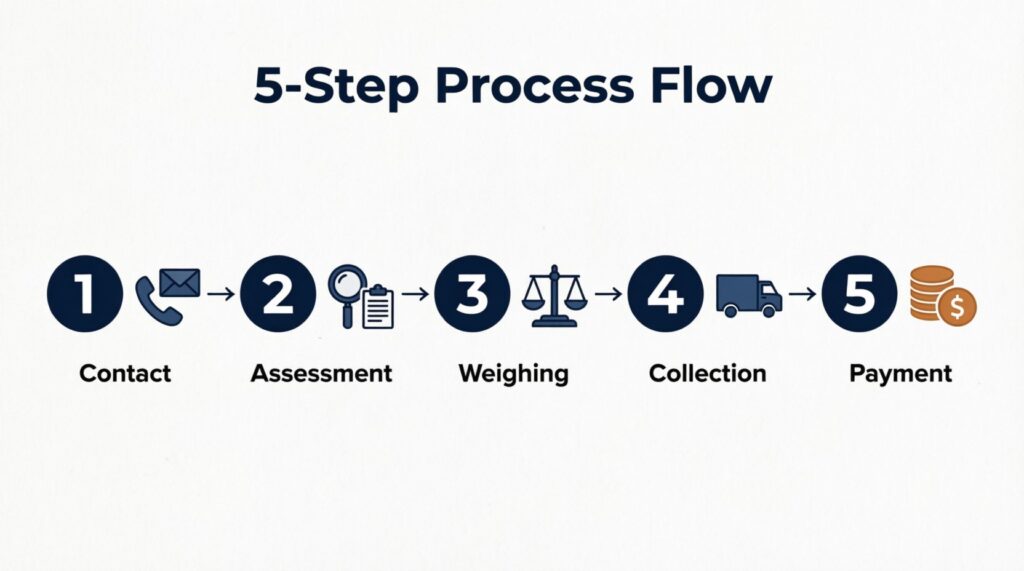
For most factory-scale collections, the process goes like this:
Step 1: Initial contact and assessment
You contact the scrap yard service — usually by WhatsApp, phone, or an online form. Share photos and a rough description of what you have (metal types, approximate volume or weight, site access details). A good operator will give you a preliminary quote based on this.
Step 2: Site visit and weighing
The collector arrives at your factory with a vehicle suited to the volume. They inspect the scrap, weigh it (either on-site with a portable scale or at a certified weighbridge), and confirm the final price before anything moves.
Step 3: Loading and transport
The team loads the scrap. For large factory clearances, this may involve multiple trips or a skip placement.
Step 4: Payment and documentation
Payment is typically made on the day of collection, in cash or via transfer. You should receive a receipt confirming the weight, the materials collected, and the amount paid. Keep this for your records.
Step 5: Processing and recycling
The scrap goes to the processing facility, where it is sorted further, shredded, baled, or prepared for downstream recycling. In Singapore’s context, this often means materials eventually reach regional smelters and refiners.
How to Prepare Your Factory Scrap Before Collection
A little preparation makes a big difference — both to the process on the day and to the price you get.
Segregate your metals. Keep copper separate from steel. Keep aluminum separate from cast iron. Mixed loads get valued at the lowest component, which means you lose money on the higher-value materials.
Remove non-metal attachments where practical. Rubber hoses attached to copper pipe, plastic brackets on aluminum profiles, and wooden pallets mixed in with steel frames all reduce the value of your load. Strip what you can.
Identify any hazardous components. If any machinery contains asbestos insulation, PCB-containing equipment, or lead components, flag these before the collector arrives. Do not mix them in with general scrap.
Estimate your volume. You do not need precision, but a rough sense of tonnage helps the collector send the right vehicle and crew. A full lorry of steel plate is very different from a few pallets of copper coil.
Clear access to the collection point. Make sure the collector can get a truck to where the scrap is. If the scrap is on an upper floor or in a restricted area, sort out access in advance.
Factory Scrap Prep Checklist
- Metals sorted by type (steel, copper, aluminum, etc.)
- Non-metal materials removed where possible
- Hazardous components identified and flagged
- Rough weight or volume estimated
- Site access confirmed for collection vehicle
- Contact person available on the day of collection
- Documentation requirement communicated to the collector
Questions to Ask Any Scrap Yard Operator Before Booking
Not all operators are equal. Before you confirm a collection, ask these:
- Are you a registered business in Singapore? (Ask for the UEN if you want to verify.)
- Do you comply with NEA requirements for scrap metal collection?
- Can you provide a receipt or collection record after the job?
- How do you determine the weight — on-site scale or certified weighbridge?
- Do you handle hazardous components separately, or do you mix them with general scrap?
- What is your process for metals like lead or electrical components?
- How soon can you schedule the collection, and what vehicle size will you send?
If an operator cannot answer questions 1 through 4 clearly, that is a red flag. Price is not the only thing that matters.
Common Mistakes Factory Managers Make
Mixing all metals together. This almost always reduces the payout. A bucket of copper wire buried in a steel pile gets weighed as mixed scrap, not copper.
Waiting until the scrap pile becomes a safety issue. Many factories let metal accumulate until it is blocking walkways or becoming a fire risk. Scheduling regular clearances — even twice a year — prevents this.
Choosing solely on price. An operator offering 20% more than everyone else for the same material is worth questioning. Commodity prices are not that different between legitimate operators. Very high quotes sometimes reflect inaccurate weighing practices that get “corrected” on the day.
Not keeping records. Even for a routine scrap sale, keep the receipt. If your company is ever audited for environmental compliance, having records of how industrial waste left your site is useful.
Ignoring regulated materials. Electrical equipment, fluorescent tubes, batteries, and components containing hazardous substances are not regular scrap. They need separate handling. If your factory’s metal scrap also includes these items, confirm with the collector how they handle them.
If you also have IT equipment mixed in with your factory clearance — old servers, network switches, computer casings — those need careful handling too. Read about how to dispose of used enterprise servers in Singapore or proper server rack disposal for guidance on that side of things.
Steel vs. Copper vs. Aluminum: What to Know About Value
Without quoting specific prices (which change daily with global commodity markets), here is how the three main factory metals compare in practical terms:
Steel is the most common factory scrap metal and the heaviest. It is worth less per kilogram than copper or aluminum, but factories typically have it in large volumes. Structural steel, machinery frames, and sheet metal offcuts all qualify.
Copper is among the highest-value scrap metals. Even a modest amount of clean copper — from old wiring, motors, or plumbing — is worth collecting carefully. Keep it clean and separated for the best return.
Aluminum sits between the two. It is lighter, so volumes can be deceiving — a big pile of aluminum extrusions may weigh less than you expect. But per kilogram, it pays better than steel.
One practical note: scrap prices fluctuate with global commodity markets, particularly the London Metal Exchange (LME). Any operator who quotes you a price weeks in advance and cannot explain what it is based on should be questioned. Legitimate operators price based on current market rates.
Factory Scrap and Singapore’s Environmental Goals
Singapore takes industrial waste seriously. The Resource Sustainability Act introduced mandatory requirements for large industrial and commercial generators to manage their waste responsibly. While the specific thresholds and obligations depend on your operation type, the direction of regulation is clear: factories are expected to reduce waste going to incineration and Semakau Landfill, and to channel recyclable materials into proper recycling streams.
Scrap metal recycling fits squarely into this. Metal is one of the most recyclable materials in existence. Steel can be recycled indefinitely without losing structural quality. Copper from factory scrap goes back into cable manufacturing. Aluminum gets remelted and reused in profiles and casings. When your factory’s scrap goes through a legitimate recycling channel, it contributes directly to extending Singapore’s landfill life and reducing energy-intensive primary metal production.
This is not just good optics — for businesses working toward ISO 14001 environmental management or reporting on sustainability metrics, documented scrap recycling with proper collection records counts as a measurable, verifiable action.
If your factory also generates e-waste alongside metal scrap — things like old office equipment, cabling, or IT hardware — the same principles apply. You can read more about office e-waste collection in Singapore or data centre decommissioning and scrap collection for information on handling those material streams correctly.
How Karung Guni Singapore Handles Factory Metal Scrap
Karung Guni Singapore is operated by Infinity Fair Trading, based at City Warehouse, 5 Kaki Bukit Road, Singapore 417839. The service covers factory and industrial clients across Singapore, alongside homes, offices, hotels, and schools.
For factory metal recycling, the process starts with a WhatsApp message or a quick submission on the sell page. Share photos and a description of your scrap — metal type, rough volume, site location. The team will come back with a quote and schedule a collection at a time that works for your operations.
Infinity Fair Trading buys a range of materials including scrap metal across categories. Collections are arranged at your convenience — there is no need to transport anything yourself.
Ready to Clear Your Factory Scrap?
If you have steel offcuts, copper wire, aluminum profiles, or other metal scrap sitting in your factory, the process to clear it is straightforward.
WhatsApp Karung Guni Singapore directly: wa.me/6590577637
Or use the sell page to submit photos and a description. You will get a quote without having to do the heavy lifting yourself.
For general questions or business enquiries, get in touch via the contact page or email admin@infinityfairtrading.com.
Karung Guni Singapore is operated by Infinity Fair Trading, City Warehouse #04-1, 5 Kaki Bukit Road, Singapore 417839.
No Comments