


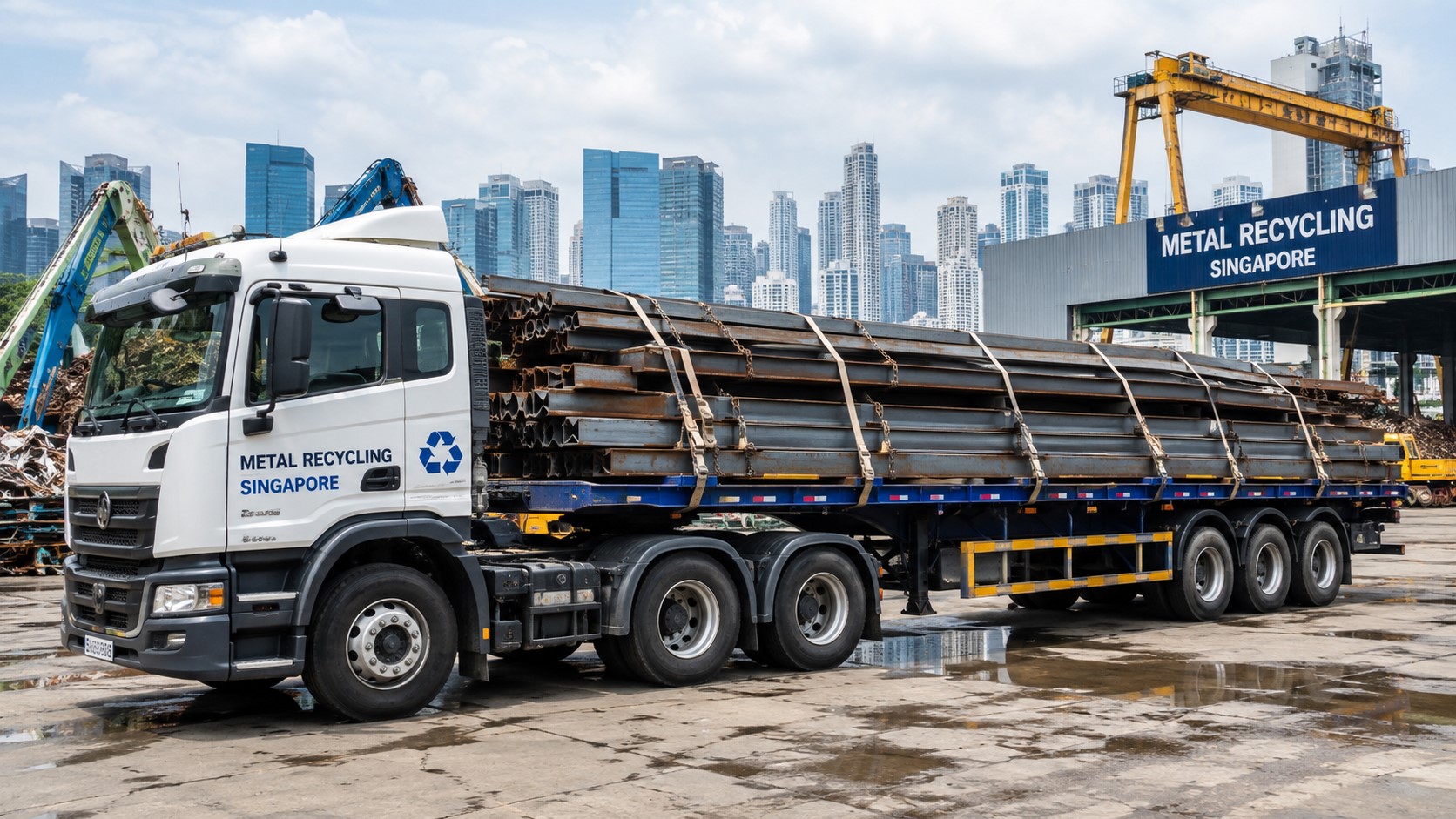
04 Aug Hire Experts for Heavy Iron Scrap Removal in Singapore
Heavy iron scrap does not move itself. And it does not belong in a regular bin lorry.
If you have old machinery, structural steel, cast iron pipes, or industrial equipment sitting on your premises, you need a team that knows how to handle it safely, legally, and without turning your site into a mess. That is what a licensed scrap collection service is for.
This guide covers what heavy iron scrap actually is, why DIY removal is more trouble than it is worth, and what you should expect from a professional collection job from start to finish.
What Counts as Heavy Iron Scrap?
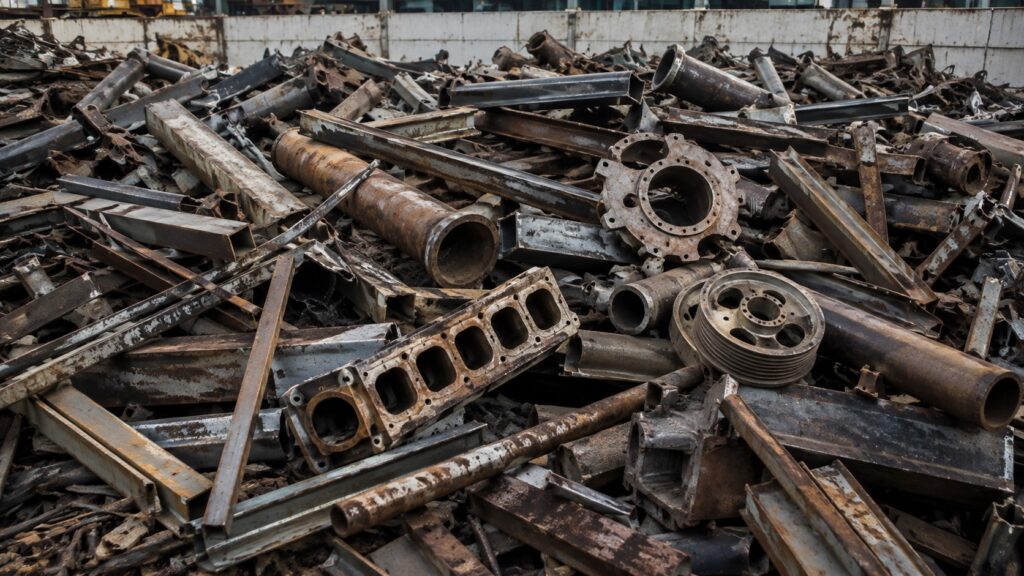
Heavy iron scrap is any large, bulky ferrous metal item that has reached the end of its useful life. Ferrous just means it contains iron or steel.
Common examples in Singapore’s industrial and commercial context include:
- Steel beams, columns, and structural frames from renovation or demolition work
- Old factory machinery and equipment frames
- Cast iron pipes and fittings from plumbing or drainage systems
- Industrial boilers, compressors, and storage tanks
- Vehicle chassis and heavy vehicle parts
- Warehouse racking and shelving systems made from steel
- Generator housings and motor casings
If it is heavy, made mostly of iron or steel, and you no longer need it, it qualifies. The key difference from regular scrap is the volume and weight involved. A team and proper equipment are needed to shift this material safely.
Why You Should Not Handle It Yourself
The idea of calling a random lorry driver to cart away your scrap might seem like the easy option. In most cases, it creates more problems than it solves.
Safety comes first. Heavy iron components can weigh hundreds of kilograms. Moving them without the right equipment risks injury to your staff and damage to your property. A professional team brings forklifts, pallet jacks, strapping gear, and the experience to use them correctly.
Unlicensed removal is a compliance risk. Singapore’s National Environment Agency (NEA) regulates waste disposal. Industrial scrap, especially if it contains any hazardous elements like oil residue in old machinery or lead-based paint on structural steel, must be handled according to NEA guidelines. If you hand scrap to an unlicensed operator and something goes wrong during transport or disposal, the liability can come back to you.
Mixed loads cost more and take longer. If you try to arrange removal yourself without knowing how scrap processing works, you might end up with a mixed load that the facility has to sort before it can process. That slows things down and reduces the value of your scrap.
A licensed specialist handles all of this. They assess your materials, bring the right vehicle and equipment, and transport everything to the correct processing facility.
Does Heavy Iron Scrap Have Any Value?
Yes, often it does. Iron and steel are among the most recycled materials in the world because the metal can be melted down and reused without significant loss of quality.
The scrap value depends on a few things:
- Grade and type: Clean structural steel and cast iron fetch better rates than mixed or corroded material.
- Volume: Larger loads are more attractive to buyers. A truckload of steel beams is a different conversation from a few oddments.
- Condition: Scrap with contamination (oil, coatings, concrete attached) is harder to process and worth less.
- Market rates: Global steel and iron prices move based on supply and demand. Scrap prices in Singapore reflect those movements.
In some cases, the scrap value offsets the cost of collection. In others, there may still be a service fee depending on the size, weight, location, and complexity of the job. The honest answer is that you will not know until you get a proper assessment.
When you contact Karung Guni Singapore, they can look at what you have and give you an accurate picture.
Red Flags When Choosing a Scrap Removal Company
Not every scrap collector in Singapore is operating properly. Here is what to watch out for:
- No documentation offered. A proper job comes with a receipt or acknowledgment of what was collected. If a company is not willing to provide this, walk away.
- Cash only, no record of transaction. Legitimate businesses issue invoices.
- No NEA licensing. You can check whether a waste management company is registered and licensed through NEA’s public database. Do not skip this step for industrial scrap jobs.
- No site assessment before quoting. Anyone quoting a price without seeing or understanding your material is guessing. A serious operator will ask questions or visit first.
- Pressure to decide immediately. A credible company does not need to rush you.
If you are doing this on behalf of a company, make sure there is a proper paper trail. If something goes wrong with the disposal downstream, you want to be able to show what happened with your scrap.
How to Prepare Your Site Before Collection Day
A little preparation goes a long way. It makes the job faster and can affect your final quote.
1. Identify and separate your iron scrap from other materials. Keep ferrous metals together. If you have a mix of iron, aluminium, copper, or e-waste, sort them out. Mixed loads take longer to process and may be valued lower. If you also have electronic equipment to dispose of, take a look at office e-waste collection as a separate service.
2. Make sure the material is accessible. The team needs a clear path to reach your scrap. If it is at the back of a warehouse behind other equipment, that needs to be cleared first. If a forklift is required, the floor surface and entry points need to accommodate it.
3. Remove or flag any hazardous attachments. Old machinery might have oil-filled components, asbestos insulation (in older equipment), or lead-based paint. Let the collection team know upfront. They will tell you how to handle it.
4. Know roughly what you have. You do not need to weigh everything yourself, but a rough estimate of volume helps the team send the right vehicle. A few steel beams fit in a lorry. A full factory clearance needs a different plan.
5. Confirm loading access. Can a heavy lorry park near the collection point? Is there a loading bay? These practical details matter, especially for shophouse units or older industrial buildings with limited access.
What the Removal Process Looks Like
Here is a typical flow for a heavy iron scrap removal job:
Step 1: Contact and initial inquiry You reach out via WhatsApp or phone. You describe what you have, where you are, and roughly how much material is involved. Photos help.
Step 2: Assessment and quote For smaller jobs, a quote may come from photos alone. For larger or more complex jobs, the team may do a site visit. Either way, you get a clear picture of what the job involves and whether there is any scrap value to offset the cost.
Step 3: Scheduling You agree on a date and time. Make sure your site is accessible and your team on the ground knows the plan.
Step 4: Collection The crew arrives with the right vehicle and equipment. They load the material safely, clear the area, and take everything away.
Step 5: Documentation You receive confirmation of what was collected. Keep this for your records.
The whole process is straightforward when both sides are prepared. Most delays happen because the site was not ready or the material was not what was described. Good communication upfront prevents both.
When You Also Have Other Equipment to Move
Heavy iron scrap removal is often part of a bigger clearance. A factory relocation might also leave behind old servers, network switches, hard drives, and other IT equipment.
Karung Guni Singapore handles more than just iron. If you have enterprise servers to clear, check out how to sell used enterprise servers in Singapore or the guide on server rack disposal. For bulk laptops and other office hardware, corporate laptop recycling covers that process.
Getting it all done in one go saves you time and separate scheduling headaches.
The Bottom Line
Heavy iron scrap is not a casual disposal job. It needs the right team, the right equipment, and ideally an operator who knows Singapore’s scrap regulations and handles the paperwork properly.
The upside is that your iron scrap likely has some value. A good operator will be honest about what your load is worth and either offset the collection cost or explain clearly why there is still a fee.
Do not hand this job to whoever turns up first. Check that they are licensed, get a proper quote, and make sure you walk away with documentation.
Ready to get your scrap cleared? Get in touch with Karung Guni Singapore for a quick assessment and collection quote.
No Comments