


27 Sep Bulk Electronics Disposal in Singapore: What Businesses Need to Know Before Calling Anyone
If you’re staring at a storeroom full of dead monitors, old laptops, or a pile of office electronics nobody wants to deal with, you already know the problem. It’s not the disposing part that’s hard. It’s finding someone who will actually come, actually pay a fair price, and actually take everything in one trip instead of leaving half of it behind because it’s “not worth much.”
We deal with this every week at Karung Guni Services Singapore, so here’s a straight answer on how bulk electronics disposal actually works here, what affects your payout, and the mistakes that cost businesses money.
What Counts as “Bulk” Electronics Disposal
Bulk usually means a full clear-out rather than a single broken laptop. Think:
- Office IT refreshes (10, 50, or 200+ laptops and desktops at once)
- Data center or server room decommissioning
- Retail or hotel closures with TVs, POS systems, and appliances
- School or clinic upgrades involving multiple devices
- Warehouse clean-outs with mixed electronics sitting for years
The common thread is volume. Once you’re past a handful of items, the logistics change completely. You need a team that can handle loading, transport, and sorting on-site, not someone showing up with a hand truck.
Why Businesses in Singapore Struggle With This
A few things make bulk disposal harder than it should be:
Space is expensive here. Every month those old machines sit in a storeroom, you’re paying rent on dead weight. We’ve walked into offices where an entire meeting room had been quietly turned into an electronics graveyard.
Data security is a real concern, not a formality. Hard drives, servers, and even old printers can hold sensitive information. Just tossing devices out or handing them to whoever offers the lowest hassle is how data breaches happen. If this is a concern for you, it’s worth reading about secure hard disk destruction before you let anything leave the building.
NEA rules matter for e-waste. Singapore’s e-waste management framework means certain electronics can’t just go into general rubbish. Businesses handling bulk disposal need a collector who understands proper handling, not just someone hauling scrap.
Not everyone actually wants your junk. A lot of “we buy electronics” services quietly avoid anything old, broken, or unbranded. That leaves businesses stuck negotiating item by item instead of getting one clean quote for everything.
How Bulk Electronics Disposal Actually Works With Us
Here’s the real process, no sugar-coating:
- You tell us what you have. A rough list is fine. Photos help but aren’t required for larger jobs.
- We give you a quote. For bulk jobs, this is usually a combined figure covering everything, not item-by-item haggling.
- We schedule a collection time that works for you. Offices, warehouses, hotels, schools, we come to the location.
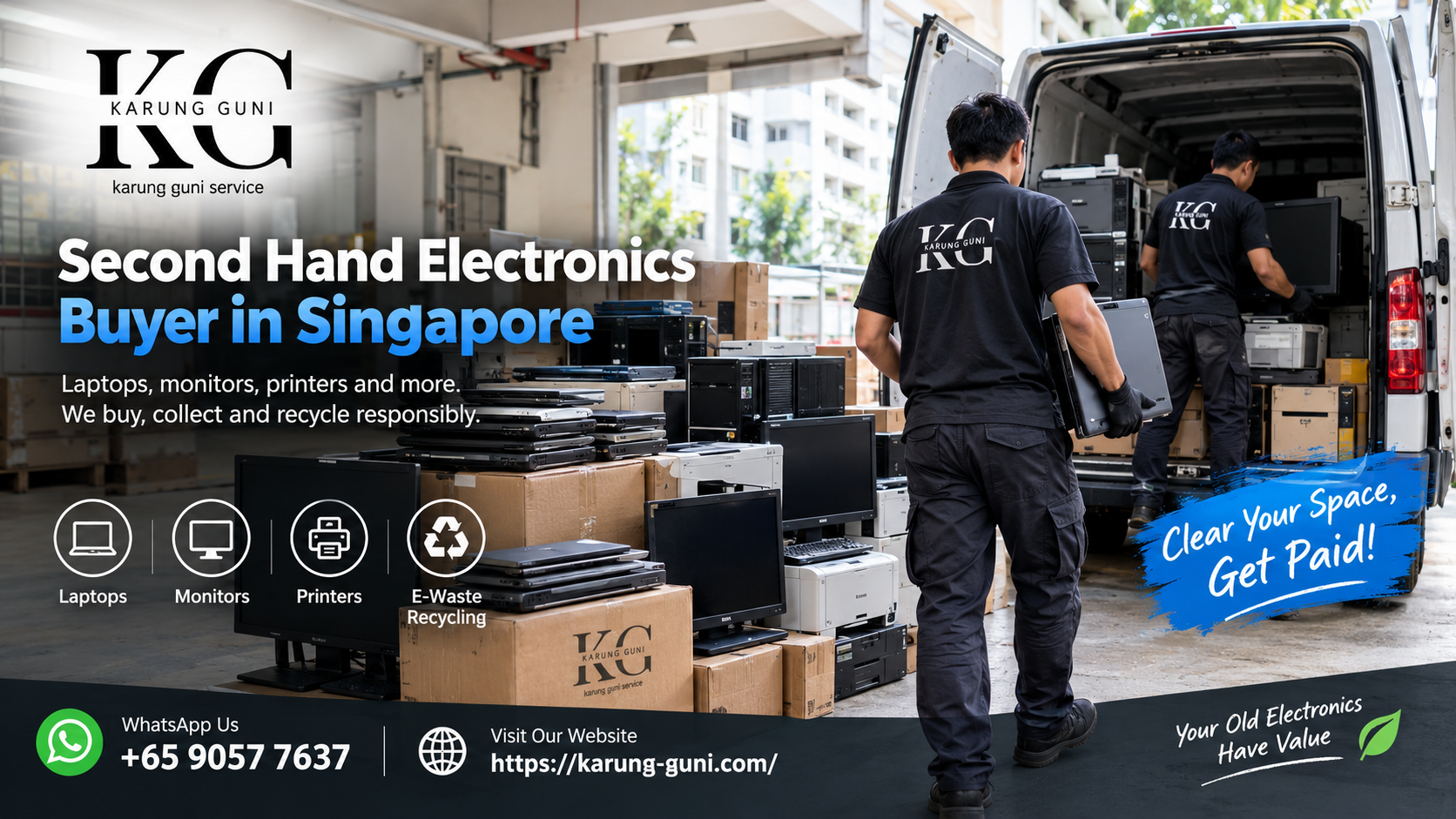
- Our team does the loading. You don’t need manpower or a van. We bring both.
- You get paid on the spot. Cash or transfer, confirmed before we leave.
No drop-off required. No waiting weeks for a “we’ll get back to you.” That’s the entire point of using a karung guni service instead of trying to arrange disposal yourself.
What Affects Your Payout
This is the part most guides skip, so let’s be direct about it.
Volume matters more than individual item condition. A single broken laptop isn’t worth much on its own. Fifty of them, even broken, add up because of the recoverable metals and parts inside. This is why selling spoilt computers in bulk usually gets a much better rate per unit than trying to sell one at a time.
Working condition items are worth more, but broken ones aren’t worthless. People assume a dead monitor is trash. It’s not. Copper, aluminum, and circuit boards inside still have recycling value.
Mixed loads are fine, but sorting helps. If you can separate laptops from cables from appliances beforehand, quoting goes faster and you’ll usually get a slightly better price because we don’t need to sort on-site.
Age isn’t the main factor people think it is. A five-year-old server can be worth more than a two-year-old consumer laptop, depending on the components. Don’t assume older automatically means worthless.
Specialty equipment gets specialty pricing. Items like UPS units, enterprise servers, or copper wiring are priced differently from general office electronics, so it’s worth mentioning these separately when you request a quote. If you’re clearing out server infrastructure specifically, our guide on selling used enterprise servers breaks down what actually drives value there.
Common Mistakes Businesses Make
Waiting until it’s an emergency. We get a lot of last-minute calls right before an office move or lease ending. You’ll get better rates and smoother scheduling if you plan collection a few weeks ahead rather than the day before.
Assuming small buyers can handle large volume. A shop that buys the occasional used phone often can’t scale to 100 desktops. Ask upfront whether the buyer regularly handles bulk jobs, not just individual sales.
Not asking about data destruction. If your electronics ever touched company data, ask specifically how devices are handled. Don’t assume it’s covered unless you confirm it.
Splitting the job across multiple buyers. Some businesses sell laptops to one place and appliances to another, thinking they’ll get better individual prices. In practice, this usually means more time spent coordinating for a marginal price difference. One collector handling the full load is almost always more efficient.
Forgetting about cables, accessories, and peripherals. Chargers, mice, keyboards, and cables pile up fast and often get left behind because they seem too small to matter. They add up. Include them in your quote request.
Office Clear-Outs vs. One-Off Disposal
If this is a full office clear-out rather than a single disposal, the process is slightly different. You’ll want someone who can assess the entire space, not just quote based on a list. We cover this in more detail in our guide to office e-waste collection, including what to expect if you’re clearing multiple floors or departments at once.
For businesses specifically shutting down server rooms or data centers, the process involves additional considerations around data security and equipment testing. Our data center decommissioning guide walks through that in detail.
What to Have Ready Before You Call
To get an accurate quote quickly, have this on hand:
- Rough count of items by category (laptops, monitors, printers, etc.)
- Location and access details (loading dock, lift access, stairs only, etc.)
- Preferred collection window
- Whether any devices contain sensitive data that needs certified destruction
That’s genuinely all you need. We handle the rest.
Getting Started
If you’ve got electronics piling up and want them gone without the back-and-forth, message us on WhatsApp at +65 9057 7637 with a rough idea of what you’re clearing out. We’ll get back to you with a quote, usually within the hour during business hours.
We’re based at City Warehouse #04-1, 5 Kaki Bukit Road, Singapore 417839, and we collect across Singapore, no matter how many items or how big the job.
No Comments