


20 Sep Excess Electronics Buyer in Singapore: How to Sell Your Old Devices Without the Hassle
If you’re sitting on a pile of old phones, laptops, routers, or that drawer full of tangled chargers nobody uses anymore, you’re not alone. Most homes and offices in Singapore build up excess electronics faster than they get rid of them. The good news is you don’t have to throw any of it away, and you definitely don’t have to let it sit in storage taking up space. There’s a real market for used and unwanted electronics here, and finding the right buyer makes the whole process quick and even profitable.
This guide walks you through how to sell excess electronics in Singapore, what actually has value, what to watch out for, and how to avoid the common mistakes people make when clearing out their gadgets.
Why “Excess Electronics” Is a Bigger Category Than You Think
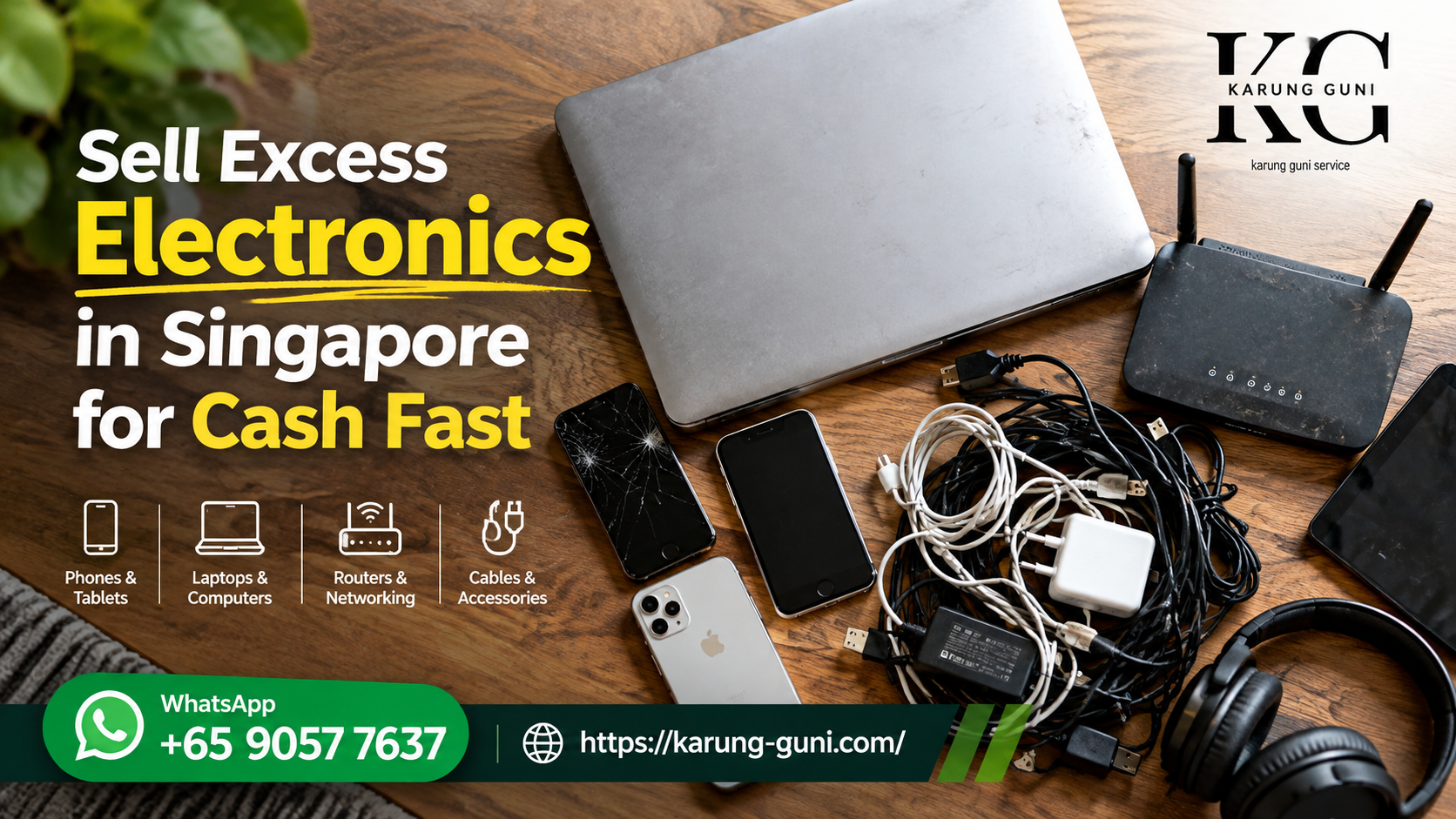
When people hear “sell electronics,” they usually think of phones and laptops. But excess electronics covers a lot more ground, and most of it still has resale or scrap value:
- Old smartphones and tablets, even cracked or non-working ones
- Laptops and desktops, including ones that won’t boot
- Routers, modems, and networking gear
- Monitors, TVs, and projectors
- Gaming consoles and accessories
- Printers, scanners, and office equipment
- Hard disks, SSDs, and power supplies
- Cables, chargers, and adapters in bulk
- Audio equipment like speakers and amplifiers
If it plugs in or runs on a battery, there’s a decent chance someone will pay for it, either for parts, refurbishment, or the metals inside.
Working vs. Non-Working: Does It Matter?
This is one of the most common questions we get, and the honest answer is it depends on the item, not on whether it powers on.
A working laptop from the last five years will always fetch more than a broken one, because it can be resold as-is or lightly refurbished. But a dead laptop still has value in its components: the RAM, the battery, the motherboard, and the aluminium or plastic casing. Same goes for phones. A cracked screen doesn’t kill the value, it just changes which bucket the item falls into.
The mistake a lot of people make is assuming broken electronics are worthless and tossing them in general waste. That’s not just a missed opportunity, it’s also not great for the environment, since e-waste contains materials that shouldn’t end up in a landfill. A proper e-waste collection service can take these off your hands responsibly, and often for cash rather than a fee.
How the Selling Process Actually Works
Selling excess electronics in Singapore is simpler than most people expect. Here’s the general flow:
- Sort your items. Separate what’s working from what isn’t, and group similar items together (all your cables in one bag, all your old phones in another). This makes quoting faster and more accurate.
- List the items with a buyer. Most karung guni services let you submit details and photos through a quick form. Be honest about condition. Overstating what a device does will just slow things down when the collector arrives.
- Get a quote. A reliable buyer will give you a fair estimate based on item type, condition, and current scrap or resale rates.
- Schedule a pickup. This is where it gets convenient. Look for a service that offers free doorstep collection, whether you’re at home, in an office, or clearing out a hotel or school storeroom.
- Get paid on the spot. The best services pay immediately upon collection, so there’s no waiting around for a bank transfer or cheque.
If you’re an office manager clearing out a storeroom rather than a household with a few old phones, the same idea applies but at scale. Business owners are often surprised at how much cash value is sitting in a stack of retired IT equipment. If that’s your situation, it’s worth reading our guide on selling spoilt computers in bulk, which covers how bulk pricing and pickup logistics work differently from single-item sales.
What Determines the Price
A few factors decide what your excess electronics are worth:
Brand and model. Apple and Samsung devices generally hold value longer than lesser-known brands, even when they’re a few years old.
Condition. Physical damage, water exposure, and missing parts (like a laptop without its charger) all bring the price down, but rarely to zero.
Age. Electronics depreciate fast, especially phones and laptops. A device that’s five or more years old is often worth more for its metal content than as a working unit.
Volume. If you’re clearing out a whole household or office, bulk quantities usually get better per-item rates than selling one device at a time.
Data-bearing components. Hard disks and SSDs need special handling. If data security is a concern, especially for a business, ask whether the buyer offers certified destruction. We’ve written more on this in our piece on secure hard disk destruction, which is worth a read if you’re clearing out anything that held sensitive files.
Common Mistakes People Make
Wiping devices incorrectly (or not at all). Before handing over any phone, tablet, or laptop, do a factory reset and remove your accounts. For hard disks you’re not comfortable resetting yourself, ask the buyer about secure wiping or physical destruction instead of just deleting files, which doesn’t actually erase the data.
Throwing away instead of selling. E-waste bins are fine for small items like batteries and cables, but larger electronics like TVs, computers, and appliances often still have resale or scrap value. Tossing them means leaving money on the table.
Not asking about pickup logistics. If you’re in a condo with loading restrictions, or an office building with security procedures, mention this upfront. A collector who does this regularly will know how to work around it.
Assuming all buyers pay the same. Rates vary based on how a buyer resells or processes the material. It’s fine to ask how pricing is determined, a transparent buyer won’t have a problem explaining it.
Waiting too long to sell. Electronics lose value every year, sometimes every month for newer models. If you know you’re not going to use something again, selling sooner gets you a better price than letting it sit in a cupboard for another two years.
For Businesses: Excess Electronics at Scale
Offices, schools, hotels, and data centers deal with excess electronics differently than households do. Equipment refresh cycles, lease returns, and office relocations all generate large batches of IT hardware at once. If this sounds like your situation, a few things are worth knowing:
- Bulk collection is usually more efficient and better priced than piecemeal sales
- Data security should be handled before anything leaves your premises, not after
- Servers, networking equipment, and enterprise hardware often have separate value streams from consumer electronics
If you’re managing a decommissioning project, our guide on data center decommissioning scrap collection breaks down what to expect. And if it’s specifically office equipment like printers and laptops you’re clearing, we’ve covered that in our posts on bulk printer disposal and corporate laptop recycling.
Getting a Fair Deal
The easiest way to know you’re getting a fair price is to get a quote before committing. A trustworthy buyer will ask a few questions about your items, give you a reasonable estimate, and be upfront about how final pricing might shift once they’ve seen the items in person (this usually only happens if the condition is worse than described, not as a bait-and-switch tactic).
If you’re in Singapore and have excess electronics piling up at home or in the office, Karung Guni Service SG offers free doorstep collection and pays on the spot once items are picked up. You can reach out on WhatsApp at +65 9057 7637 to get a quick quote, or drop by our facility at City Warehouse #04-1, 5 Kaki Bukit Road, Singapore 417839, if you’d rather sort things out in person.
Clearing out old electronics doesn’t have to mean a trip to the dump or weeks of trying to sell things individually online. A single call or message can get it all off your hands, responsibly recycled, and turned into cash the same day.
No Comments