


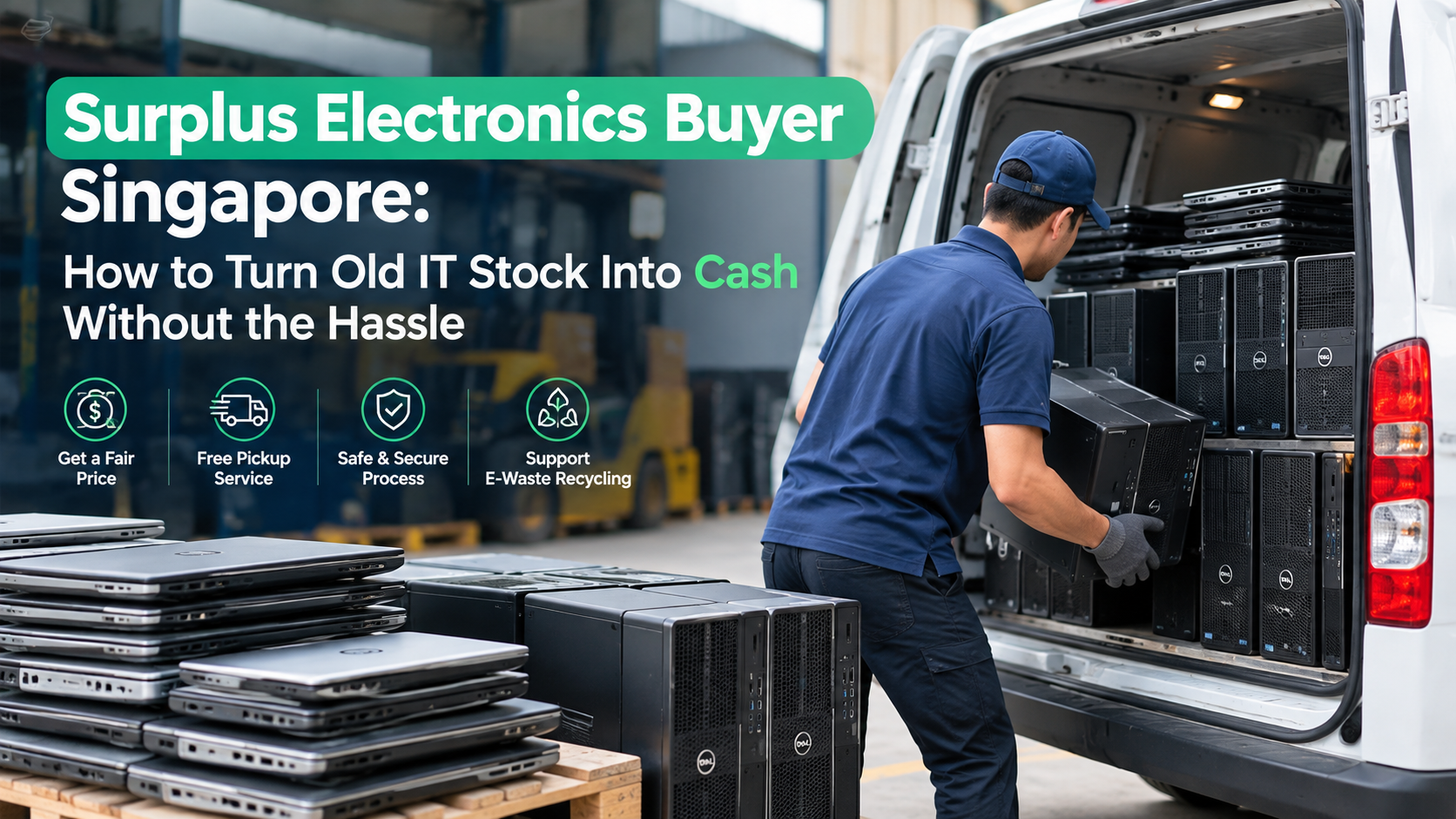
17 Sep Surplus Electronics Buyer Singapore: How to Turn Old IT Stock Into Cash Without the Hassle
If you’re a business owner in Singapore sitting on a storeroom full of old laptops, servers, or networking gear, you already know the problem. That equipment isn’t doing anything for you anymore, but it’s still taking up space, and figuring out what to do with it feels like a bigger job than it should be.
Maybe you upgraded your office IT last quarter and now have a stack of desktops nobody wants. Maybe your company just closed a data center and needs those racks gone by end of month. Or maybe you’re simply tired of tripping over old monitors in the store room. Whatever the reason, selling your surplus electronics to a specialist buyer is almost always faster, safer, and more profitable than most business owners expect.
This guide walks through exactly how it works in Singapore, what your gear might be worth, and the mistakes that cost companies money every year.
What Counts as “Surplus Electronics”
Surplus electronics is just a business term for equipment you no longer use but that still has resale or scrap value. It’s broader than most people think. In our experience buying from offices, warehouses, and IT departments across Singapore, the most common categories are:
Office computers and laptops replaced during a hardware refresh cycle. Servers and network switches pulled out after a data center decommissioning or office relocation. Printers, copiers, and UPS power supply units that have reached end of lease. Old monitors, keyboards, and peripherals sitting in a supply closet. Enterprise-grade equipment like used enterprise servers and server racks from a company that’s downsizing its IT footprint.
The key thing to understand is that “surplus” doesn’t mean “broken.” A lot of what companies call surplus is still working equipment that’s simply outdated for their needs but perfectly usable for resale, refurbishment, or component recovery. That’s exactly why it has value.
Why Selling Beats Dumping or Storing
I’ve walked into more than a few Singapore offices where a spare room has quietly turned into an electronics graveyard. Nobody made a bad decision on purpose. It just happens because clearing it out feels like a hassle nobody has time for.
Here’s the thing though: that hassle usually takes less effort than people assume, and the alternative costs more than it looks like on the surface.
Storing surplus equipment costs you real money in office rent, even if it’s just a corner of a warehouse. Throwing it out is illegal in Singapore for most electronic waste categories, and improper disposal can create liability issues, especially with equipment that once held business data. Letting it sit also means the resale value keeps dropping. Electronics depreciate fast, and a laptop that’s worth something today might be scrap value only in six months once the model is truly outdated.
Selling to a proper buyer solves all three problems at once. You get cash back on the books, the space is cleared, and the equipment is handled through a paper trail that protects you if anyone ever asks where it went.
What Determines the Value of Your Equipment
Pricing surplus electronics isn’t a flat rate, and any buyer who quotes you a number without asking questions first is probably lowballing you. A few things genuinely move the price up or down.
Volume matters more than people expect. A single old laptop is worth very little to a buyer once you account for pickup logistics. Ten pallets of laptops from an office refresh is a different conversation entirely. If you’re clearing out a whole office or warehouse, always ask about bulk electronics rates rather than pricing item by item.
Condition and completeness count. A server with its original rails and power supplies intact is worth more than one that’s missing parts. Working condition is worth more than dead-on-arrival, but even non-working units usually have scrap or component value, particularly for anything with copper wiring or precious metal content on the circuit boards.
Brand and specs still matter for anything under five years old. Enterprise gear from major manufacturers, decent RAM and storage configurations, and networking equipment that’s still compatible with common protocols will fetch noticeably more than generic or heavily outdated stock.
Data-bearing devices need special handling, and that actually affects price too, since a reputable buyer builds data destruction into their process rather than charging you extra for it later.
The Data Security Question Nobody Should Skip
This is the part most articles on this topic gloss over, and it’s the one that actually gets companies in trouble.
Any device that ever stored company data, and that includes hard drives, SSDs, old phones, and even some networking gear with cached configs, needs to be wiped or physically destroyed before it leaves your building. This isn’t optional in any serious sense. A leaked customer database or old financial records sitting on a hard drive that ended up in the wrong hands is a much bigger problem than whatever you’d save by skipping this step.
A legitimate surplus buyer should be able to explain their data handling process without you having to ask twice. Look for buyers who offer hard disk destruction as a standard part of the pickup, not an upsell. Ask whether they provide a certificate of destruction, especially if your company needs it for compliance or audit purposes. If a buyer can’t answer these questions clearly, that’s a sign to keep looking.
How the Selling Process Actually Works
For most businesses, selling surplus electronics in Singapore follows a fairly simple sequence, and knowing it in advance saves you from a lot of back-and-forth.
Start with a rough inventory. You don’t need a spreadsheet with serial numbers, but knowing roughly what you have (how many units, what type, rough age and condition) helps a buyer give you a realistic quote instead of a guess. Get a quote before the pickup. Any buyer worth working with will give you a price range based on your description, then confirm the final number on-site once they’ve actually seen the equipment. Be wary of anyone who insists on a fixed price sight unseen for anything beyond a handful of items. Schedule the pickup around your operations, not theirs. A good buyer works around your office hours and loading dock access rather than asking you to disrupt your day. Get paperwork for anything with data or compliance implications. This includes a collection receipt at minimum, and a data destruction certificate for anything that held sensitive information. Get paid on the spot or through agreed terms. Most straightforward transactions are settled at pickup, particularly for smaller volumes.
If you’re dealing with something more involved, like an office e-waste collection covering an entire floor, or a full corporate laptop recycling job after a fleet refresh, the process is the same but scaled up, usually with a site visit beforehand to plan logistics.
Common Mistakes That Cost Businesses Money
After years in this line of work, the same handful of mistakes show up again and again.
Selling piecemeal instead of consolidating. Some offices sell a few laptops here, a printer there, over several months. You’ll almost always get a better combined rate by holding equipment until you have enough volume for one pickup.
Not asking about specific equipment categories. Generic “electronics buyers” sometimes don’t know how to properly value specialized gear like UPS power supply units or network switches. A buyer who handles a wide range of enterprise equipment will typically quote these more fairly than one who mainly deals in consumer electronics.
Skipping the data wipe conversation. As covered above, this isn’t just a security issue, it’s also a cost issue if you have to sort it out separately after the fact.
Assuming old equipment is worthless. Even non-functioning gear often has recoverable value through metal and component recycling. Don’t assume something needs to work to be worth selling.
Not getting anything in writing. Even for smaller transactions, a simple receipt protects you if there’s ever a question later about what left your premises and when.
Getting a Pickup Arranged
If you’ve got surplus electronics sitting around and you’re ready to clear the space, the process doesn’t need to be complicated. Karung Guni Singapore handles pickups for offices, warehouses, and IT departments across the island, from a single office clearance to a full factory metal scrap yard job.
You can reach the team directly on WhatsApp at +65 9057 7637 to get a quote, or visit the collection point at City Warehouse #04-1, 5 Kaki Bukit Road, Singapore 417839.
Getting a quote costs nothing and usually takes just a description of what you have and a few photos if you can send them. From there, it’s a straightforward pickup, fair payment, and one less thing sitting in your storeroom.
No Comments