


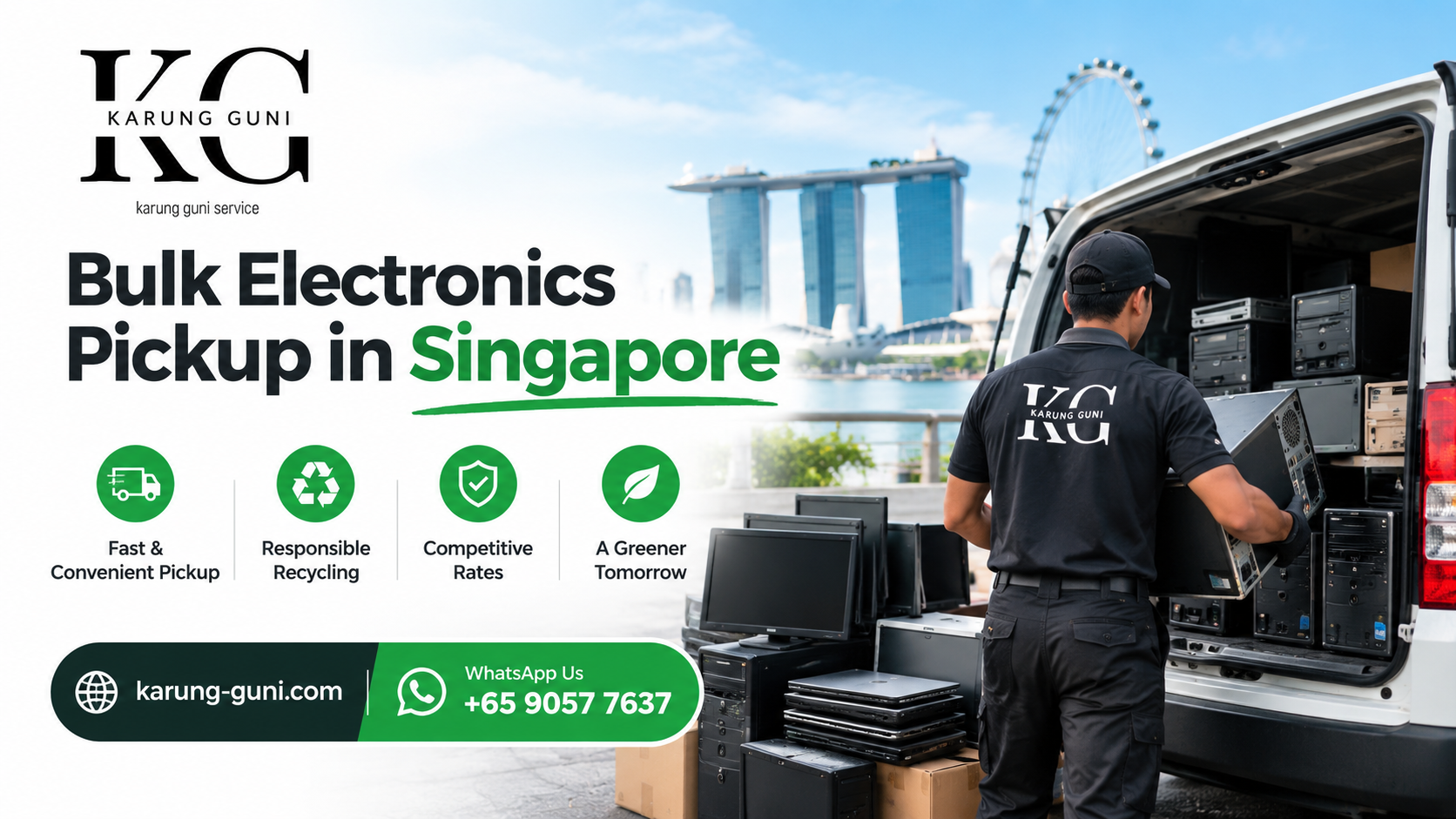
25 Oct Bulk Electronics Pickup in Singapore: How It Works, What to Prepare, and What to Avoid
You have a storeroom full of old laptops, monitors, printers, or servers. Maybe your office is moving. Maybe a project just ended and the equipment is no longer needed. Either way, you need it gone, and you would like to get something back for it if possible.
That is what a bulk electronics pickup is for. A team comes to your site, loads everything, and takes it away. No carrying boxes to a recycling point, no booking five separate trips, no selling items one by one online.
This guide explains how bulk pickup works in Singapore, what affects the price, how to prepare, and the mistakes that cost people time and money.
What counts as “bulk” electronics?
There is no official number. In practice, a pickup becomes “bulk” when it no longer makes sense to handle it yourself. That usually means:
- 10 or more computers, laptops, or monitors
- A pallet or more of mixed office equipment
- Server racks, network switches, or UPS units
- A whole office or warehouse clearout
- Equipment from a closed shop, school, clinic, or showroom
If you are somewhere in the middle, a quick WhatsApp message with a photo is the easiest way to find out if a pickup makes sense.
Who needs bulk electronics pickup?
Most requests come from a few types of customers:
- Offices that are moving or downsizing. Old desktops, screens, phones, and printers pile up fast.
- IT teams after a hardware refresh. Laptops and PCs are replaced in batches, and the old ones need to go.
- Data centres and server rooms. Servers, racks, switches, and power equipment need careful handling.
- Retailers and repair shops. Faulty stock, returns, and old display units.
- Property managers and renovators. Units are cleared out and appliances are left behind.
If you are in the office or IT category, our guide on office e-waste collection in Singapore goes deeper into how companies handle this.
How bulk electronics pickup works, step by step
A good pickup service keeps this simple. Here is what the process usually looks like.
1. You send the details. Tell the buyer what you have, roughly how many, and where the items are. Photos help a lot. A short list is enough: “40 laptops, 30 monitors, 10 printers, 3 racks.”
2. You get a quote or a price offer. Working items, newer models, and equipment with resale value can be bought. Broken or very old items may be collected for recycling, sometimes at no cost, sometimes with a small fee. A fair buyer tells you which is which before the truck arrives.
3. You pick a pickup time. Weekday office hours are common, but many sites need evenings or weekends because of building rules.
4. The team arrives and loads. They check the items against the list, pack and load them, and take care of the heavy lifting. If your site has a loading bay, goods lift, or time slot rules, tell them in advance.
5. You get payment or confirmation. If the items were bought, you are paid. If they were collected for recycling, you should get written confirmation of what was taken.
For a wider look at how scrap and equipment pickup works in general, see how Karung Guni Singapore runs a typical collection.
What affects the price?
People often ask, “How much will I get?” The honest answer is that it depends. These are the main factors:
- Working condition. Items that power on and function are worth much more than dead ones.
- Age and model. A three-year-old business laptop sells far better than a ten-year-old desktop.
- Quantity. Larger batches are easier to price and move, so they often get better offers.
- Specs and brand. Business-grade brands, higher RAM, and newer processors raise the value.
- Missing parts. No hard drive, no charger, or a cracked screen lowers the price.
- Metal and component content. Even dead equipment has some recoverable material, but it is worth less than working units.
If you want to see how this applies to computers specifically, read about selling spoilt computers in bulk. If your stock is mostly working equipment, the page on selling electronics in bulk is the better fit.
Data security: the part people forget
This is the biggest risk with bulk electronics, and it is the one most people think about too late.
Old laptops, servers, printers, and even photocopiers can hold company data. Handing them over without a plan can create a real problem under Singapore’s Personal Data Protection Act (PDPA), which expects organisations to protect personal data they hold, including when disposing of devices.
Here is a practical way to handle it:
- Wipe drives before pickup if you can. Use a proper erasing tool, not just “delete” or “format.”
- Remove drives you do not want to leave your hands. Keep them aside for separate destruction.
- Ask what happens to the data afterwards. A trustworthy buyer will explain their process clearly.
- Get it in writing if the data is sensitive. This matters for finance, healthcare, legal, and HR equipment.
If you want drives physically destroyed, see our page on hard disk destruction in Singapore. For company laptops specifically, the guide on corporate laptop recycling covers the full process.
How to prepare for a bulk electronics pickup
A little prep saves a lot of back and forth on the day. Here is a simple checklist:
- Count and list your items. Even a rough list by type is useful.
- Take photos. One wide photo of the pile and a few close-ups of the better items.
- Separate working from non-working. This can raise your offer, since good units are not priced down with the junk.
- Gather chargers and accessories. Matching chargers add value to laptops and some other devices.
- Handle data first. Wipe or remove storage before the team arrives.
- Move items to one spot. Ground floor or near the lift is best.
- Check building rules. Many offices and condos need loading bay bookings, lift protection, or advance notice to management.
- Note anything unusual. Large equipment, damaged batteries, or items that leak should be flagged early.
Common mistakes to avoid
These come up again and again.
Throwing items away before asking. Old equipment that looks useless can still have value. Ask before you bin or give away anything in quantity.
Mixing batteries and loose cells into the pile. Swollen or damaged lithium batteries are a fire risk. Tell the team about them before pickup so they can handle them safely.
Only comparing the highest price. A high offer that changes on the day is worse than a fair offer you can rely on. Ask if the quote is firm once the items are checked.
Skipping the access check. Narrow lifts, stairs, and time-limited loading bays can slow things down or add cost. Share these details early.
Ignoring paperwork. If you are a company, keep a record of what was taken and when. It helps with audits and internal asset tracking.
Using someone who will not say where the items go. You do not need a long report, but a good buyer should be able to explain whether items are resold, recycled, or dismantled.
Selling vs recycling: which is right for you?
Not every pile is the same. Here is a simple way to think about it.
| Your situation | Likely best option |
|---|---|
| Mostly working laptops, PCs, monitors | Sell for cash |
| Mix of working and broken equipment | Sell the good, recycle the rest in one pickup |
| Fully dead or very old equipment | Recycle, possibly free collection |
| Servers, switches, networking gear | Sell, often high value |
| Items with sensitive data | Data wipe or destruction first, then sell or recycle |
For equipment with higher resale value, these pages may help:
- Bulk electronics buyer in Singapore
- Selling used enterprise servers
- Used network switches buyer
- UPS and power supply buyers
If you are clearing out a server room, the guides on server rack disposal and data centre decommissioning explain what to expect. Printers are a topic of their own, covered in bulk printer disposal.
What about big appliances?
Bulk electronics jobs often include appliances like fridges and washing machines, especially in property clearouts. These are heavy and need extra manpower, so mention them when you ask for a quote. We have separate guides for old refrigerator disposal and selling a spoilt washing machine.
A note on regulated e-waste in Singapore
Singapore has a national system for e-waste. Under the Extended Producer Responsibility scheme, which started in July 2021, producers of regulated items such as ICT equipment, large household appliances, and lamps are responsible for their collection and recycling. For households with a few items, there are public drop-off points. For businesses and bulk loads, a private pickup is usually more practical, since it saves time and handles the heavy work.
If you want the official details, check the National Environment Agency’s website for the latest rules, since requirements can be updated.
What to expect from a trustworthy bulk pickup service
Before you book, use this quick filter:
- They ask about your items before quoting, instead of giving a random number.
- They explain what is bought and what is only collected.
- They tell you about access, timing, and any fees upfront.
- They handle data concerns seriously.
- They show a real address and contact details.
- They respond quickly and clearly.
You can read more about the team on our Who We Are page, or see what we buy on the Karung Guni sell page.
Frequently asked questions
Do you take small quantities? It depends on the items and the location. If you are not sure, send a message with photos. We will tell you honestly if a pickup makes sense.
Do I get paid for old electronics? Working and newer equipment often has resale value. Broken or very old items may be collected for recycling instead. We will explain which applies before pickup.
Can you collect from an office with limited loading time? Yes, many pickups are done around building rules. Share the loading bay hours, lift size, and any management requirements when you book.
What if my devices still have data on them? Wipe them before pickup where possible. If you need drives destroyed, tell us in advance so it can be planned properly.
Do you collect broken or non-working equipment? Yes. Non-working electronics can usually be collected for recycling. Mixing them with working units in one pickup is often the easiest approach.
How fast can a pickup be arranged? Many jobs can be scheduled within a few days, depending on volume and location. Larger or more complex jobs may need more planning.
Do you handle servers and network equipment? Yes. See our pages on enterprise servers and network switches.
Ready to book a bulk electronics pickup?
The easiest way to start is to send a quick message. Tell us:
- What items you have and roughly how many
- A few photos of the pile
- Your location and any access limits
- When you would like the pickup done
We will reply with a clear next step, so you know what to expect before anyone turns up.
WhatsApp: +65 9057 7637 Address: City Warehouse #04-1, 5 Kaki Bukit Road, Singapore 417839 Or use our contact page: Get in touch
No Comments