


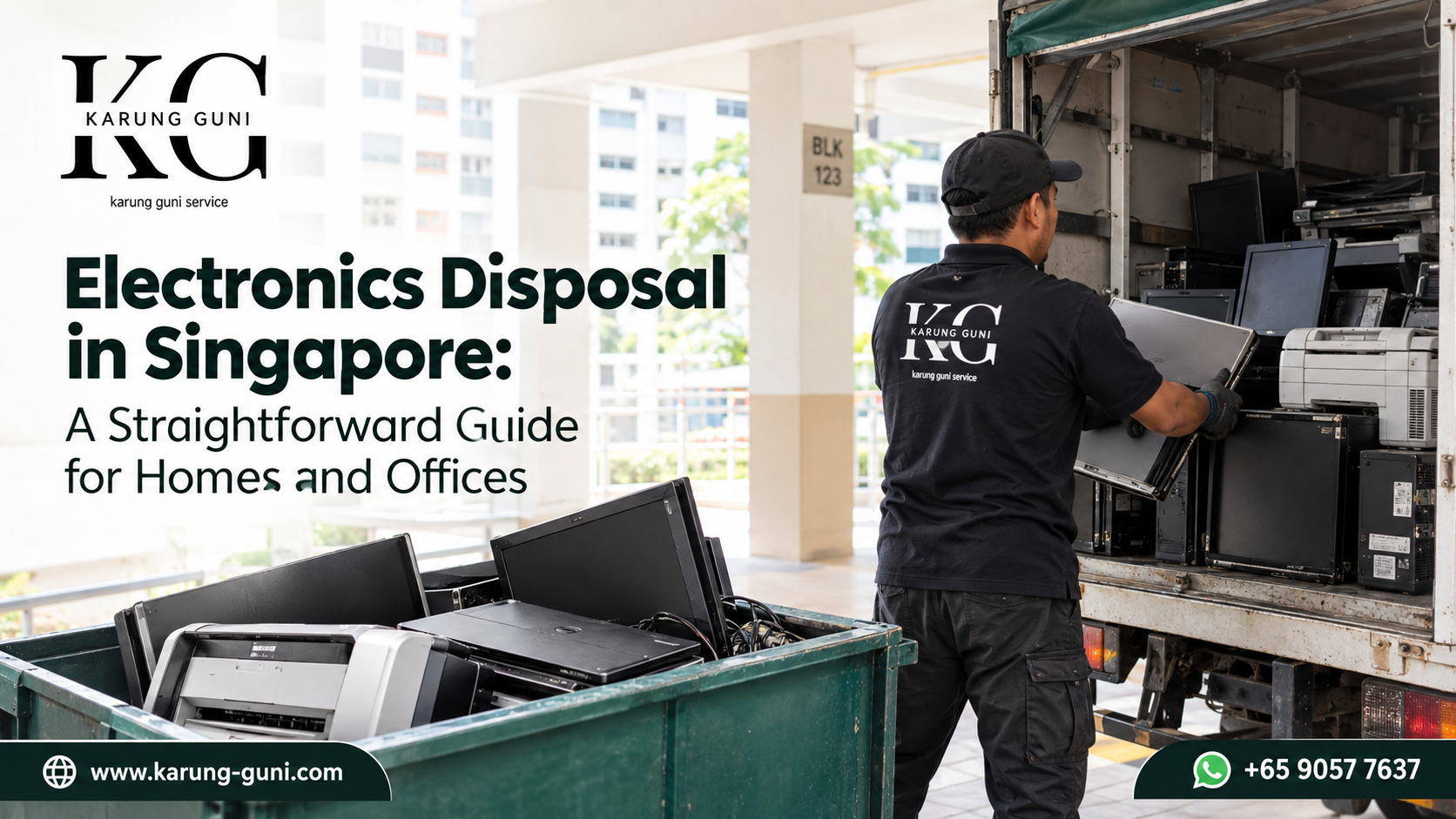
24 Sep Electronics Disposal in Singapore: A Straightforward Guide for Homes and Offices
If you’ve got a pile of dead laptops, an old TV taking up closet space, or a stack of routers nobody remembers plugging in, you’re not alone. Most people in Singapore hold onto old electronics far longer than they should, mostly because they’re not sure what to do with them. Chucking them in the regular bin feels wrong (and it is), but the “proper” way often seems like a hassle.
Here’s the good news: disposing of electronics in Singapore is actually pretty simple once you know your options. This guide walks through what counts as e-waste, why it matters, the free and paid ways to get rid of it, and the mistakes that trip up most people and businesses.
Why You Can’t Just Bin Old Electronics
Electronics aren’t like food waste or paper. Inside a phone, laptop, or old CRT monitor, you’ll find lead, mercury, cadmium, and other materials that can leach into soil and water when dumped in a landfill. Singapore’s Semakau Landfill has limited space, and the government has been pushing hard to keep e-waste out of it since introducing the Extended Producer Responsibility (EPR) scheme in mid-2021.
Under this scheme, producers and retailers of regulated electronics (think large appliances, IT equipment, batteries) are legally required to fund and support the collection and recycling of their products. ALBA E-Waste Smart Recycling manages this system nationally, working alongside other licensed recyclers.
There’s also a more practical reason to be careful: your old devices probably still have your personal data on them. Deleting files or doing a factory reset doesn’t actually erase the data, it just hides it from normal view. If a hard disk or phone ends up in the wrong hands, that data can often be recovered. This is the part most disposal guides gloss over, but it matters just as much for a household laptop as it does for an office server.
What Counts as E-Waste
E-waste covers a wider range of items than most people assume. It’s not just phones and laptops. In Singapore, regulated e-waste generally includes:
Household electronics like TVs, air conditioners, refrigerators, washing machines, and fans. IT equipment such as desktops, laptops, monitors, printers, scanners, and networking gear like routers and switches. Mobile devices including phones, tablets, and their chargers. Batteries and lightbulbs, which fall under separate but related collection streams. Small appliances like rice cookers, kettles, and hair dryers.
Office and enterprise gear also counts, and often needs a different approach than a single household item. Servers, UPS units, data center hardware, and bulk quantities of laptops or printers usually call for a collection service rather than a drop-off bin, simply because of volume and, in many cases, data security concerns.
Free Ways to Dispose of Electronics in Singapore
If you’re getting rid of a handful of items, there are several no-cost options worth knowing about.
Public e-waste bins. You’ll find these orange bins in shopping malls, community clubs, HDB void decks, and some electronics retailers across the island. They’re meant for smaller items like phones, cables, and small appliances rather than bulky ones like fridges or washing machines. You can check recycle.gov.sg for the nearest bin to you.
Retailer take-back. When you buy a new appliance, most major retailers are required to take back your old one of the same type, free of charge, as part of the EPR scheme. This is often the easiest route if you’re upgrading anyway, since the retailer handles the pickup or in-store drop-off.
Quarterly collection drives. NEA and grassroots organizations run periodic e-waste collection events in residential areas. These are handy for households doing a bigger clear-out, though the timing depends on your area’s schedule.
Bulky item removal via town councils. For large appliances that don’t fit the bin system, most town councils offer scheduled bulky waste collection, though this isn’t always free and isn’t always e-waste specific, so check first.
When You Need a Collection Service Instead
Bins and take-back schemes work fine for a phone or two. They don’t work well when you’ve got a office full of old desktops, a data center being decommissioned, or a stack of enterprise servers that need certified data destruction before they leave the building.
This is where a dedicated collection and recycling service makes more sense, especially for:
Businesses clearing out IT equipment during an office move or upgrade. Anyone with volume too large for a public bin, like multiple appliances or a full lot of scrap electronics. Situations involving sensitive data, where you need documented proof that hard disks were wiped or destroyed. Bulk scrap metal recovery, since a lot of e-waste (old wiring, aluminium casings, copper components) actually has recycling value rather than being pure waste.
At Karung Guni Singapore, we handle this end of things directly, picking up e-waste, scrap metal, and old appliances from homes and offices around the island, with no charge for most collections. If you’ve got items sitting around and don’t want to deal with sorting through public bin locations or waiting for a collection drive, that’s usually the faster route.
Common Mistakes People Make
A few things trip up even well-meaning people when it comes to e-waste:
Assuming small electronics don’t matter. A single old phone charger seems harmless, but multiply that across a few million households and it adds up to a real environmental problem. Every piece counts, even the small ones.
Skipping data wiping. This is probably the biggest oversight. Before any device leaves your hands, whether it’s going to a bin, a retailer, or a collection service, make sure personal or business data has been properly wiped. For businesses in particular, ask for a certificate of data destruction if the service offers one. It’s not overkill, it’s basic due diligence.
Storing e-waste indefinitely “just in case.” A lot of people keep dead electronics around for years thinking they might fix them or find a use later. In most cases, it’s better to get them recycled sooner. Components degrade, and the longer they sit, the less recoverable value they have.
Mixing e-waste with regular scrap for sale. If you’re trying to sell scrap metal for cash, keep e-waste separate since it often needs specialized handling for safety and compliance reasons, and mixing it can complicate the pickup or lower what you’re offered.
Not checking if a device has resale or scrap value first. Not everything needs to go straight to recycling. Working laptops, servers, and even some appliances can sometimes be sold or have parts recovered for cash before being scrapped. It’s worth asking before assuming something is only fit for disposal.
A Quick Decision Guide
If you’re not sure which route fits your situation, here’s a simple way to think about it. A single small item like a phone or charger usually goes straight to a public e-waste bin. One large appliance being replaced is often best handled through retailer take-back when you buy the new one. Multiple items or an office clear-out is where a collection service pays off, since someone comes to you rather than you making several trips. And if data security is involved at all, whether it’s an old work laptop or a decommissioned server, that’s a case for going through a service that can document proper destruction, not a bin.
Related Reading
If you’re dealing with a larger or more specific disposal job, these guides go into more detail:
- Sell Spoilt Computers in Bulk to Karung Guni
- Professional E-Waste Collection for Your Office
- Secure Hard Disk Destruction & E-Waste Scrap
- Certified Corporate Laptop Recycling Programs
- Data Center Decommissioning Scrap Collection
- How to Schedule Bulk Printer Disposal for Offices
- Sell Copper Wire Scrap for Instant Cash
Get Your Electronics Collected Today
Whether it’s a single old TV or a full office of outdated IT equipment, Karung Guni Singapore picks up e-waste, appliances, and scrap electronics across the island. We handle the sorting and proper disposal so you don’t have to figure out where everything goes.
WhatsApp us at +65 9057 7637 to arrange a free pickup, or visit us at City Warehouse #04-1, 5 Kaki Bukit Road, Singapore 417839.
No Comments